
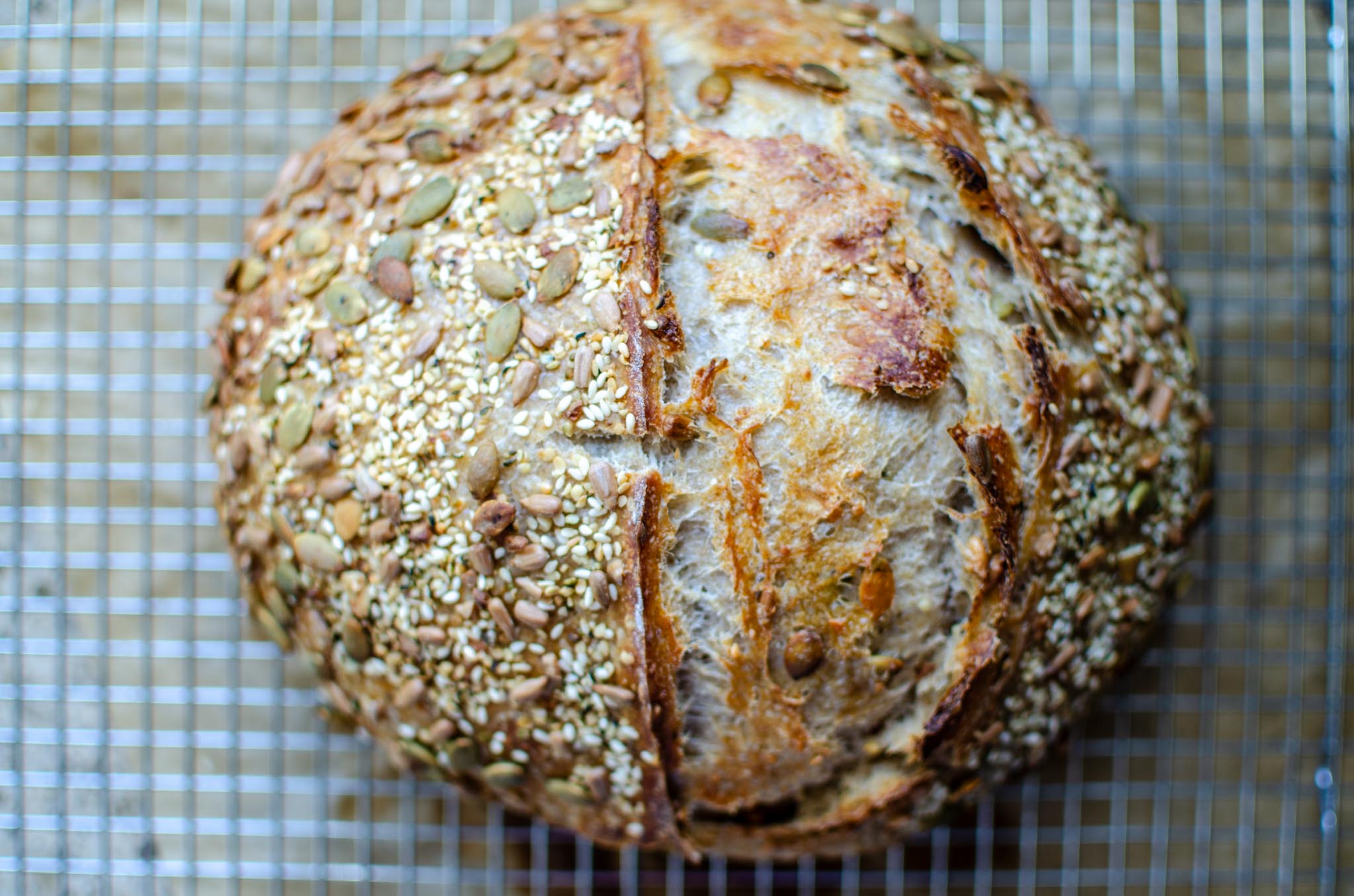
Seeded Multigrain Sourdough Bread Recipe
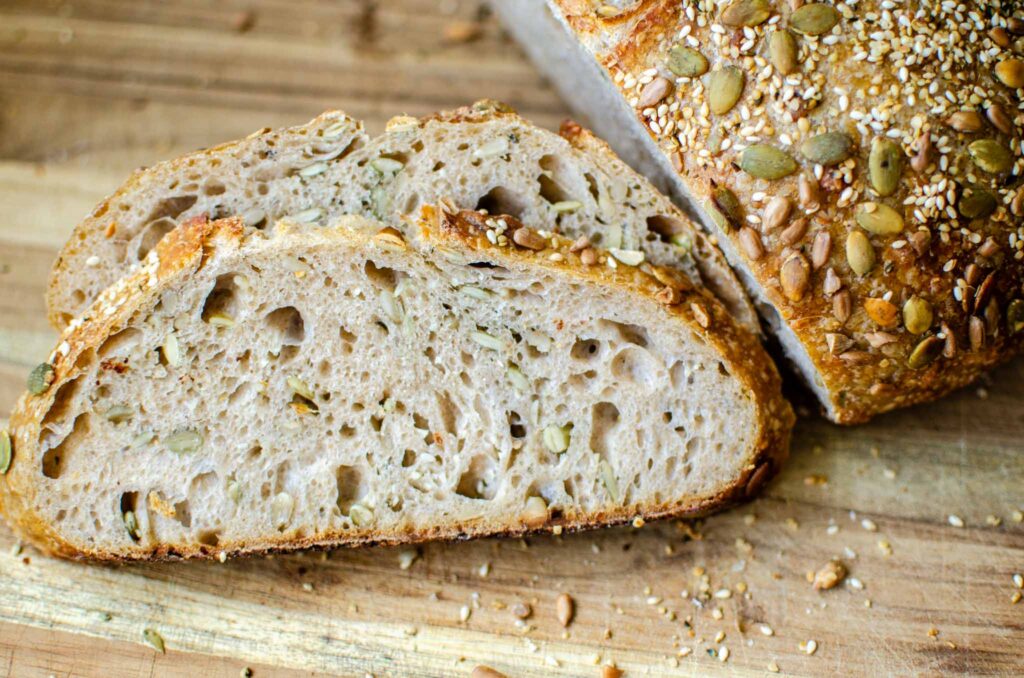
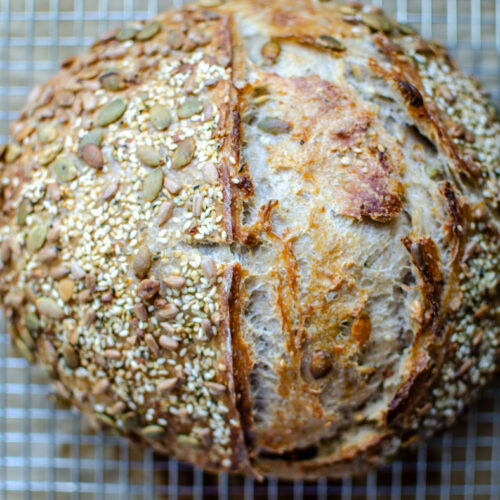
Welcome to your new favorite multigrain bread. This seeded multigrain bread is full of whole grain goodness, long fermented benefits of sourdough with its signature tang, as well as nutty, wholesome flavor from all of the seeds. Sesame, poppy, sunflower, hemp hearts, and pumpkin seeds are all woven throughout the loaf and roasted across the beautiful, crunchy crust.
“Love it! ❤ I’m new to sourdough bread making. this is the third bread recipe I’ve tried. turned out absolutely perfect! So tasty” -Eileen
Save This For Later!
We’ll email this post to you so it doesn’t get lost in your open tabs!
By submitting this form, you consent to receive emails from Lockrem Homestead
New to Sourdough?
If you’re new to sourdough baking, these beginner-friendly guides will help you get started with confidence. Learn how to make a Sourdough Starter from Scratch, feed and maintain it with the Complete Sourdough Starter Guide, and bake your first loaf with this Easy Sourdough Bread Recipe. Together, these guides create a solid foundation for your sourdough journey.
This seeded multigrain sourdough bread uses my traditional sourdough bread recipe with the addition of seeds for an elevated chewy, wholesome flavor.
Not only is this seeded multigrain sourdough bread beautiful, but it’s also adaptable. Add your favorite seeds and nuts or leave some off. Some seeds pair together better than others, so it’s fun to experiment to find what you like.
Enjoy a toasted slice with butter for a quick breakfast. This bread makes the best sandwiches. Paired with your favorite deli meats and cheeses for a sandwich with extra nutritional benefits of the whole grain.
Everyone enjoys this bread no matter how you serve it.
Seeded Multigrain Sourdough Bread Benefits
Seeded multigrain sourdough bread provides some healthy fats and more fiber from the seeds, benefiting your digestive health and your blood sugar levels.
The fermentation process also makes the bread more digestible as well as increases the availability of nutrients. So you ask, is it healthy? I’d say that if you’re going to enjoy bread, a long-fermented bread is better than traditional bread. Adding seeds and whole grains adds even more health benefits. Like anything, moderation is key. Our family enjoys eating homemade long fermented whole grain seeded sourdough bread as a source of carbs.
Why You’ll Love Seeded Sourdough Bread Recipe
- Flavor – This seeded whole grain loaf has a chewy, hearty texture and is absolutely delicious.
- Healthy – Chock full of whole grains, whole grain bread is a healthy choice.
- Versatile – Adjust what type of seeds you add to the bread. Use what you have on hand or your favorites, just be sure the total amount remains the same.
Ingredients for Seeded Multigrain Sourdough Bread
- Levain – Made up of a portion of your sourdough starter, flour, and water. You can use 125 g of an active sourdough starter in place of the levain if it’s healthy and has been fed recently.
- Water
- Flour – Use a combination of bread flour and whole wheat flour
- Sea salt
- Seeds – A combination of sesame seeds, pumpkin seeds, sunflower seeds, chia seeds, and hemp hearts
Equipment to Make Sourdough Bread
- Bowl
- Kitchen scale – A vital tool for measuring sourdough bread dough ingredients. They’re not expensive and will help ensure accurate, consistent measurements.
- Danish dough whisk – I like how a Danish dough whisk cuts through the dough to incorporate the ingredients. A great tool if you plan to bake sourdough bread regularly.
- Lame – A special scoring tool that holds a sharp razor. You can also use a sharp knife, but a lame makes it easy for small, intricate scoring.
- 9″ Banneton basket – A banneton is a proofing basket that provides support for the bread dough as it proofs. Dust with a little bit of rice flour to prevent the dough from sticking.
- Parchment paper or a dough sling.
- 7 qt Dutch oven or larger – Using a Dutch oven is the best way for home bakers to create an artisan loaf of bread with a beautiful crust. The enclosed baking environment traps steam, allowing the crust to stay moist and expand.
- Digital thermometer – Use to read the bread’s internal temperature to know when the bread is done baking. Great for beginner bakers as they improve their bread-baking skills.
- Cooling rack
Instructions for Seeded Multigrain Sourdough Bread
Create the Levain
Add 50 g each of sourdough starter, flour, and water to a clean container 3-4 hours before you plan to mix the dough and allow it to peak. This accounts for some left in the jar.
While you wait for the levain to peak, mix the seeds in a small bowl and set aside.
Autolyse the Dough
In a large mixing bowl combine water and the flours.
Allow the dough to autolyze for 30 minutes. This lets the flour properly hydrate, giving the gluten development a head start for when you begin your folds.
Add the Levain and Salt
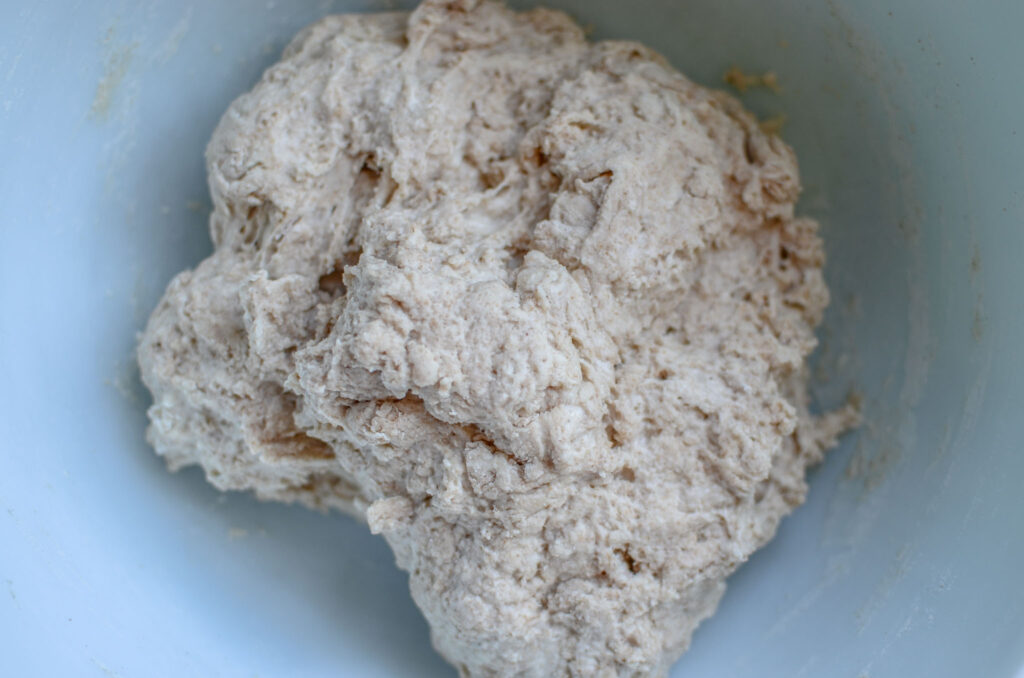
After 30 minutes add all of the levain to the autolyzed dough. Sprinkle the salt over the starter and mix by hand to bring it all together.
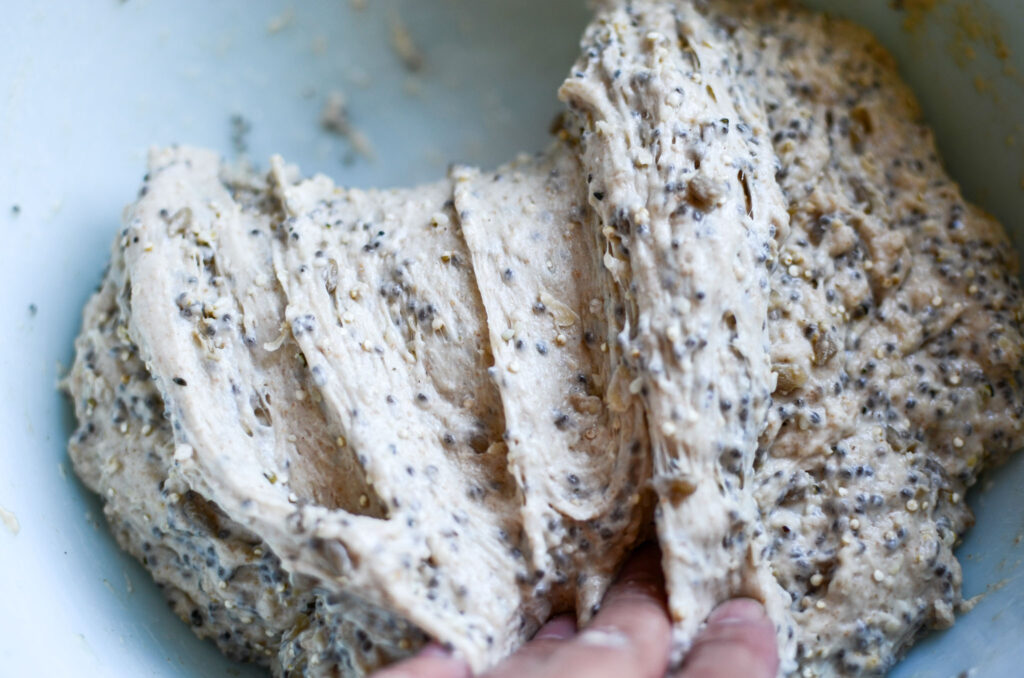
I find a combination of stretch and folds while squeezing the dough incorporates everything.
Cover the seeded multigrain sourdough bread dough with a damp tea towel or a plate and allow to rest for 30 minutes.
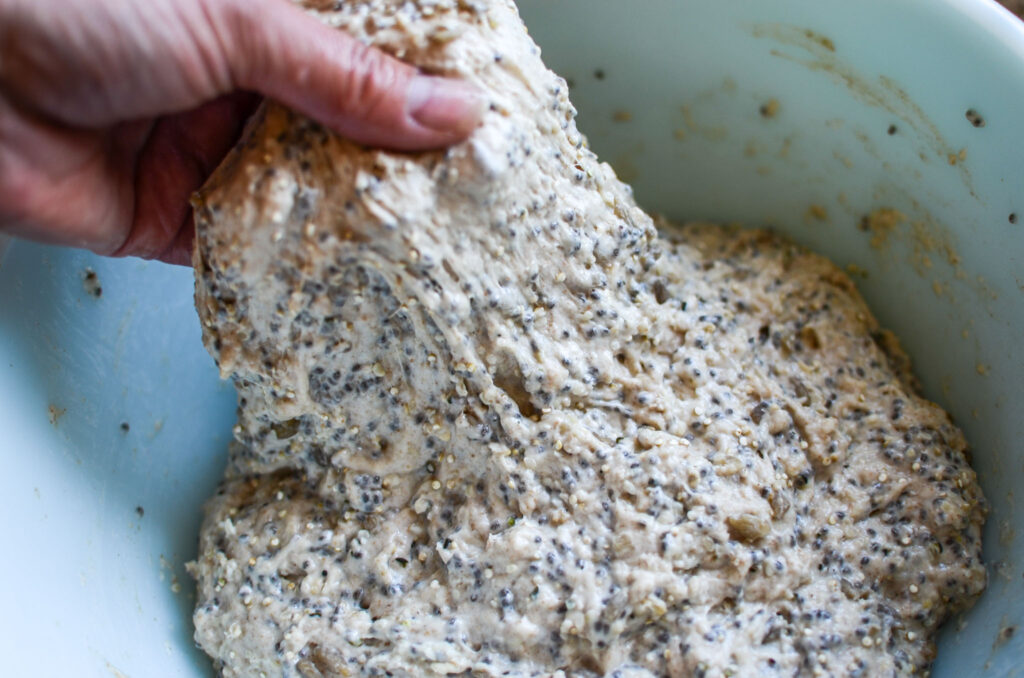
Stretch and Folds | Strengthening the Gluten
Do a series of stretch and folds.
Grad the side of the dough and stretch it straight up before folding it over onto itself in the middle of the bowl. Rotate the bowl a quarter turn and repeat another stretch. Continue to stretch and fold the dough 8-12 times, or until it becomes resistant. Cover and rest for 30 minutes. This completes one set of stretch and folds.
Continue to do a total of 4 stretch and folds with 30 minute intervals.
On the third set of stretch and folds, add the seed mixture over the top of the dough. The stretch and folds will incorporate the seeds throughout the dough.
Use wet hands if the dough becomes too sticky to work with.
Bulk Fermentation
Cover the bowl with a plate or plastic wrap and let the dough rise in a warm place for 6-8 hours or until the dough is puffy, and the top is domed down where it meets the bowl.
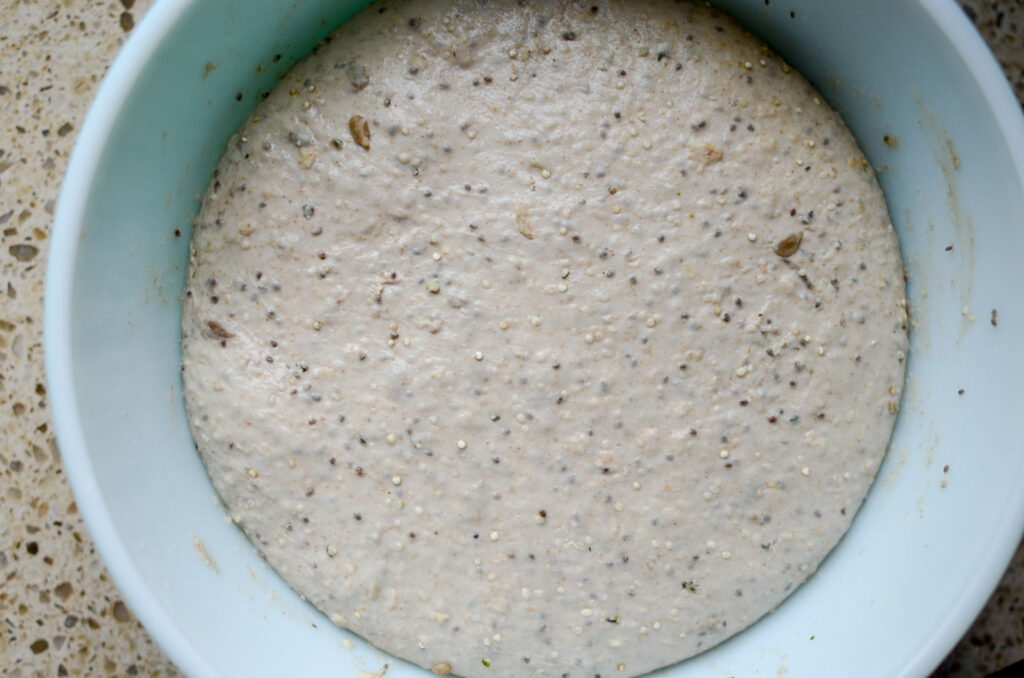
The exact amount of time the bread dough takes to bulk ferment largely depends on the temperature of your kitchen. Warm air temperature will ferment the dough faster than in a cool kitchen.
Shape
Turn out the dough on a lightly floured work surface using a bowl scraper.
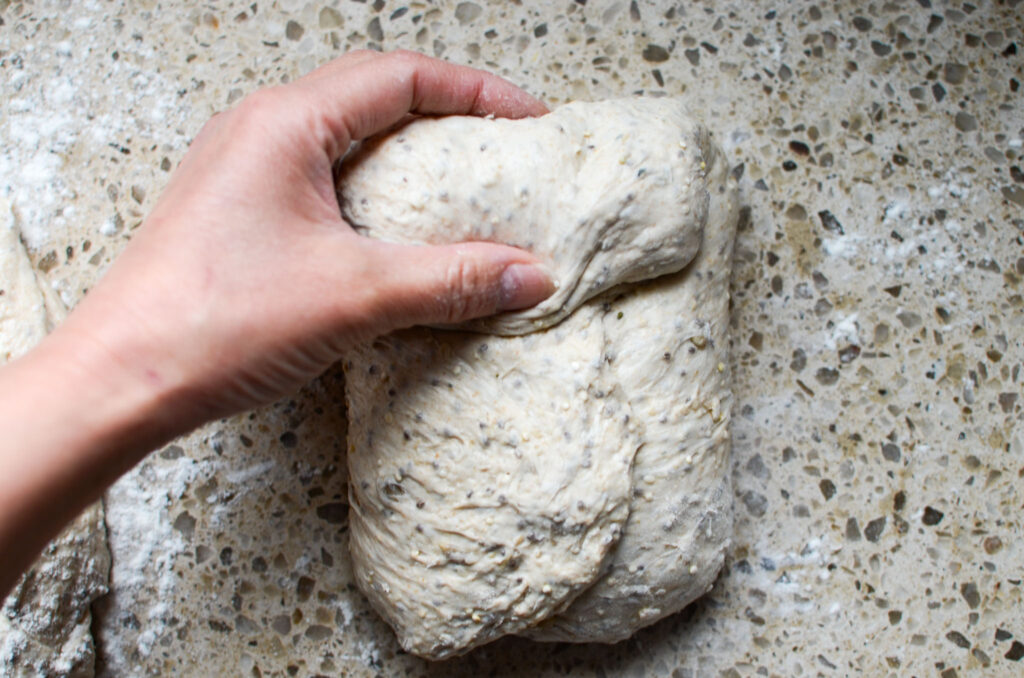
First, fold the bottom half of the dough up to the middle. Then fold and overlap the sides to the middle of the dough.

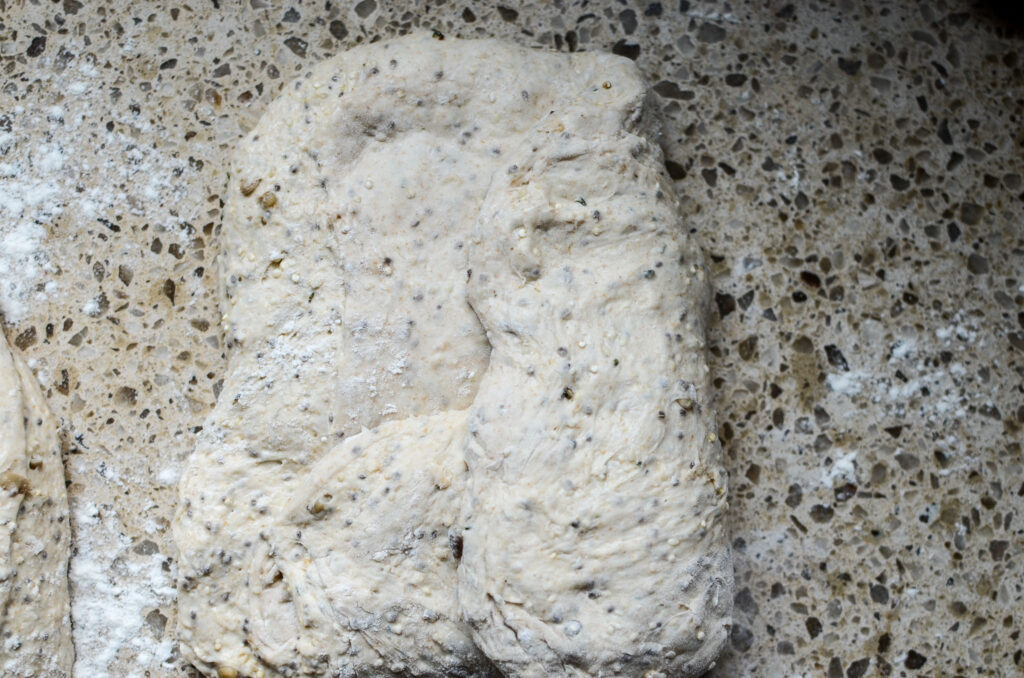
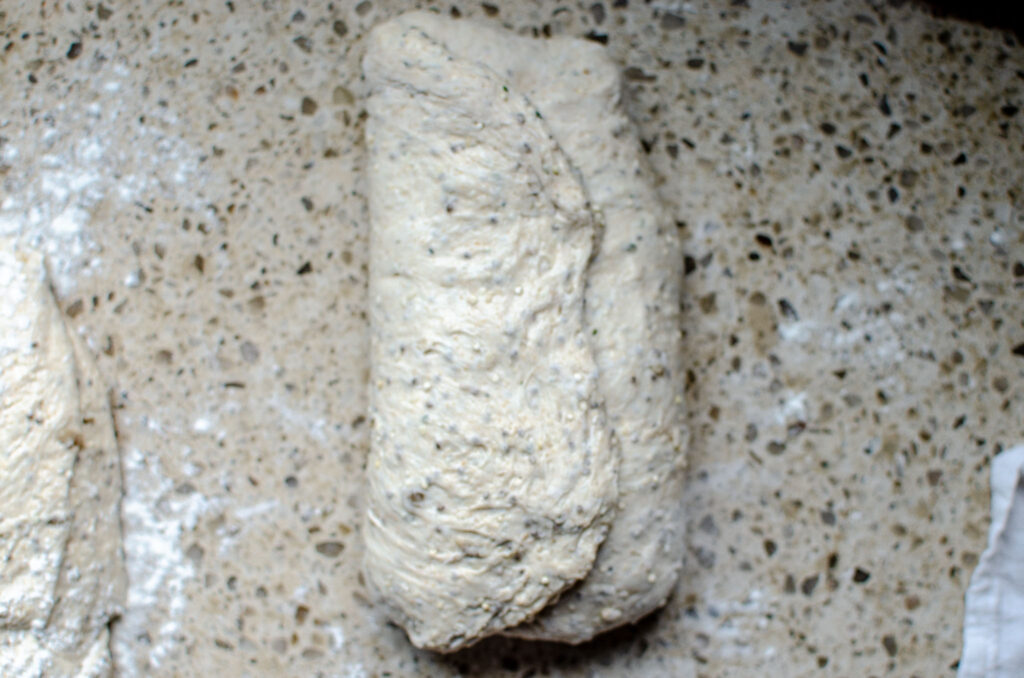
Starting at the top of the dough, roll the dough into a ball.
Use a bench knife to flip the dough ball over so it’s seam-side down on the workspace.
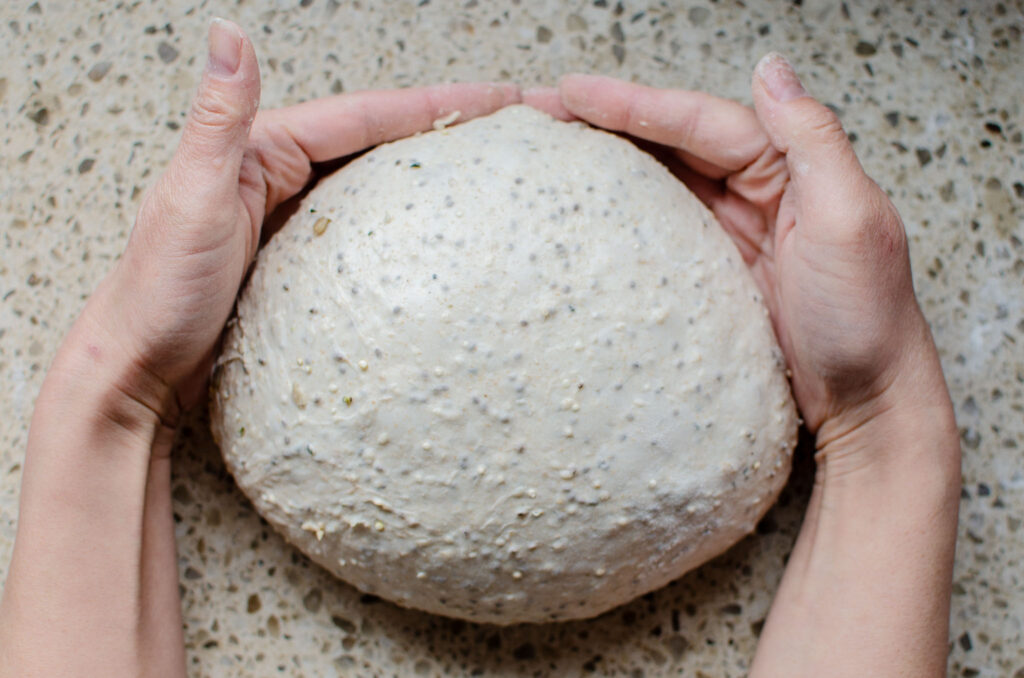
Tighten the top of the dough by cupping the dough with both hands and pulling towards you. Pivot the dough slightly and do another pull until the dough is round in shape with a smooth, tight top.
Transfer the dough to a banneton that has been sprinkled with rice flour with the seam side up.
What if You Don’t Have a Banneton?
While its nice to have, you don’t need a fancy proofing basket to bake good bread. After the dough is shaped, place the dough onto a piece of parchment paper with the seam side down. Then, using the parchment paper as handles, lift the dough back into the bowl. Cover the bowl and refrigerate.
Final Proof
Cover the banneton or place it in a plastic bag and refrigerate for 8-24 hours.
If you choose to bake the bread the same day you mix the dough, let the bread have its second rise covered in the banneton at room temperature for a few hours until the dough is puffy and jiggles when shaken a bit. Preheat the oven and bake as directed.
Bake
The next day, preheat a Dutch oven at 450°F/232°C for one hour.
Remove the cold dough from the refrigerator and turn out on to a piece of parchment paper.
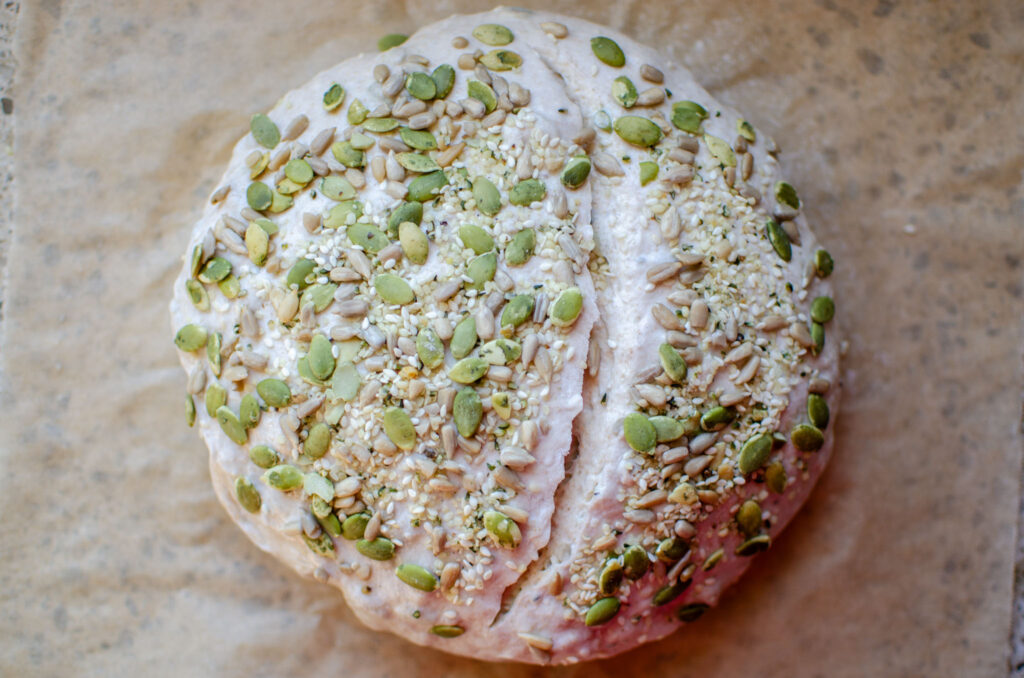
Using a sharp knife or bread lame, score the top of the loaf at a 45° angle.
Brush the top of the bread lightly with water and sprinkle on the seeds.
Lift the bread into the hot Dutch, oven using the parchment paper as handles, and bake for 30 minutes with the lid on. Remove the lid and bake for an additional 10 minutes. The bread is done when the internal temperature reaches 200°F/94°C.
Cool
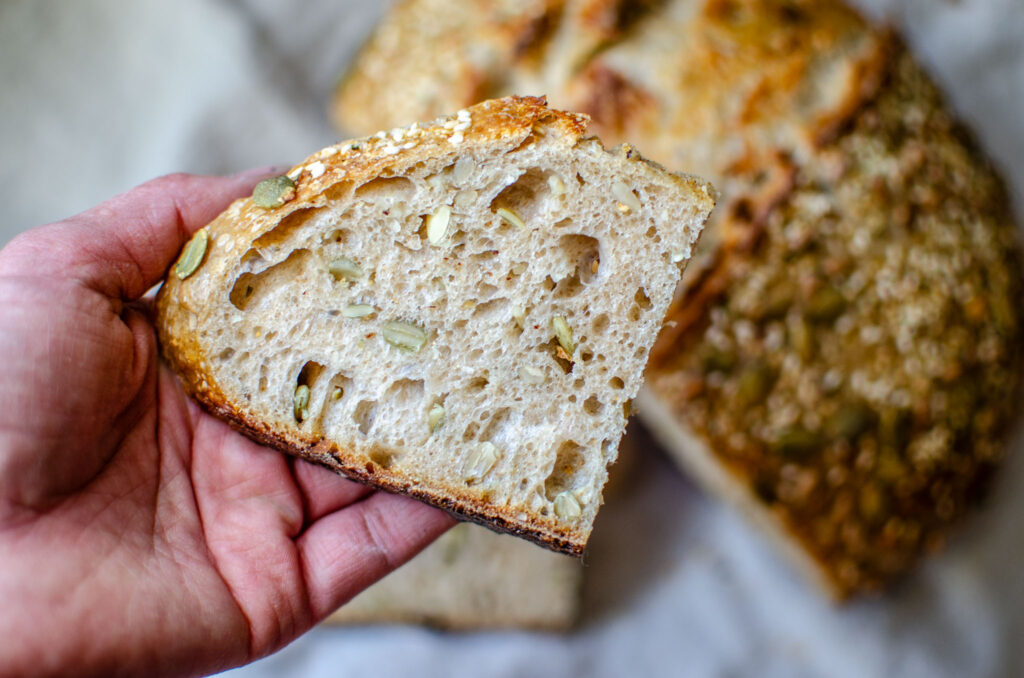
Lift the bread out onto a wire rack to cool. Wait until the bread has completely cooled before slicing to avoid a gummy texture.
Storage
Store the bread in an airtight container for 3-4 days at room temperature. Sourdough loaves, whole or sliced, can be frozen for longer storage. Wrap securely, label with the name and date, and place in the freezer. For the best flavor, use within three months.
Helpful Tips
- Cold sourdough bread dough has a better oven spring when it hits a high temperature, creating a taller loaf.
- Scoring the top of the whole grain loaf gives the bread a controlled place to expand in the oven.
- The water helps the seeds adhere to the bread.
- I used a combination of one tablespoon of each of the larger seeds and one teaspoon of each of the smaller seeds. But be creative and use whatever combination you enjoy!
What To Eat With Whole Grain Sourdough Bread?
- Pair with soups or salads for a tasty side.
- Build amazing sandwiches with your favorite meats, cheeses, and fresh toppings like tomatoes, lettuce, and pickles.
- Whole wheat bread makes delicious toast. The nutty flavor pairs well with your favorite jams, butters, or spreads.
- Create hearty, chewy croutons. Cube the bread and lay it out on a sheet pan. Drizzle them with oil and bake until dried.
Sourdough Sample Schedule
Baking with sourdough can be a bit intimidating at first since so many variables are involved. But once you understand the process, it’s quite simple and highly flexible to accommodate your schedule. Here is a sample baking schedule.
| Day 1: 8:00 am | Mix the levain |
| 10:00 am | Autolyse the flours |
| 10:30 am | Add salt and levain to the autolyse mixture |
| 11:00 – 12:30 pm | Do 4 sets of stretch and folds with 30-minute intervals. Add seeds during the 3rd set. |
| 12:30 – 6:00 pm | Bulk ferment at room temperature |
| 6:00 – 8:00 am | Shape the dough, place it in a proofing basket, and refrigerate to cold proof |
| Day 2: 8:00 am | Preheat Dutch oven |
| 9:00 pm | Score and bake the bread dough |
Whole Grain Sourdough Bread FAQs
Do I Need to Use a Kitchen Scale?
I know that buying a kitchen scale seems like one more thing, however, measuring by weight instead of volume ensures consistent sourdough bread doughs. Investing in an inexpensive scale is a great idea if you plan to bake sourdough bread regularly.
What’s The Difference Between Whole Wheat and Whole Grain?
Whole grain sourdough bread is made with various whole grains, such as oats, rice, bulgar, rye, millet, and quinoa, but can be made using whole wheat flour, white flour, or a blend of the two. Whole wheat bread is made with whole wheat flour without the addition of other whole grains.
What Kind of Seeds to Use?
I love the combination of larger seeds as well as the smaller seeds for some variety as well as providing a great texture. There’s really an endless combination of seeds you can use. I used pumpkin, sunflower, chia, hemp and sesame seeds. Other options are poppy, flax, quinoa or fennel seeds.


I’d love to hear from you! If you made this Seeded Whole Grain Sourdough Bread recipe and loved it, I would love it if you gave it 5 stars! Happy Baking!
Seeded Multigrain Sourdough Bread Recipe
Want to Save This Recipe?
Enter your email & I’ll send it to your inbox. Plus, get great new recipes from me every week!
By submitting this form, you consent to receive emails from Lockrem Homestead
Equipment
- kitchen scale
- large mixing bowl
- 9" banneton
- Danish dough whisk
- lame
- parchment paper or dough sling
Ingredients
Levain
- 50 g active sourdough starter
- 50 g bread flour
- 50 g water
Seeded Multigrain Sourdough Bread Dough
- 350 g water 1½ cups
- 400 g bread flour 3 ¼ cups
- 100 g whole wheat flour ½ cup + 1 tsp
- 10 g salt 2 tsp
- all levain (you can substitute 125 g of active sourdough starter if it's healthy)
Seed Mix
- ¼ cup sunflower seeds
- ¼ cup pumpkin seeds
- 1 tbsp sesame seeds
- 1 tbsp hemp hearts
- additional seeds for the top of the bread exact amounts in the notes section at the bottom of the recipe card.
Instructions
Create the Levain
- Add 50 g each of sourdough starter, flour, and water to a clean container 3-4 hours before you plan to mix the dough and allow it to peak. This accounts for some left in the jar.
- While you wait for the levain to peak, add the seed mix to a small bowl, stir to combine, and set aside.
Autolyse the Dough
- In a large mixing bowl combine water and the flours.
- Allow the dough to autolyze for 30 minutes. This lets the flour properly hydrate, giving the gluten development a head start for when you begin your folds.
Add the Levain and Salt
- After 30 minutes add all of the levain to the autolyzed dough. Sprinkle the salt over the starter and mix by hand to bring it all together.
- I find that a combination of stretch and folds while squeezing the dough incorporates everything.
- Cover the seeded multigrain sourdough bread dough with a damp tea towel or a plate and allow to rest for 30 minutes.
Stretch and Folds | Strengthening the Gluten
- Do a series of stretch and folds.
- Grad the side of the dough and stretch it straight up before folding it over onto itself in the middle of the bowl. Rotate the bowl a quarter turn and repeat another stretch. Continue to stretch and fold the dough 8-12 times, or until it becomes resistant. Cover and rest for 30 minutes. This completes one set of stretch and folds.
- Continue to do a total of 4 stretch and folds with 30 minute intervals.
- On the third set of stretch and folds, add the seed mixture over the top of the dough. The stretch and folds will incorporate the seeds throughout the dough.
- Use wet hands if the dough becomes too sticky to work with.
Bulk Fermentation
- Cover the bowl with a plate or plastic wrap and let the dough rise in a warm place for 6-8 hours or until the dough is puffy, and the top is domed down where it meets the bowl.
Shape
- Turn out the dough on a lightly floured work surface using a bowl scraper.
- First, fold the bottom half of the dough up to the middle. Then fold and overlap the sides to the middle of the dough.
- Starting at the top of the dough, roll the dough into a ball.
- Using a bench knife, flip the dough ball over so that the seam is down on the work space.
- Tighten the top of the dough by cupping the dough with both hands and pulling towards you. Pivot the dough slightly and do another pull until the dough is round in shape with a smooth, tight top.
- Transfer the dough to a banneton that has been sprinkled with rice flour with the seam side up.
Final Proof
- Cover the banneton or place it in a plastic bag and refrigerate for 8-24 hours.
Bake
- The next day, preheat a Dutch oven at 450°F/232°C for one hour.
- Remove the cold dough from the refrigerator and turn out on to a piece of parchment paper.
- Using a sharp knife or bread lame, score the top of the loaf at a 45° angle.
- Brush the top of the bread lightly with water and sprinkle on the seeds.
- Lift the bread into the hot Dutch, oven using the parchment paper as handles, and bake for 30 minutes with the lid on. Remove the lid and bake for an additional 10 minutes. The bread is done when the internal temperature reaches 200°F/94°C.
Cool
- Lift the bread out onto a wire rack to cool. Wait until the bread has completely cooled before slicing to avoid a gummy texture.
Storage
- Store the bread in an airtight container for 3-4 days at room temperature. Sourdough loaves, whole or sliced, can be frozen for longer storage. Wrap securely, label with the name and date, and place in the freezer. For the best flavor, use within three months.
Was very pleased with how this turned out! Can’t wait for it to cool down enough to slice and eat.
My husbands favorite bread! I make it weekly for him. Thank you
I love hearing that! You’re welcome!
Can you add linseeds to this dough and would they need to be soaked before adding to then dough mixture?
You can add linseeds, but they will adjust the ratios of the dough, whether you add them dry or soak them beforehand. If you add them dry, they will pull moisture from the dough. However, if you soak them, they’ll add moisture to the dough. Depending on how much you plan to add to the dough, I’d suggest soaking with a minimal amount of liquid and strain before adding to the dough. Let me know how it turns out!
Can you make this with more whole wheat flour? Like flip the ratio of flours?
You can experiment with adjusting the flour ratios, however, I’ve only tested this recipe. Adjusting the ingredient list in that way will give you a new recipe. Whole wheat flour absorbs more water so you may need to add more water if you swap the types of flour in the recipe. Let me know how it goes!
Hi , I was just wondering if I can bake your bread in a covered loaf pan instead in a Dutch oven?
I’ve not tried it with this recipe before. The recipe is only tested using a Dutch oven, so that’s what I can vouch for. Let me know how it goes for you!
We love this bread. I didn’t have wheat flour and used spelt. So crunchy and delicious!! Thank you for sharing.
Yummy! I’m glad you love it! Thanks for sharing!
Hello I Love the taste I just found I added bit too much water I Will do a bit less next time. What size of round baton do I need for this recipe? 9″
Yes, 9″ banneton.
It tastes awesome it was my first time making sourdough bread
Welcome! I hope you check out some of my other sourdough recipes! I’m glad to hear that you enjoyed the flavor!
This looks delicious! Question… should the seeds be raw or roasted/soaked/prepped somehow? Thank you!
The recipe is formulated so that the seeds go into the dough dry. If you wanted to soak them, use a portion of the water you would add to the autolyze. Then, add all of the water and seed mixture to the dough. As far as roasted or raw, use what you enjoy eating! I’d suggest unsalted or they can make your bread too salty.
Thank you for this recipe. It’s so much easier than other recipes I’ve looked at AND the bread is wonderful!
You’re welcome! I’m glad you enjoyed it!
I’m new to sourdough and so I’m still learning. But I bake a lot so I can get it down. My son and I love seeded bread so I thought, why not. I made it along side a regular loaf. The regular loaf I was making for a dinner with friends. So the loaf comes out, looking SO beautiful. And I left it out next to the regular for it to cool. When dinner came around everyone wanted to try the seeded so I let them, nervous because I didn’t know how it tasted, what the inside looked like, etc. but it was a MASSIVE hit! This is literally the BEST bread I have ever had. Thank you so much for the recipe!!
Yay! Every successful loaf feels so good! I’m glad you enjoyed the bread! I hope you find other bread recipes on the blog you enjoy