
100% Whole Wheat Sourdough Bread Recipe
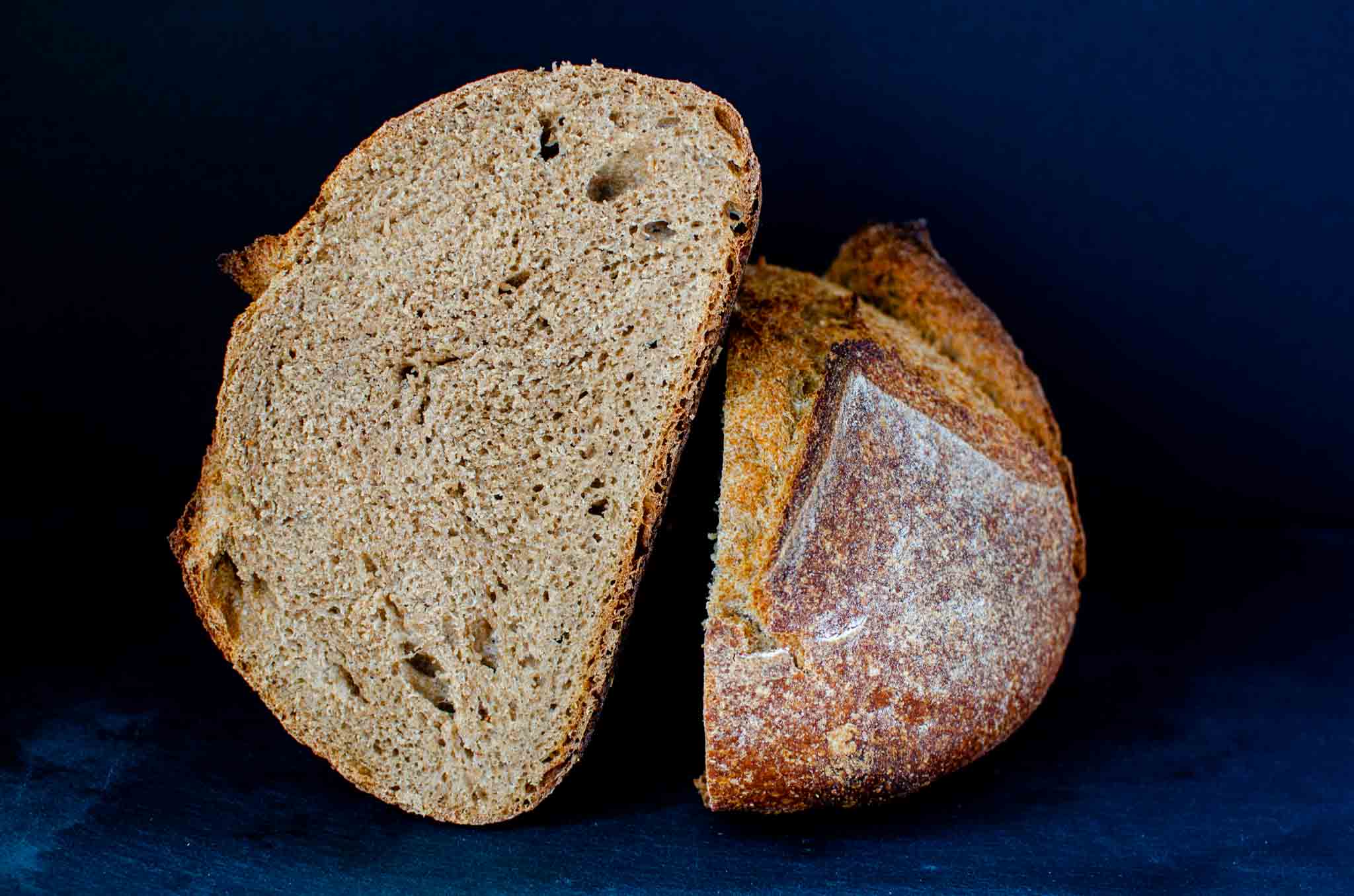
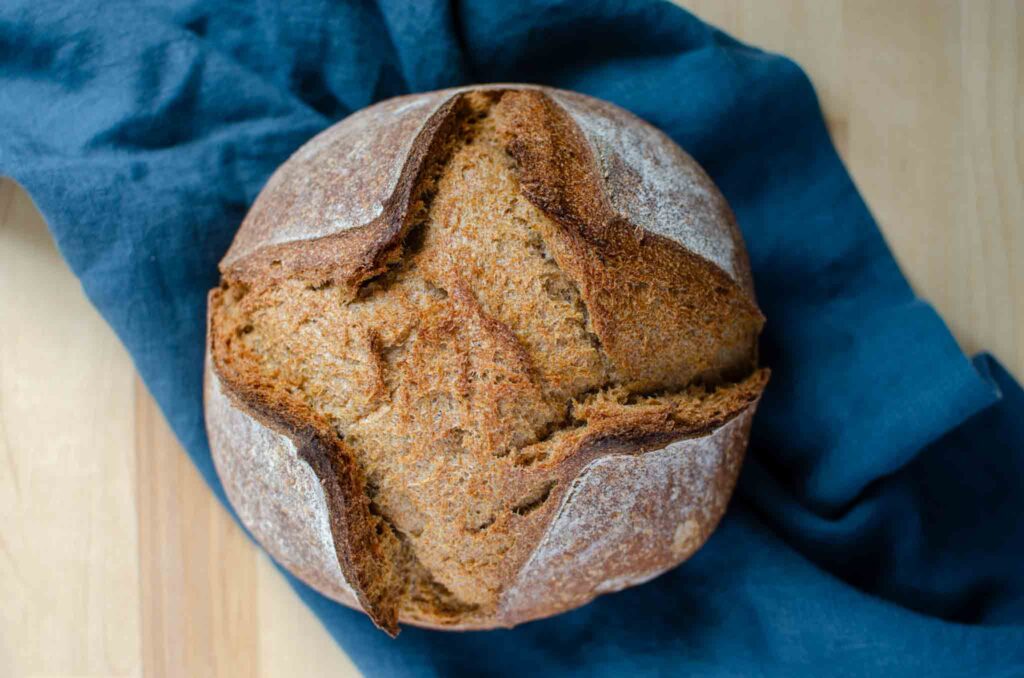
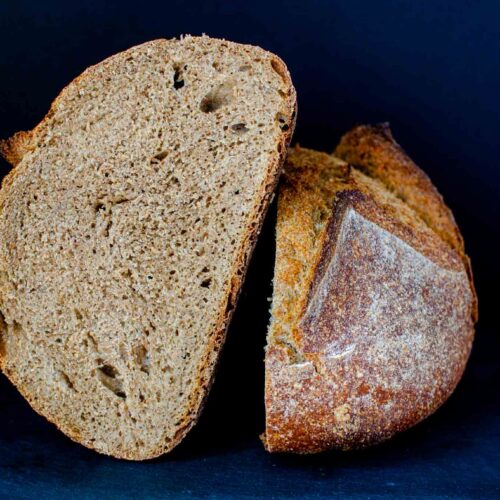
Learn how simple it is to make 100% whole wheat sourdough bread with step-by-step instructions. This whole wheat sourdough bread recipe uses 4 simple ingredients to create a delicious, dense loaf of whole wheat bread.
Save This For Later!
We’ll email this post to you so it doesn’t get lost in your open tabs!
By submitting this form, you consent to receive emails from Lockrem Homestead
New to Sourdough?
If you’re new to sourdough baking, these beginner-friendly guides will help you get started with confidence. Learn how to make a Sourdough Starter from Scratch, feed and maintain it with the Complete Sourdough Starter Guide, and bake your first loaf with this Easy Sourdough Bread Recipe. Together, these guides create a solid foundation for your sourdough journey.
100% whole wheat sourdough bread has a hearty, nutty flavor with a tight crumb that has a slightly chewy texture.
Most whole wheat sourdough bread recipes vary in the ratio of whole wheat flour to white flour. There’s a balance between using enough whole wheat flour for added goodness and flavor. while using all-purpose flour to achieve a lighter texture and a taller rise.
This 100% whole wheat sourdough recipe is different than a white whole wheat bread recipe to produce a hefty, dense loaf.
What is Whole Wheat Bread?
Simply put, whole wheat bread uses whole wheat flour instead of all-purpose or white bread flour. Whole grain flour starts as a wheat kernel that is stripped of its outer shell, leaving the edible part behind, called a wheat berry.
Whole wheat flour includes the bran, germ, and endosperm, containing healthy fats, vitamins, minerals, and antioxidants. The endosperm, the largest part of the grain, contains the starchy carbs. In most cases, white flours are made up mostly of the endosperm.
Whole grain bread found in grocery stores will have varying ratios of whole wheat flour to white flour. This combination creates a well-crafted balance of whole wheat flour for added health benefits, but relies on all-purpose flour or bread flour to help with lift and lighten the texture of the loaf.
Why You’ll Love Bread Recipe
- A whole wheat loaf is full of flavor. Baking it at home allows you to enjoy this delicious bread anytime.
- Whole wheat bread is full of whole grains, making it a healthier choice.
100% Whole Wheat Sourdough Bread Ingredients
- Whole wheat flour – A dark, nutty flour made using the whole wheat kernel. Find whole wheat flour in your local grocery store.
- Sourdough starter – Use an active sourdough starter, or one that’s been fed and allowed to rise to its peak.
- Water – Using warm water encourages fermentation activity.
- Salt – Adds flavor to your bread and helps gluten development.
Equipment to Make Sourdough Bread
- Bowl
- Kitchen scale – A vital tool for measuring sourdough bread dough ingredients. They’re not expensive and will help ensure accurate, consistent measurements.
- Danish dough whisk – I like how a Danish dough whisk cuts through the dough to incorporate the ingredients. A great tool if you plan to bake sourdough bread regularly.
- Lame – A special scoring tool that holds a sharp razor. You can also use a sharp knife, but a lame makes it easy for small, intricate scoring.
- 9″ Banneton basket – A banneton is a proofing basket that provides support for the bread dough as it proofs. Dust with a little bit of rice flour to prevent the dough from sticking.
- Parchment paper or a dough sling.
- 7 qt Dutch oven or larger – Using a Dutch oven is the best way for home bakers to create an artisan loaf of bread with a beautiful crust. The enclosed baking environment traps steam, allowing the crust to stay moist and expand.
- Digital thermometer – Use to read the bread’s internal temperature to know when the bread is done baking. Great for beginner bakers as they improve their bread-baking skills.
- Cooling rack
Step-By-Step Instructions For 100% Whole Wheat Sourdough Bread
The full instructions are in the recipe card below.
Step 1: Prepare the Levain
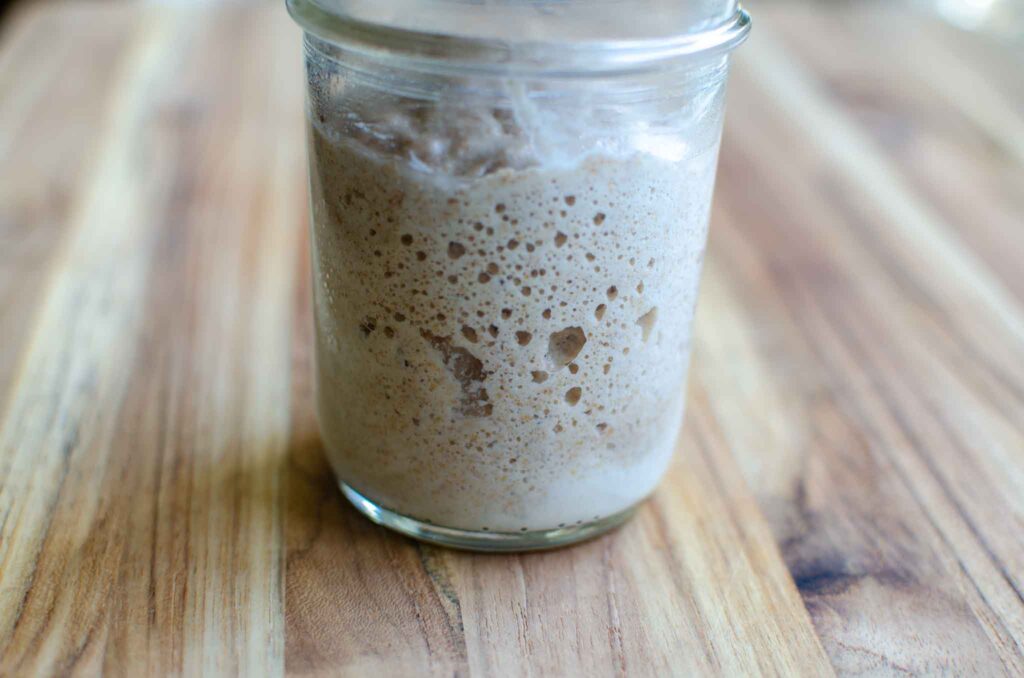
Add 36 g each of sourdough starter, water, and whole wheat flour to a small mason jar and stir to combine. Cover and allow it to come to its peak, roughly 2-4 hours.
Step 2: Mix the Dough
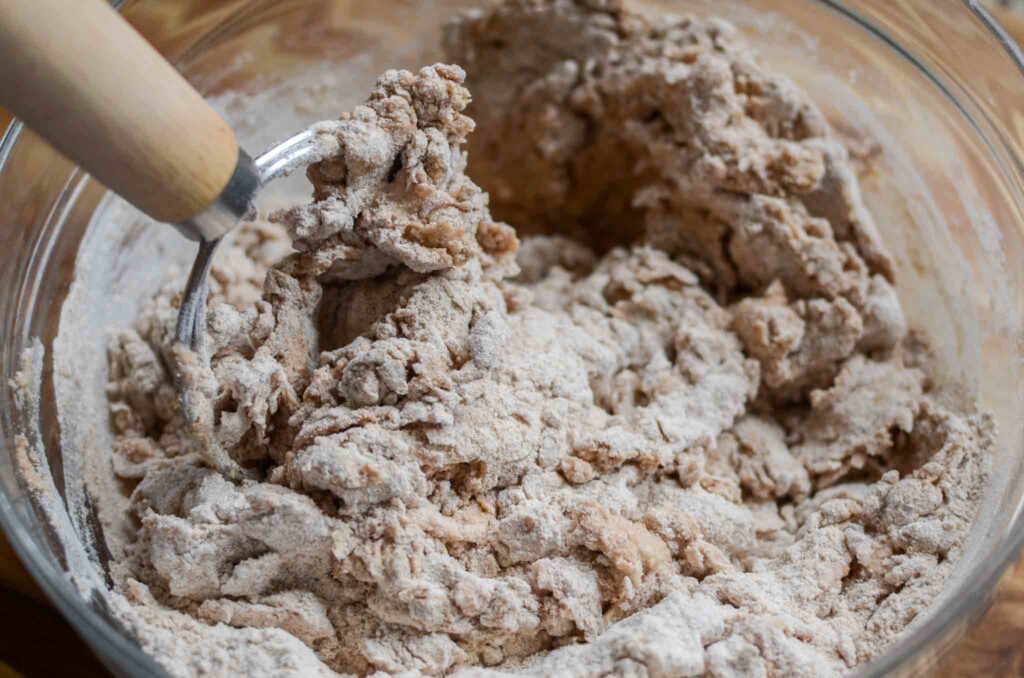
Add 350 g of water and 500 g of whole wheat flour to a large bowl. Combine thoroughly using a dough whisk. Cover with a tea towel and let the dough rest for 30 minutes at room temperature. This allows the whole wheat flour to properly hydrate.
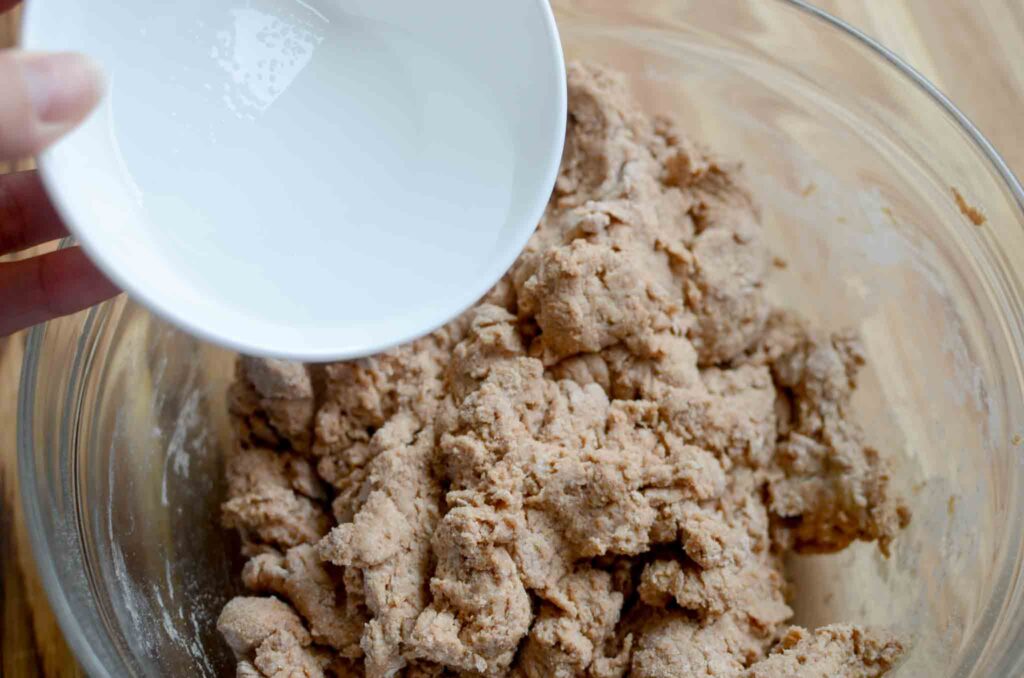
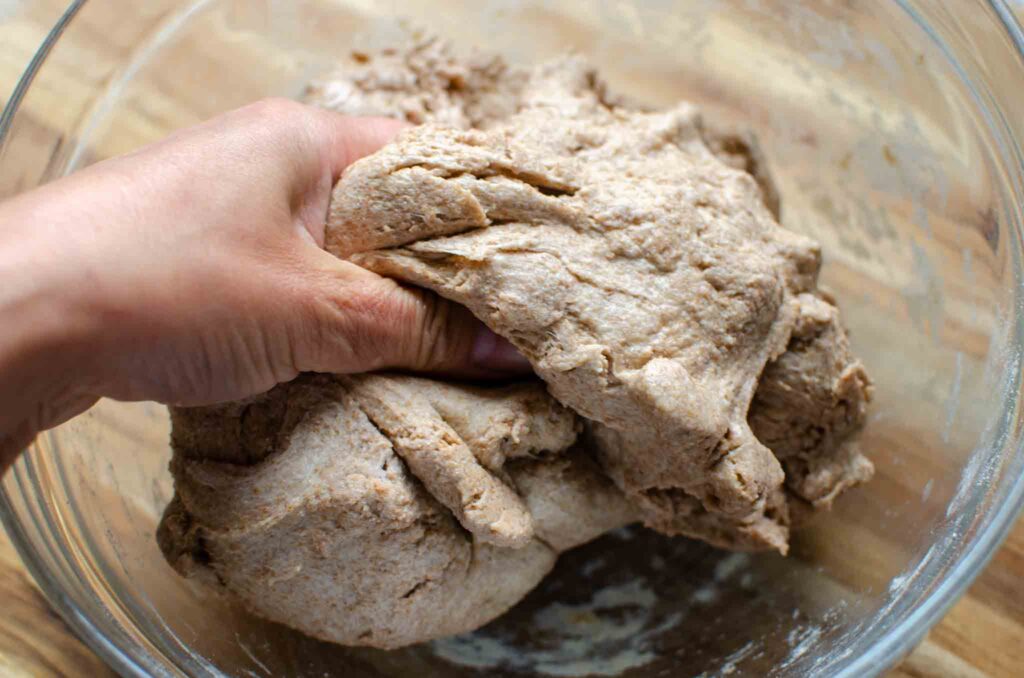
Next, combine 25 g of water and 10 g of salt in a small bowl and mix to dissolve. Pour over the dough and mix it in completely, squeezing and folding the dough. Let the dough rest for 30 minutes.
Step 3: Stretch and Folds
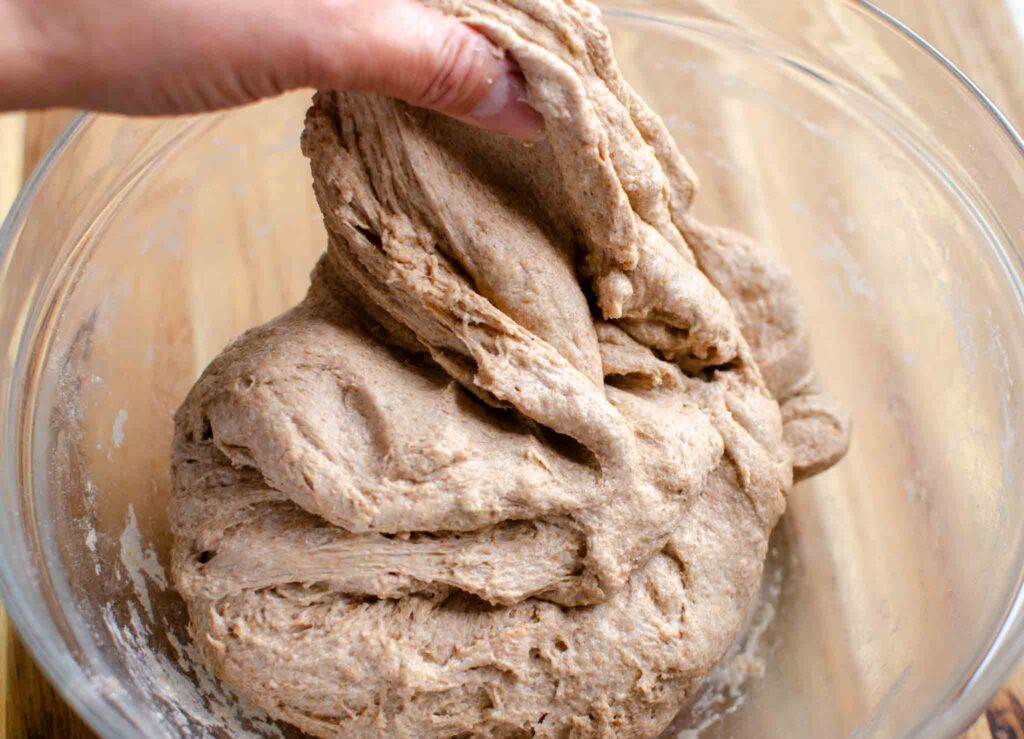
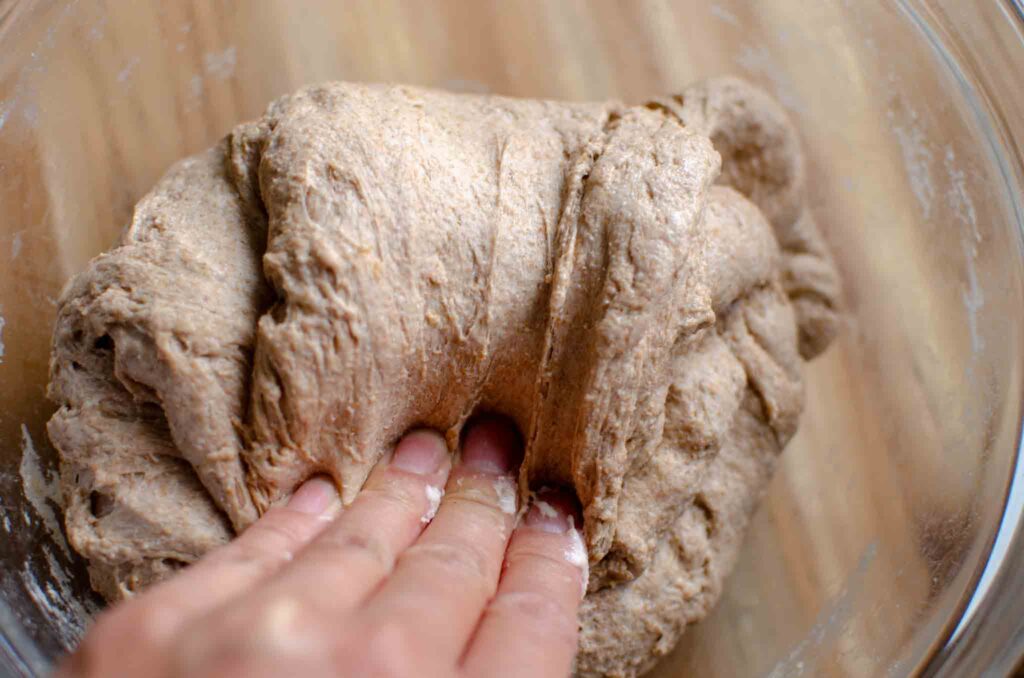
Stretch and fold the dough.
Grab the edge of the dough and lift it straight up before folding it over onto itself in the middle of the dough. Turn the bowl a quarter of a turn and repeat, stretching and folding the whole wheat dough.
Continue 6-8 more folds, working your way around the sides of the bowl, until the dough becomes tight and resistant. Rest for 30 minutes.
This completes one set. Continue to do 3 sets total with 30-minute intervals.
Step 4: Bulk Fermentation | First Rise
Cover the bowl with plastic wrap or a tea towel and put it in a warm place. Let the dough rise until it increases by 50 percent. In my 70°F/21°C kitchen, this took 5-6 hours.
The exact amount of time the bread dough takes to bulk ferment largely depends on the temperature of your kitchen. Warm air temperature will ferment the dough faster than in a cool kitchen.
Step 4: Shape
To shape, turn out the dough onto a lightly floured work surface.
Shape the dough using the envelope fold. First, fold the top of the dough down to the center of the dough. Then, fold the bottom up to meet the other fold in the middle of the dough. Fold the sides to the center in the same way.
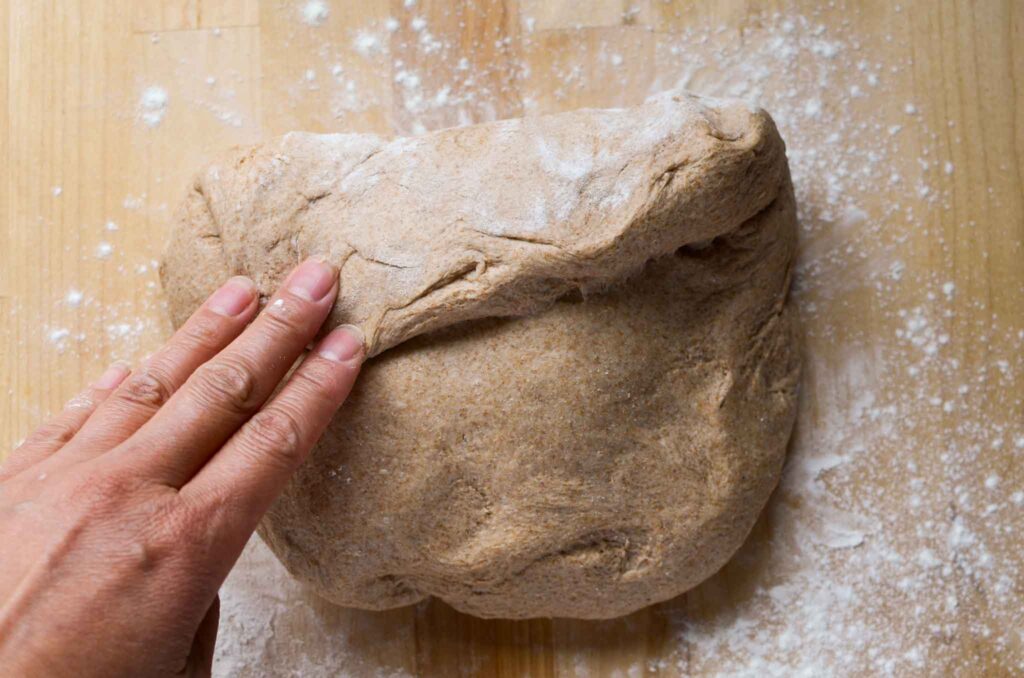
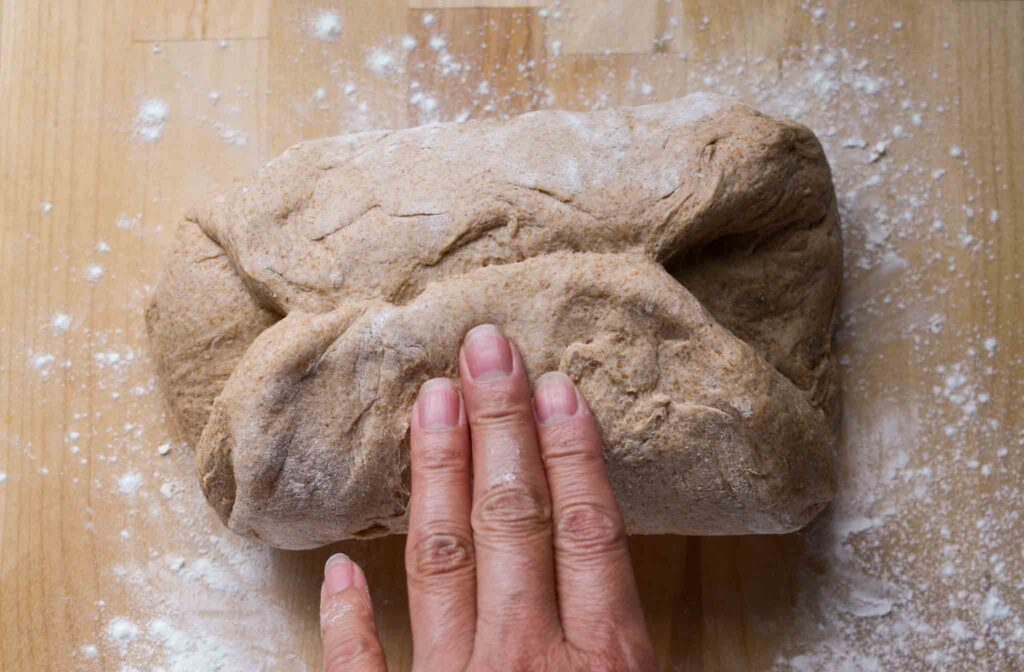
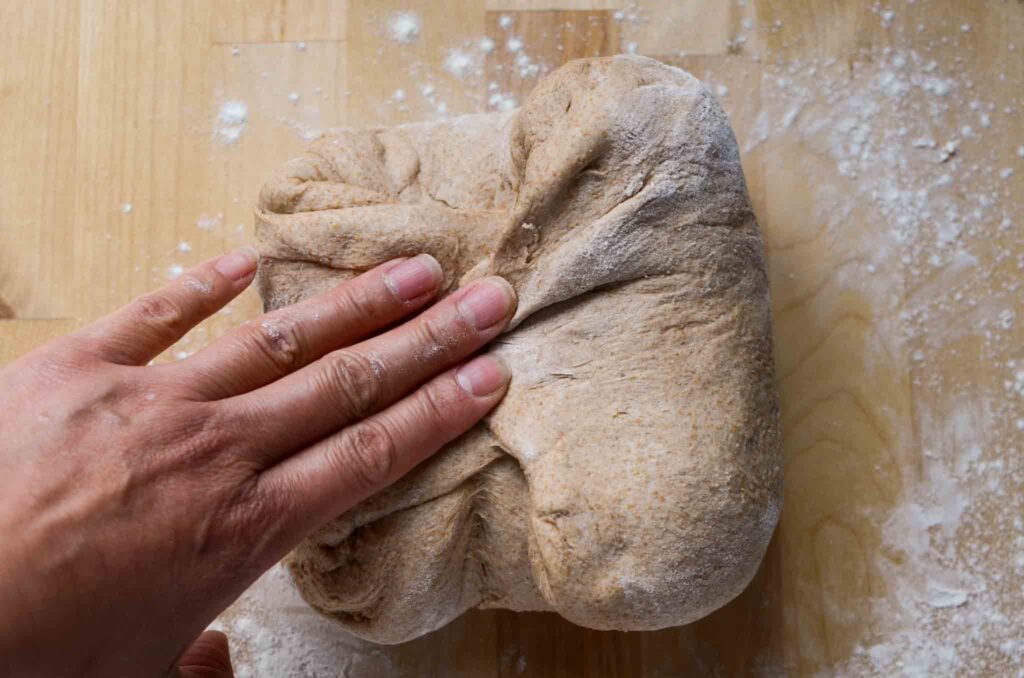
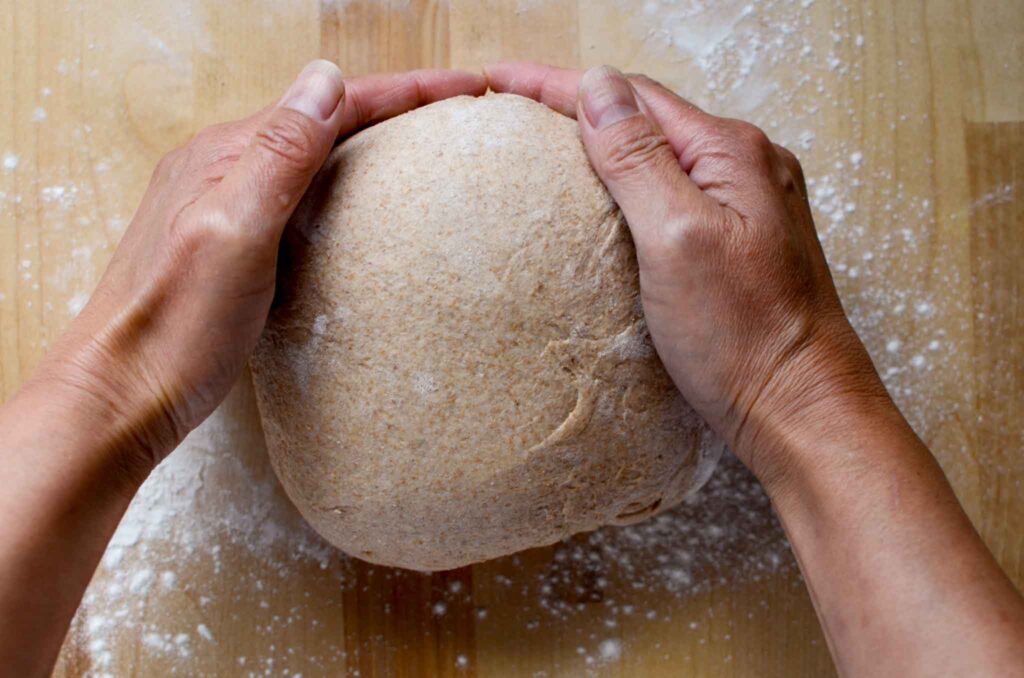
Use a bench scraper and flip the dough over, with the folds facing down. Use both hands to cup the far side of the dough and gently pull it towards you, pressing the bottom of your hands slightly under the dough as you pull. This creates some tension on the top of the loaf. Readjust your hands to a different part of the dough and continue pulling it until the loaf is a smooth, round shape.
Dust a banneton lightly with rice flour. Lift the dough into the banneton, seam side up. Place the banneton in a plastic bag or cover with a clean towel so the top doesn’t dry out.
What if You Don’t Have a Banneton?
While its nice to have, you don’t need a fancy proofing basket to bake good bread. After the dough is shaped, place the dough onto a piece of parchment paper with the seam side down. Then, using the parchment paper as handles, lift the dough back into the bowl. Cover the bowl and refrigerate.
Step 5: Proof
Allow the covered dough to rise at room temperature to proof until puffy, 2-4 hours.
Optional cold proof: Cold retard the dough in the fridge for 8- 24 hours. The fridge temps slow down fermentation, allowing the bread to develop a rich flavor.
Step 6: Bake
The next morning, preheat a Dutch oven at 450°F/232°C for 45 minutes.
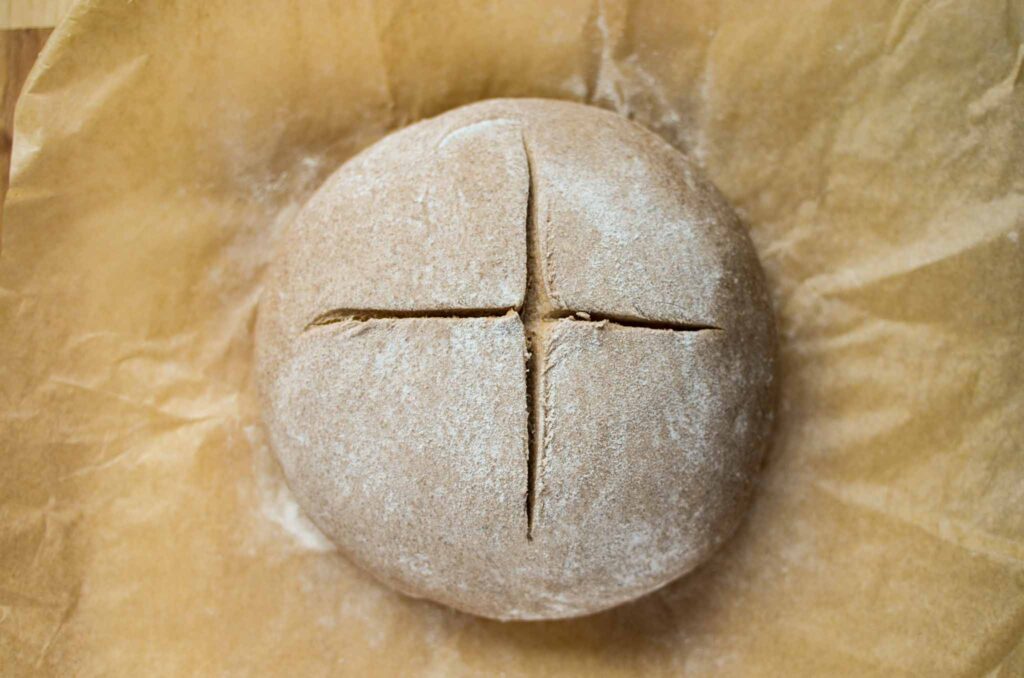
Remove the bread dough from the fridge and turn it out on a sheet of parchment paper. Score the top of the dough with a lame or sharp razor blade.
Using the parchment paper, lift the bread dough into the preheated Dutch oven and bake for 35 minutes with the lid on. Remove the lid and bake for an additional 20 minutes.
The bread is done when the bottom sounds hollow when tapped and reads 200°F/93°C with a digital thermometer.
Place the bread on a wire rack to cool.
Step 7: Store
Wait until the bread is completely cool before placing it in an airtight container. Store at room temperature for up to 5 days.
Helpful Tips
- Cold sourdough bread dough has a better oven spring when it hits a high temperature, creating a taller loaf.
- Scoring the whole wheat loaf gives the bread a controlled place to expand in the oven.
- If this is your first time using whole grains, it’s good to set realistic expectations. There’s a noticeable difference between using 100% whole wheat flour and white doughs. The sharp edges of the wheat bran cut the gluten strands, inhibiting their development, resulting in a dense bread.
- Dough sticking to your hands? A bit of water will help. Wet hands reduce the dough sticking during folding.
- You can use an active starter in place of the whole grain levain if it’s healthy and has been fed recently. A white flour starter will take longer to come to its peak, so adjust accordingly.
- A grain mill allows you to enjoy a wide range of stone-milled flour from a variety of wheat berry varieties, including hard to soft, red or white.
What To Eat With Whole Wheat Sourdough Bread?
Sourdough Sample Schedule
Baking with sourdough can be a bit intimidating at first since so many variables are involved. But once you understand the process, it’s quite simple and highly flexible to accommodate your schedule. Here is a sample baking schedule.
| 8:00 am | Mix the levain |
| 10:00 am | Mix dough |
| 10:30 am | Add salt |
| 11:00 – 12:00 pm | Do 3 sets of stretch and folds with 30-minute intervals |
| 12:00 – 5:00 pm | Bulk ferment at room temperature |
| 5:00 – 7:00 pm | Shape the dough, place it in a proofing basket, and proof |
| 6:15 pm | Preheat Dutch oven |
| 7:00 pm | Score and bake the bread dough |
Whole Wheat Sourdough Bread FAQs
Do I Need to Use a Kitchen Scale?
I know that buying a kitchen scale seems like one more thing, however, measuring by weight instead of volume ensures consistent sourdough bread doughs. Investing in an inexpensive scale is a great idea if you plan to bake sourdough bread regularly.
Why Doesn’t 100% Whole Wheat Sourdough Bread Rise Much?
If you’ve ever eaten a slice of 100% whole wheat bread, you’ll know there’s a difference compared to a traditional piece of white bread. Whole wheat flour contains much less gluten compared to white all-purpose flour, which affects how much the bread rises.
Sourdough Whole Wheat Bread Without Sugar
Sugar can play an important role in bread making aside from just flavor. Just like salt, sugar acts as a preservative against mold growing and will extend the life of your bread. Sugar is hygroscopic, meaning it attracts and retains moisture.
Adding sugar to bread dough, even after the bread cools, helps retain the moisture for a soft and moist bread. A bread recipe made without sugar has a different texture, flavor, and is delicious, but it’s good to set your expectations properly.
100% Whole Wheat Bread and Blood Sugar
Whole wheat bread is made with the whole wheat kernel. With plenty of fiber, whole wheat flour takes longer to digest and reduces the overall spike in blood sugar after eating. Whole wheat sourdough bread is a great option for those watching their blood sugar.
What’s The Difference Between Whole Wheat and Whole Grain?
Whole grain sourdough bread is made with various whole grains, such as oats, rice, bulgar, rye, millet, and quinoa, but can be made using whole wheat flour, white flour, or a blend of the two. Whole wheat bread refers to the type of flour you use to make the bread.
Aside from the health benefits of whole wheat bread, many people desire fresh milled flour. Using a grain mill to grind whole wheat berries for the home baker allows you to bake with flours at their peak nutritional level.
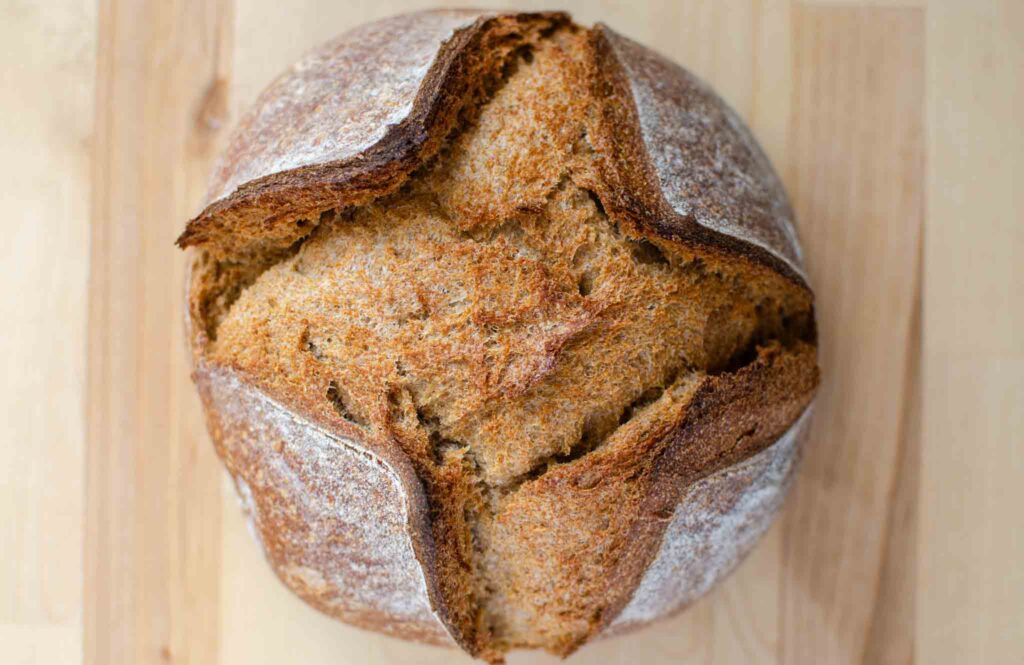
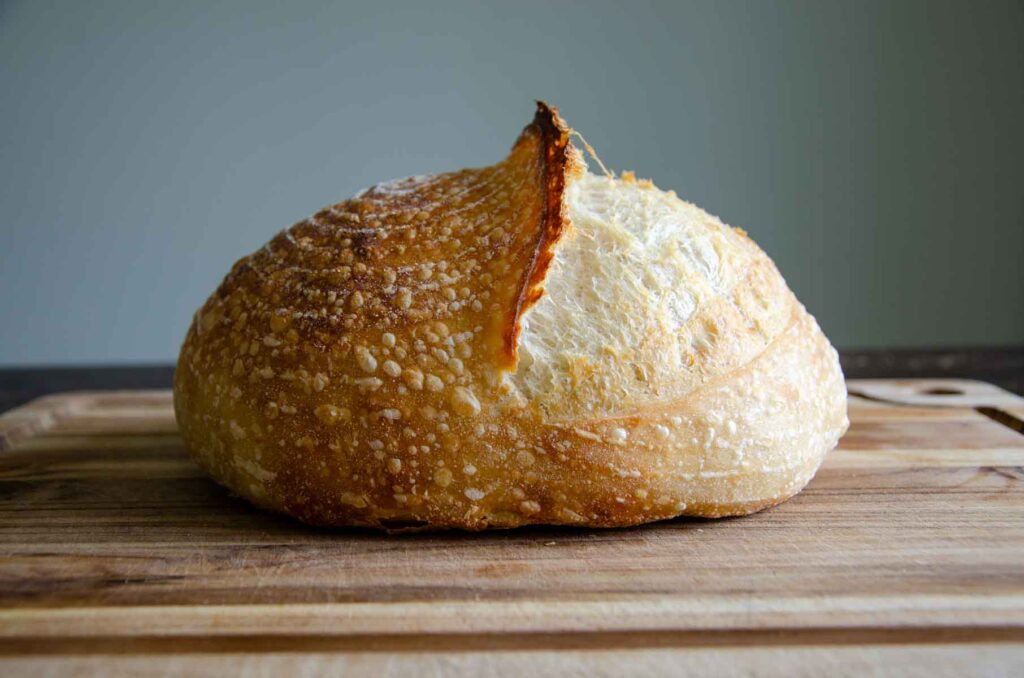


I’d love to hear from you! If you made this 100% Whole Wheat Sourdough Bread recipe and loved it, I would love it if you gave it 5 stars! Happy Baking!
100% Whole Wheat Sourdough Bread Recipe
Want to Save This Recipe?
Enter your email & I’ll send it to your inbox. Plus, get great new recipes from me every week!
By submitting this form, you consent to receive emails from Lockrem Homestead
Equipment
- Dutch Oven
- kitchen scale
- large bowl
- Danish dough whisk
- Parchment paper or sling
- lame
- Digital thermometer
Ingredients
Whole Wheat Levain
- 36 g sourdough starter
- 36 g water
- 36 g whole wheat flour
Autolyse
- 100 g active sourdough starter (the entire levain)
- 350 g water
- 500 g whole wheat flour
Salt/Water
- 25 g water
- 10 g salt
Instructions
Levain
- Add 36 g each of sourdough starter, water, and whole wheat flour to a small mason jar and stir to combine. Cover and allow it to come to its peak, roughly 2-4 hours.
Mixing the Dough
- Add 350 g of water and 500 g of whole wheat flour to a large bowl. Combine thoroughly using a dough whisk. Cover with a tea towel and let the dough rest for 30 minutes at room temperature. This allows the whole wheat flour to properly hydrate.
- Next, combine 25 g of water and 10 g of salt in a small bowl and mix to dissolve. Pour over the dough and mix it in completely, squeezing and folding the dough. Let the dough rest for 30 minutes.
Stretch and Folds
- Stretch and fold the dough.
- Grab the edge of the dough and lift it straight up before folding it over onto itself in the middle of the dough. Turn the bowl a quarter of a turn and repeat, stretching and folding the whole wheat dough.
- Continue 6-8 more folds, working your way around the sides of the bowl, until the dough becomes tight and resistant. Rest for 30 minutes.
- This completes one set. Continue to do 3 sets total with 30-minute intervals.
Bulk Fermentation
- Cover the bowl with plastic wrap or a tea towel and put it in a warm place. Let the dough rise until it increases by 50 percent. In my 70°F/21°C kitchen, this took 5-6 hours.
Shape
- To shape, turn out the dough onto a lightly floured work surface.
- Shape the dough using the envelope fold. First, fold the top of the dough down to the center of the dough. Then, fold the bottom up to meet the other fold in the middle of the dough. Fold the sides to the center in the same way.
- Use a bench scraper and flip the dough over, with the folds facing down. Use both hands to cup the far side of the dough and gently pull it towards you, pressing the bottom of your hands slightly under the dough as you pull. This creates some tension on the top of the loaf. Readjust your hands to a different part of the dough and continue pulling it until the loaf is a smooth, round shape.
- Dust a banneton lightly with rice flour. Lift the dough into the banneton, seam side up. Place the banneton in a plastic bag or cover with a clean towel so the top doesn’t dry out.
Second Ferment | Proof
- Allow the covered dough to rise at room temperature to proof until puffy, 2-4 hours.
- Optional cold proof: Cold retard the dough in the fridge for 8- 24 hours. The fridge temps slow down fermentation, allowing the bread to develop a rich flavor.
Bake
- The next morning, preheat a Dutch oven at 450°F/232°C for 45 minutes.
- Remove the bread dough from the fridge and turn it out on a sheet of parchment paper. Score the top of the dough with a lame or sharp razor blade.
- Using the parchment paper, lift the bread dough into the preheated Dutch oven and bake for 35 minutes with the lid on. Remove the lid and bake for an additional 20 minutes.
- The bread is done when the bottom sounds hollow when tapped and reads 200°F/93°C with a digital thermometer.
- Place the bread on a wire rack to cool.
Store
- Wait until the bread is completely cool before placing it in an airtight container. Store at room temperature for up to 5 days.
Any bread is worth learning, but whole wheat is a staple that can be used for truly anything! Don’t forget that you can leave a comment or ask me a question, I look forward to getting back to you!