
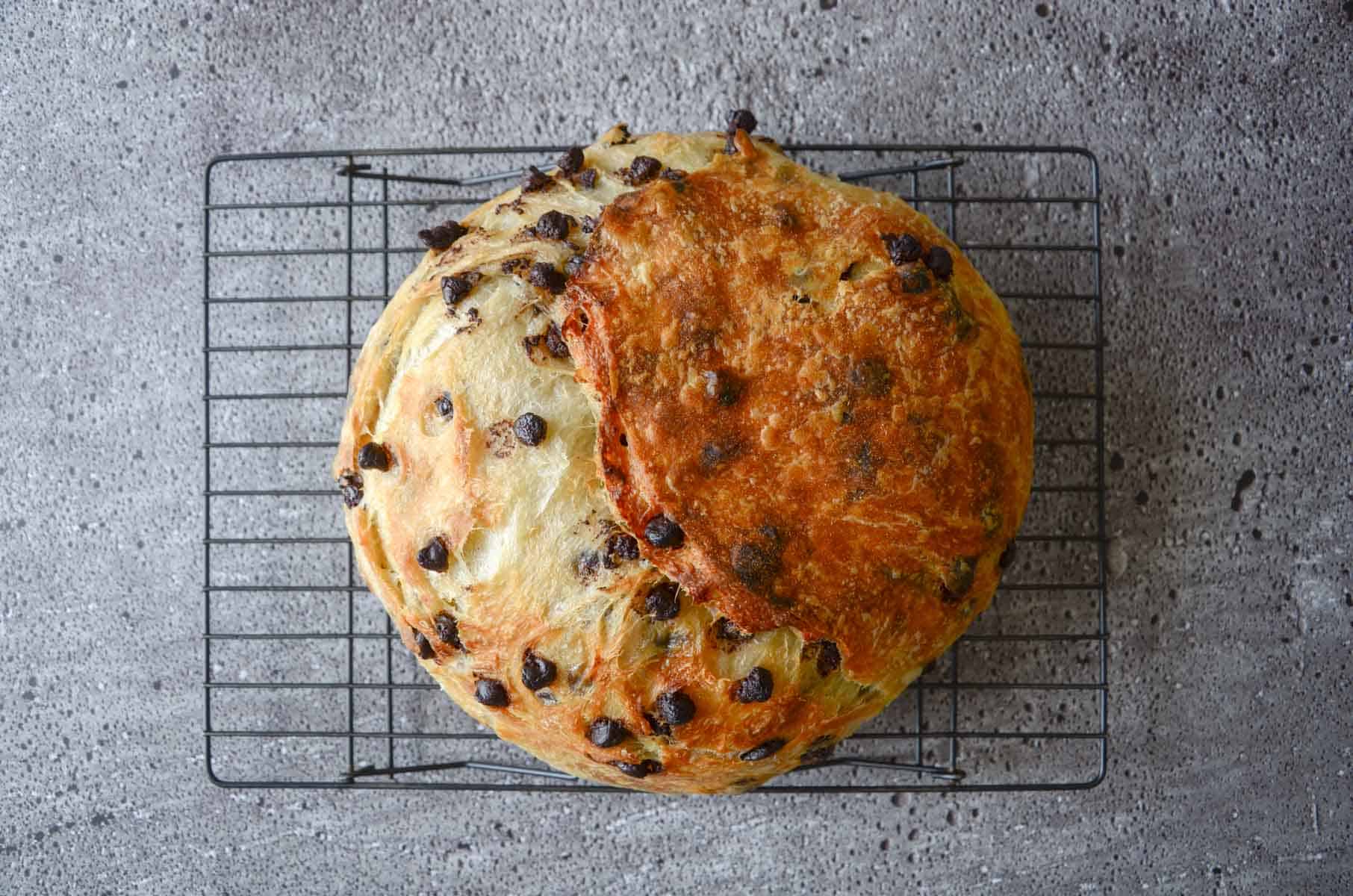
Chocolate Chip Sourdough Croissant Bread
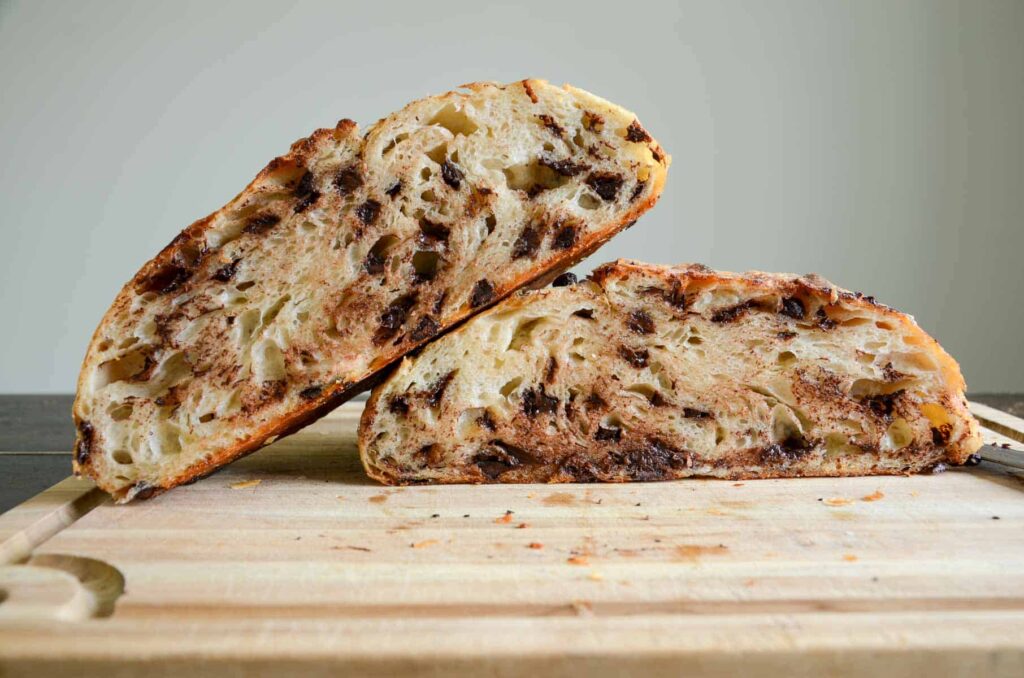
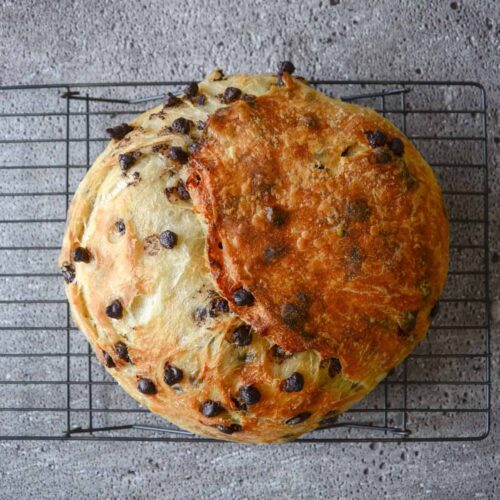
Chocolate chip sourdough croissant bread is loaded with flaky, buttery layers and sweet bits of chocolate, all wrapped in a sourdough loaf of bread. A pain au chocolat in a bite!
“Heavenly. The crust has a shattery quality similar to a croissant.
I’ll be back for more🤤” – Jenny
Save This For Later!
We’ll email this post to you so it doesn’t get lost in your open tabs!
By submitting this form, you consent to receive emails from Lockrem Homestead
New to Sourdough?
If you’re new to sourdough baking, these beginner-friendly guides will help you get started with confidence. Learn how to make a Sourdough Starter from Scratch, feed and maintain it with the Complete Sourdough Starter Guide, and bake your first loaf with this Easy Sourdough Bread Recipe. Together, these guides create a solid foundation for your sourdough journey.
I love croissants! Sourdough croissants are one of life’s simple pleasures. With their flaky layers that melt in your mouth and buttery flavor, it really is an indulgent treat.
There are times when you want the flavor of homemade croissants, but without the fuss of laminating blocks of butter between the dough. While there’s a time and place for all of the steps, sometimes life is full! Sourdough croissant bread allows you to experience all of the joys of homemade croissants, but with a simplified process.
After falling head over heels for my sourdough croissant loaf, I knew it was begging for a bit of chocolate. Can you imagine? The perfect trifecta of flavors all in one recipe: croissants, chocolate, and sourdough! What else could you ask for? This chocolate chip sourdough croissant bread is as delicious as I hoped!
Why You’ll Love Sourdough Chocolate Croissant Loaf
- Easy – Enjoy the buttery flavor without layering a butter block between the layers of croissant dough, like in traditional croissants.
- Delicious – Adding chocolate and folding a stick of grated butter into the dough instantly elevates this bread to another category of delicious! Trust me, this sweet bread is definitely worth the calories!
- Simple Ingredients – With just a few basic ingredients, you can elevate a simple bread into a treat worthy of any celebration! I made it to celebrate Father’s Day, and it was an instant success!
Chocolate Chip Sourdough Croissant Bread Ingredients
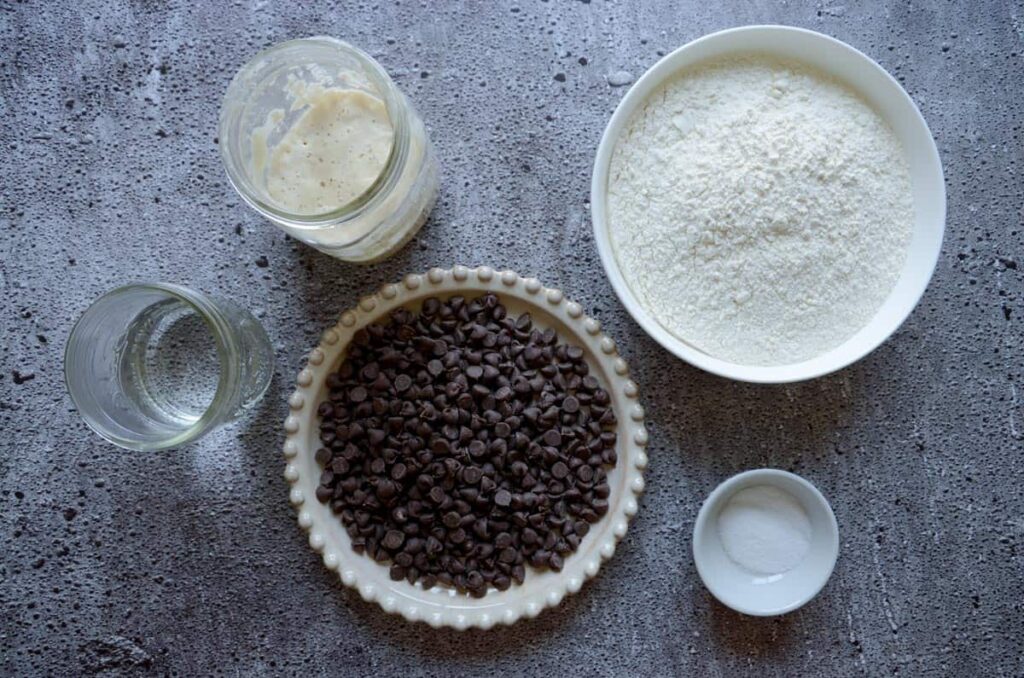
- Sourdough – Use an active sourdough starter that’s risen properly and is full of bubbles to create a levain. Alternatively, if you refresh your sourdough starter regularly, you can use that in place of the levain.
- Flour – With its higher protein content, bread flour will help build a stronger gluten structure than all-purpose flour will.
- Water – The temperature of the dough is important! Use cool water, roughly 75°F/24°C.
- Salt – Adds flavor to the bread and helps with gluten development.
- Butter – I like to use unsalted butter since the saltiness will vary brand to brand. This lets you have full control over the level of salt for consistent results. Grate the butter with a cheese grater and refrigerate until ready to add to the dough. Using cold butter will give you the best results for flaky layers!
- Chocolate chips – Use whatever type of chocolate you enjoy! I used semi-sweet chips and thought they were the perfect amount of sweetness. The dough doesn’t contain any other sweetener.
Chocolate Sourdough Croissant Bread Loaf Recipe Equipment
- Bowl
- Kitchen scale – A vital tool for measuring sourdough bread dough ingredients. They’re not expensive and will help ensure accurate, consistent measurements.
- Danish dough whisk – I like how a Danish dough whisk cuts through the dough to incorporate the ingredients. A great tool if you plan to bake sourdough bread regularly.
- Lame – A special scoring tool that holds a sharp razor. You can also use a sharp knife, but a lame makes it easy for small, intricate scoring.
- 9″ Banneton basket – A banneton is a proofing basket that provides support for the bread dough as it proofs. Dust with a little bit of rice flour to prevent the dough from sticking.
- Parchment paper or a dough sling.
- 7 qt Dutch oven or larger – Using a Dutch oven is the best way for home bakers to create an artisan loaf of bread with a beautiful crust. The enclosed baking environment traps steam, allowing the crust to stay moist and expand.
- Digital thermometer – Use to read the bread’s internal temperature to know when the bread is done baking. Great for beginner bakers as they improve their bread-baking skills.
- Cooling rack
How to Make Chocolate Chip Sourdough Croissant Bread
Create the Levain
1:1:1 Levain: This recipe calls for a levain mixed the night before you mix the dough. Combine 42 g active starter, 42 g water, and 42 g all-purpose flour in a small bowl. Cover and let it sit at room temperature for 8 hours.
The levain is ready when it has doubled in size, has lots of bubbles, and a slightly sour aroma.
Grate 113 g (½ cup) unsalted butter into a small dish and refrigerate until ready to add to the dough.
Do you have to use a levain in this recipe? No, if you have a well-maintained and frequently refreshed starter, you can substitute 125 g of active sourdough starter for the levain in the recipe.
Autolyse
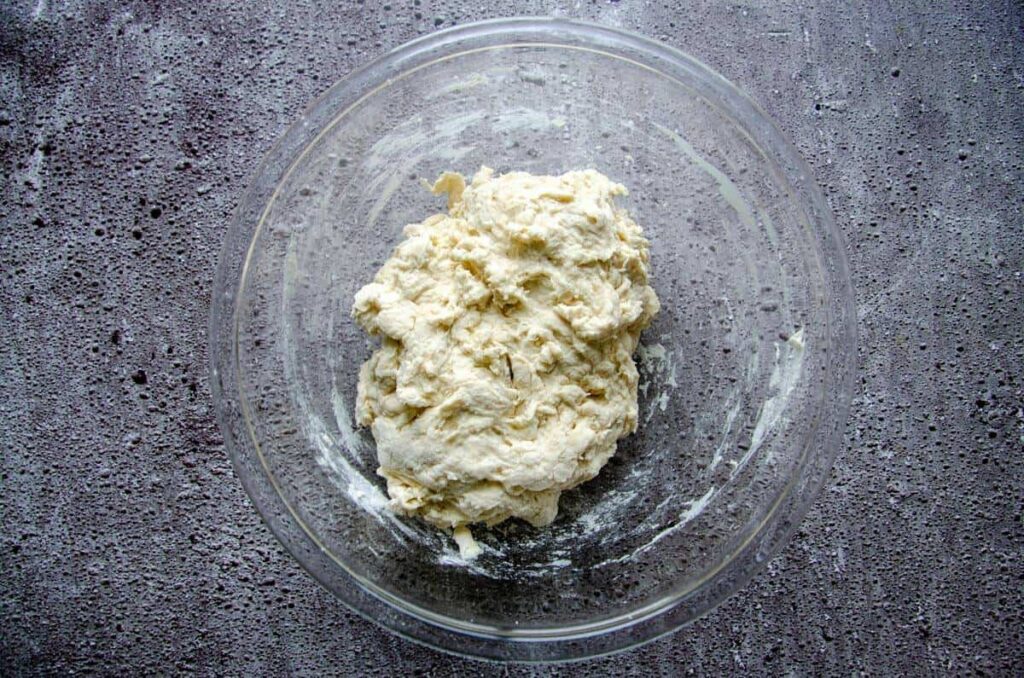
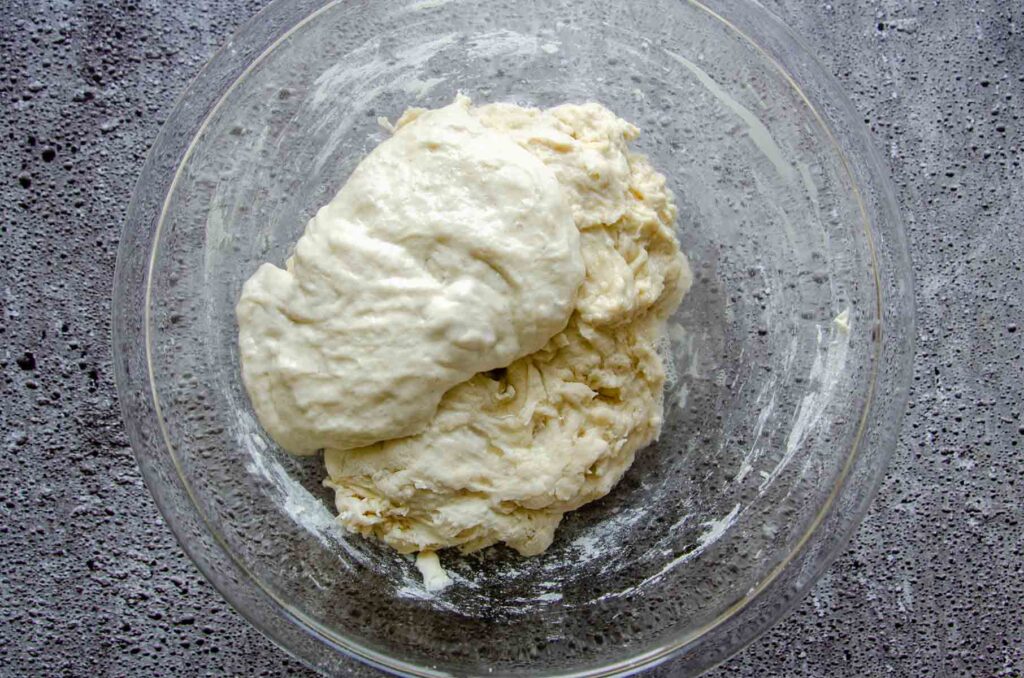
Add 320 g (1½ cups) water and 500 g (4 cups) bread flour to a large bowl and mix with a Danish dough whisk until a shaggy dough forms and all of the flour is incorporated. I found that it helped to use my hands to work the final bits of flour into the dough.
Cover the bowl and rest for 30 minutes.

Mix the Dough
Combine 10 g (2 tsp) salt with the remaining 30 g (2 tbsp) water and stir to dissolve the salt. Pour the salty water into the bowl over the dough with all of the ripe levain, and mix until fully combined.
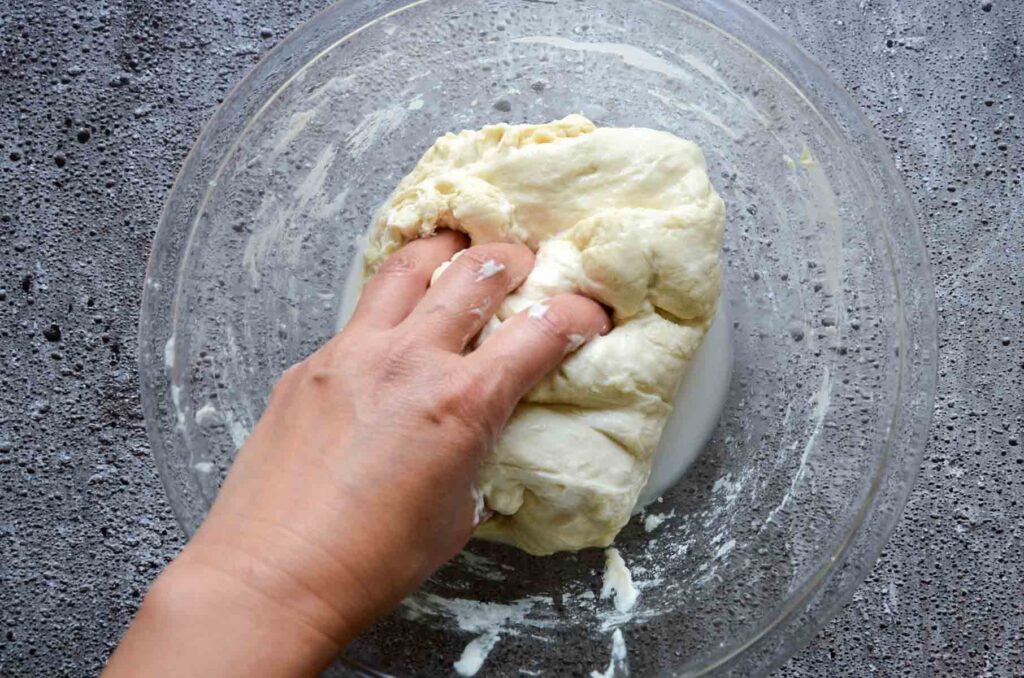
I find that my hands are the best tool for this job! Squeeze and turn the dough until the levain and liquid are adequately distributed throughout the dough. At this point, the dough can look a bit stringy and not fully cohesive; this is ok. Cover the bowl and let it rest for 30 minutes.

Stretch and Folds | Strengthen the Gluten
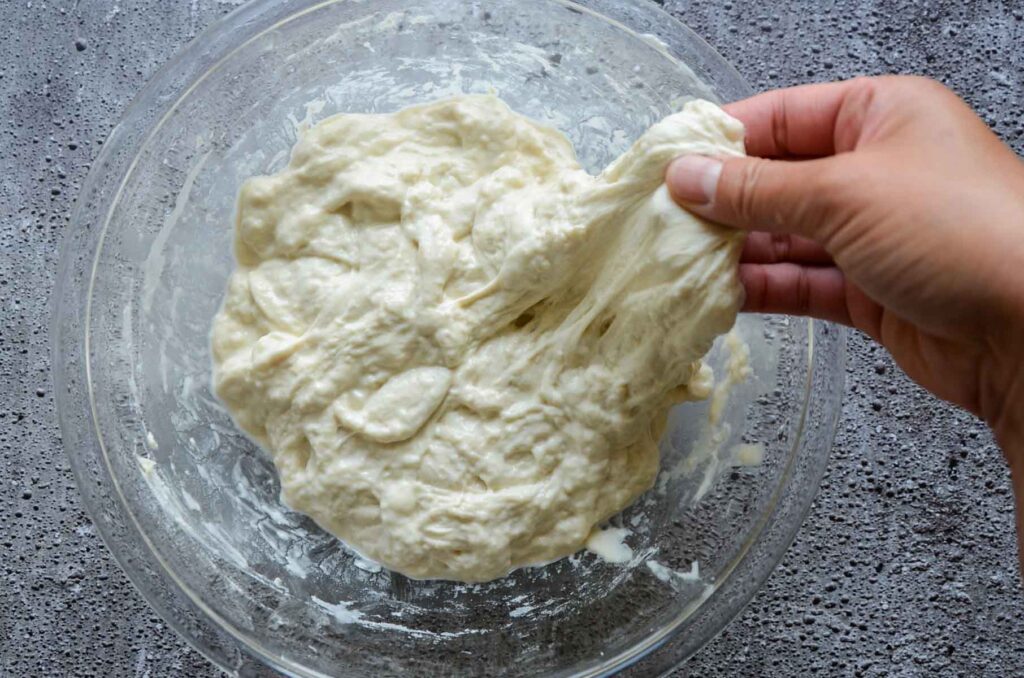
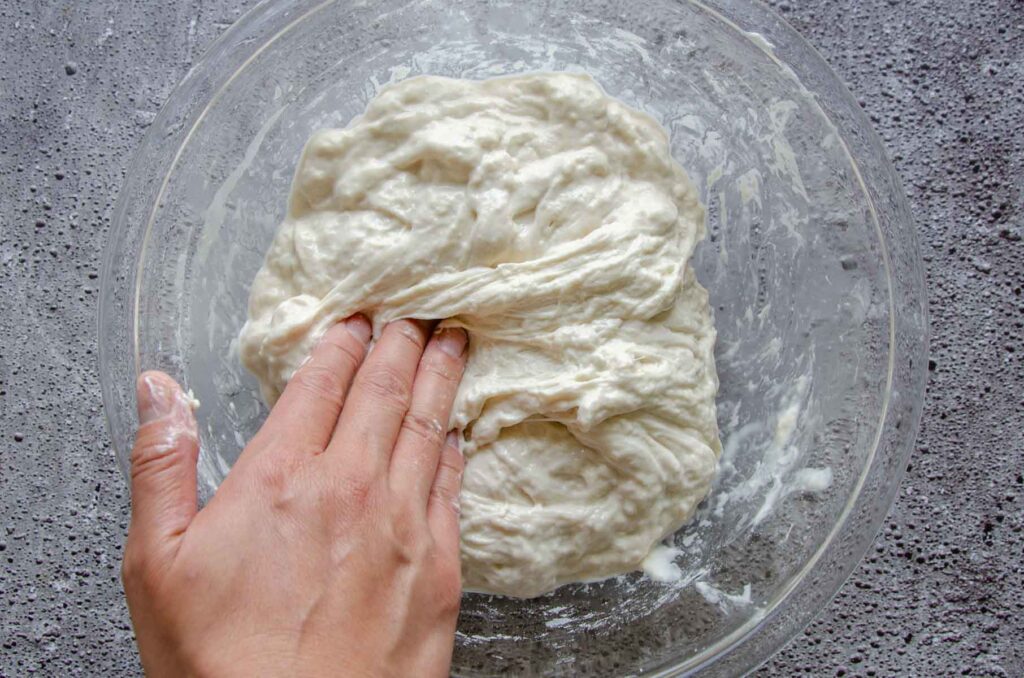
Over the next 2 hours, the dough will transform from a rough, shaggy croissant dough to a smooth and elastic dough through 5 sets of stretch and folds.
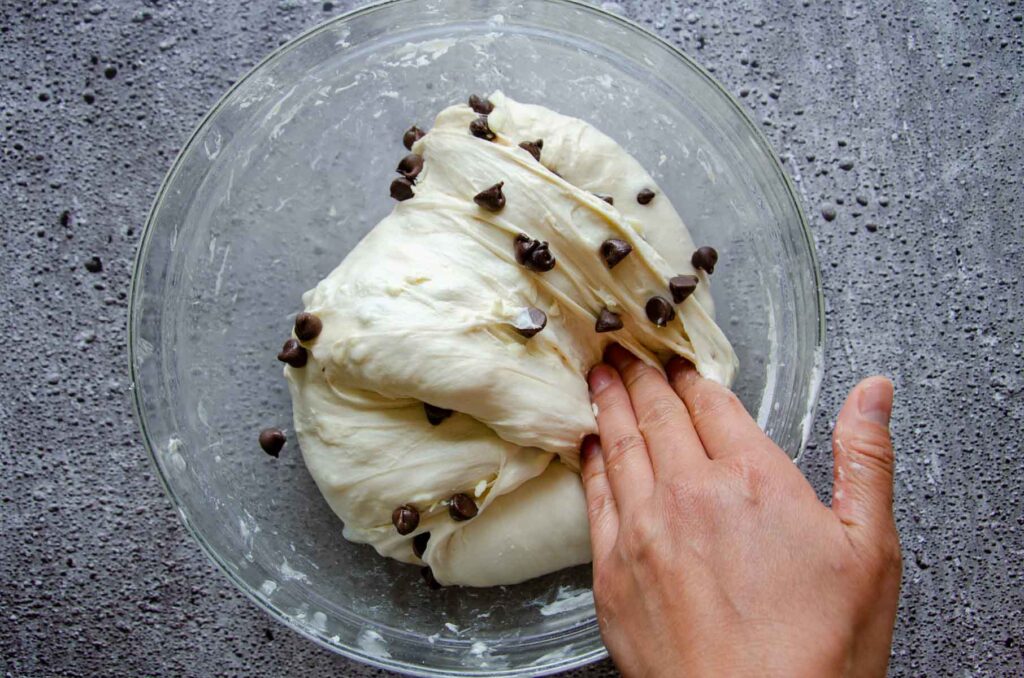
Grab the edge of the dough and lift it straight up before folding it over onto itself. Turn the bowl a quarter turn, and repeat, working your way around the sides of the bowl. Initially, the dough will be loose, but after 10-15 folds, the dough begins to come together.
Continue to stretch and fold the dough roughly 30 times, or until the dough becomes resistant. This completes one set of stretch and folds. Cover the bowl and rest for 30 minutes.
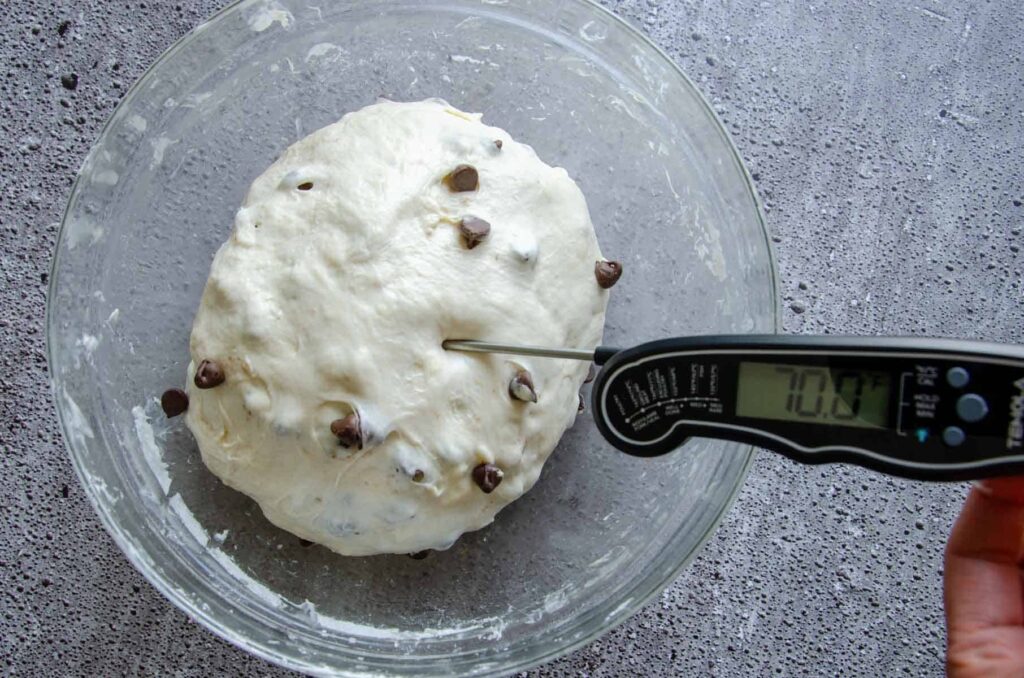
It’s important that the dough maintains a temperature of 70°-72°F/21°-22°C. Similar to making other pastry dough, like rough puff pastry or croissants, it’s important that the layers of butter stay cool to prevent too much butter leakage during the bake time. Take the temperature using a digital thermometer to monitor the dough temp. Place the bowl in the fridge for 10 minutes to cool the dough down if it starts to get too warm.
Adding Inclusions
Continue stretching and folding the dough for a total of 4 sets with 30 minute intervals.
On the second set of stretch and folds, add half of the grated butter over the top of the dough. Using the same stretch and fold method, incorporate the butter into the dough. Cover and rest for 30 minutes.
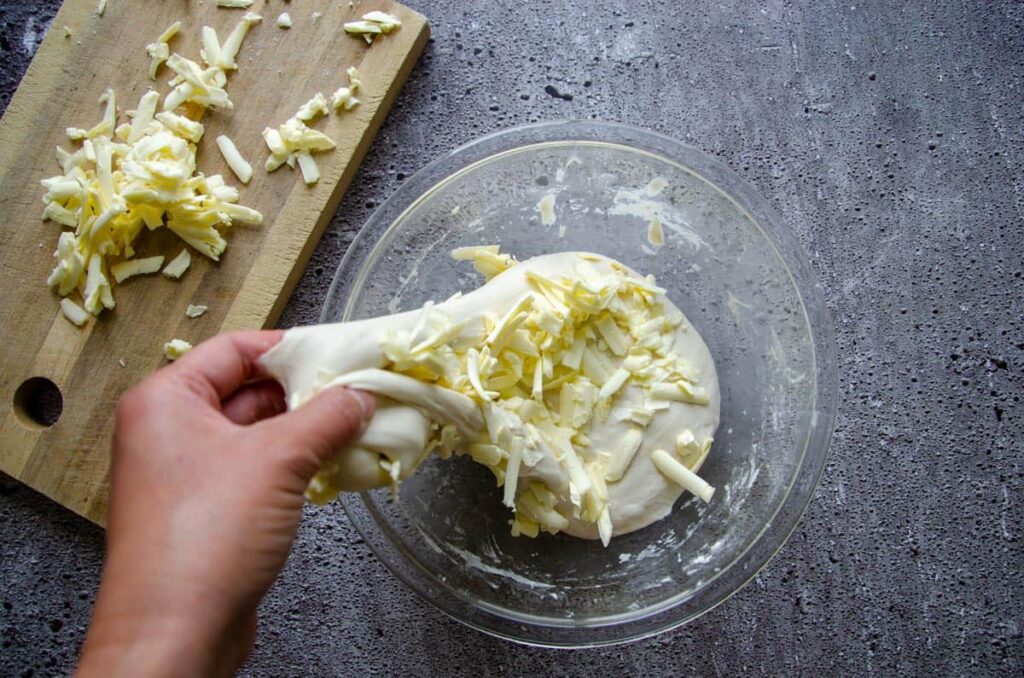
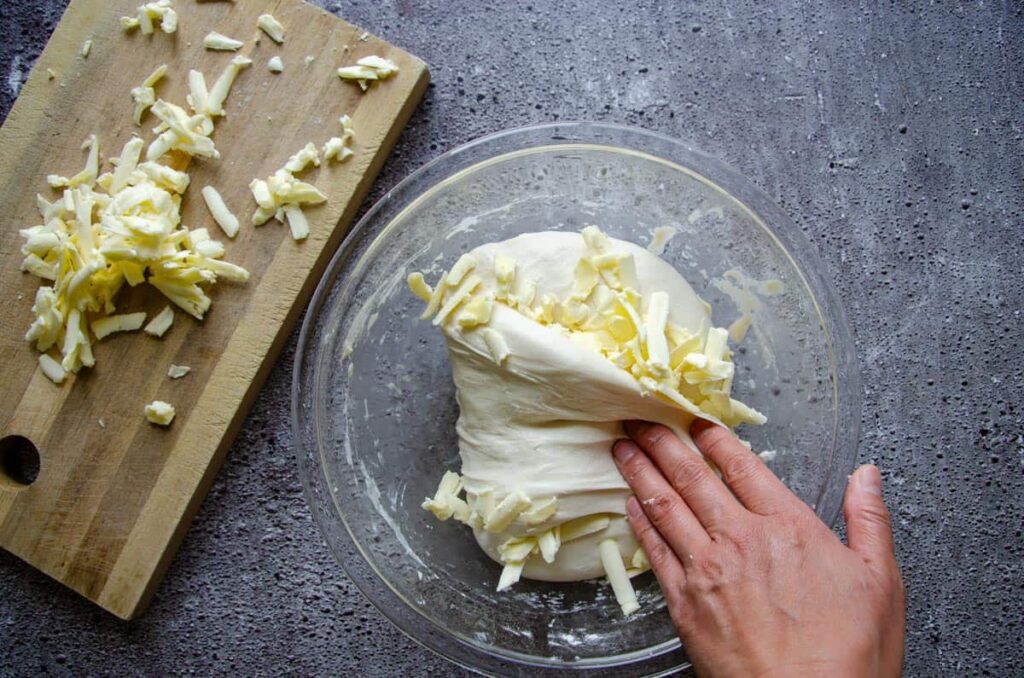
Add the remaining grated butter to the dough on the third set of stretch and folds. Cover and rest for 30 minutes.
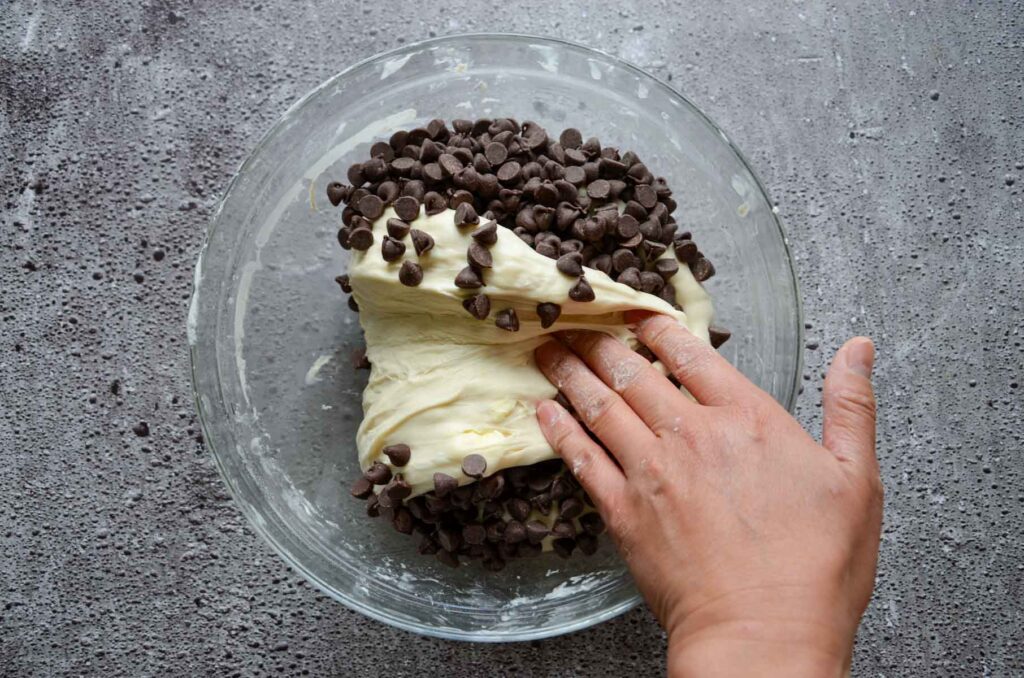
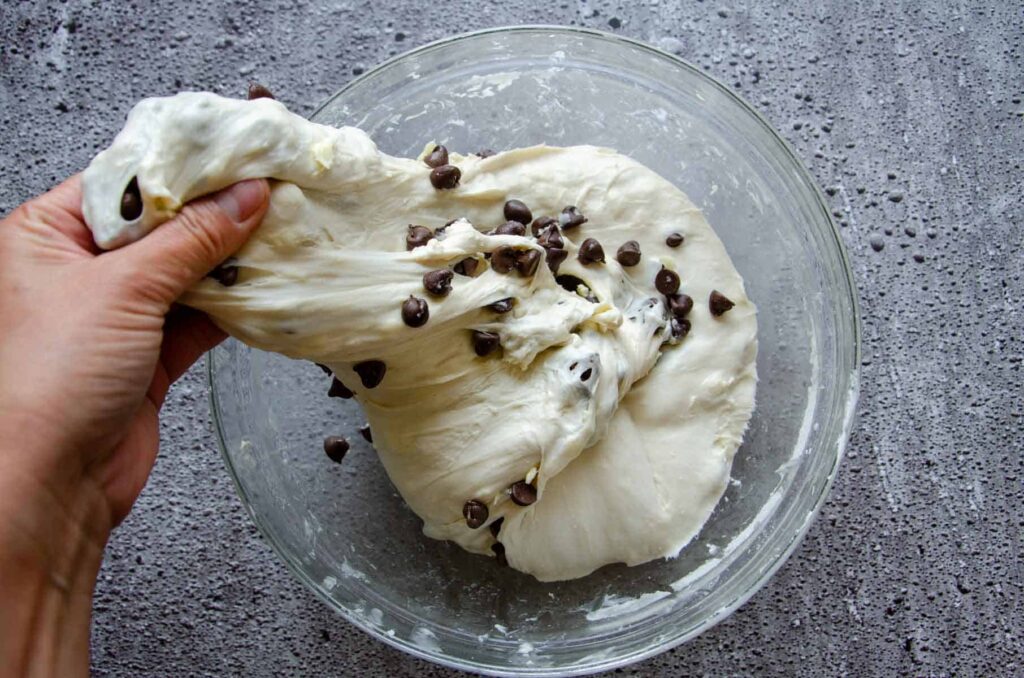
Add the chocolate chips at the fourth set of folds, making sure the chips that fall to the bottom of the bowl get mixed in.
By the fifth and final fold, the dough will be elastic and smooth, with the grated butter and chocolate chips distributed throughout the dough.
It’s important that the dough maintains a temperature of 70-72F/C. Similar to making other pastry dough, like rough puff pastry or croissants, it’s important that the layers of butter stay cool to prevent too much butter leakage during the bake time. Take the temperature using a digital thermometer to monitor the dough temp. Place the bowl in the fridge for 10 minutes to cool the dough down if it starts to get too warm.
Bulk Ferment
After the stretch and folds are completed, cover the bowl and let it rest at room temperature. The dough is done fermenting when you see plenty of air bubbles beneath the surface, and the edge of the dough where it meets the bowl domes down slightly.
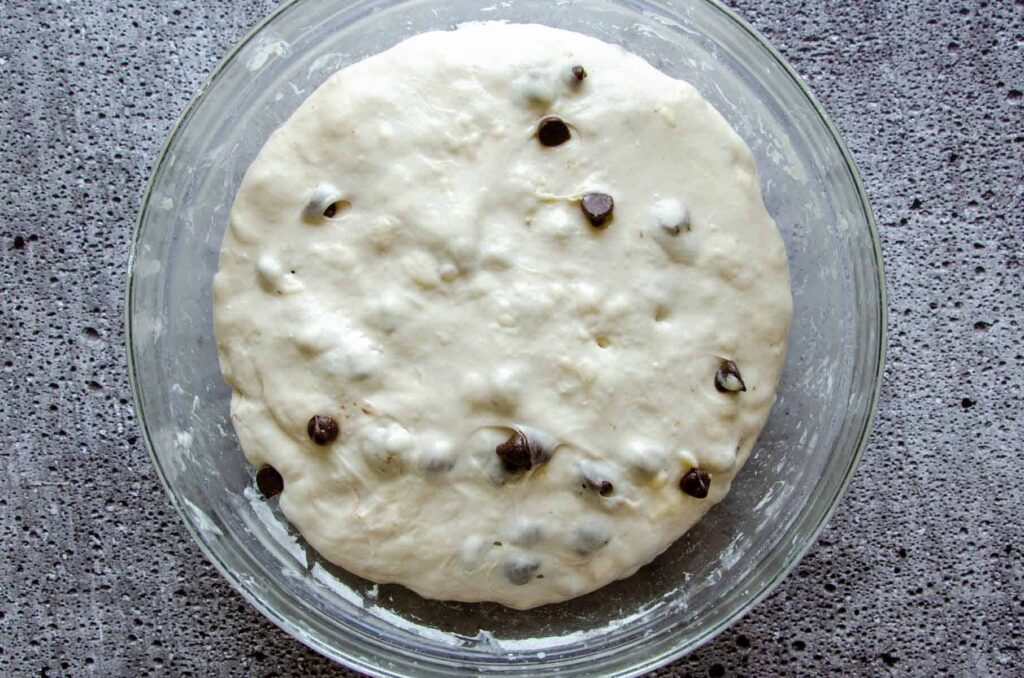
Because the dough is heavier than a traditional sourdough bread dough with the added butter and chocolate chips, the total bulk fermentation time may be longer than normal. Keep an eye on the dough’s temperature to make sure the butter doesn’t soften too much. Place the bowl into the refrigerator to cool the dough temperature as needed.
Preshape
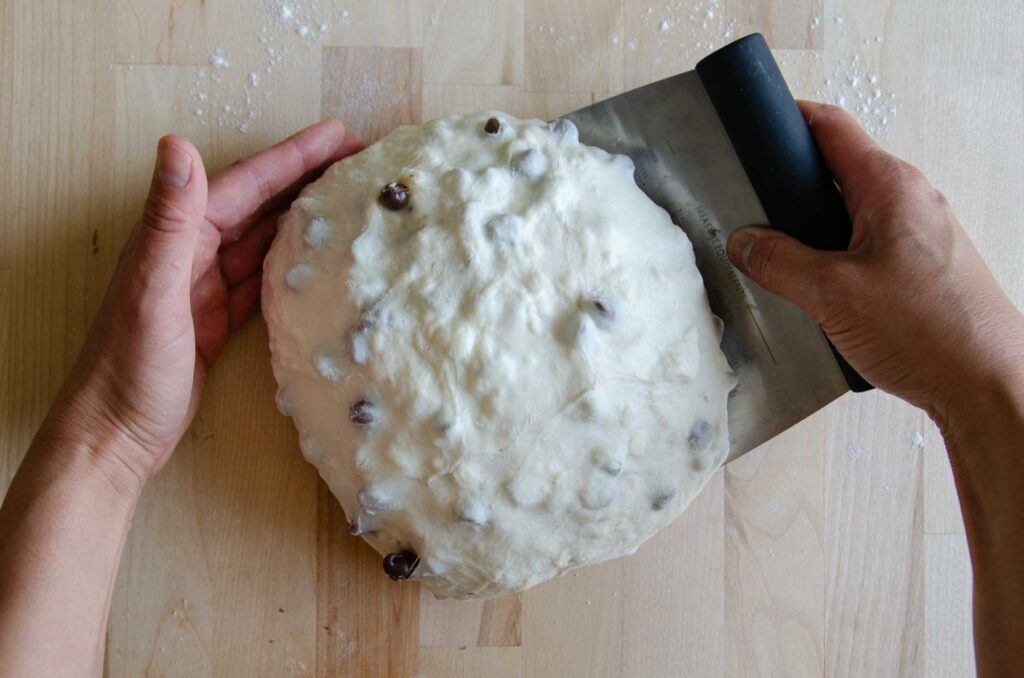
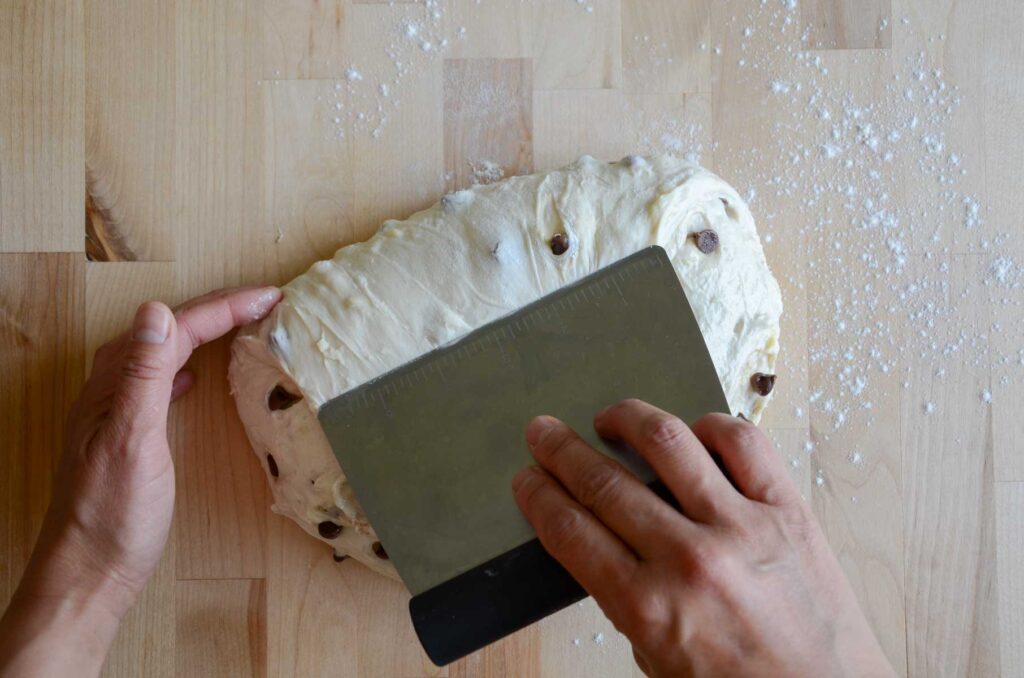
Turn out the dough onto a lightly floured work surface. Using a bench scraper and one hand, rotate the dough while pushing the dough under with the bench scraper, into a boule shape.
Bench Rest
Let the preshaped dough rest on the counter for 30 minutes uncovered. It’s normal for the dough to flatten a bit as it rests. This allows the gluten to relax a bit before its final shaping.
Shape
Prepare your banneton by dusting it with a bit of rice flour to prevent the dough from sticking.
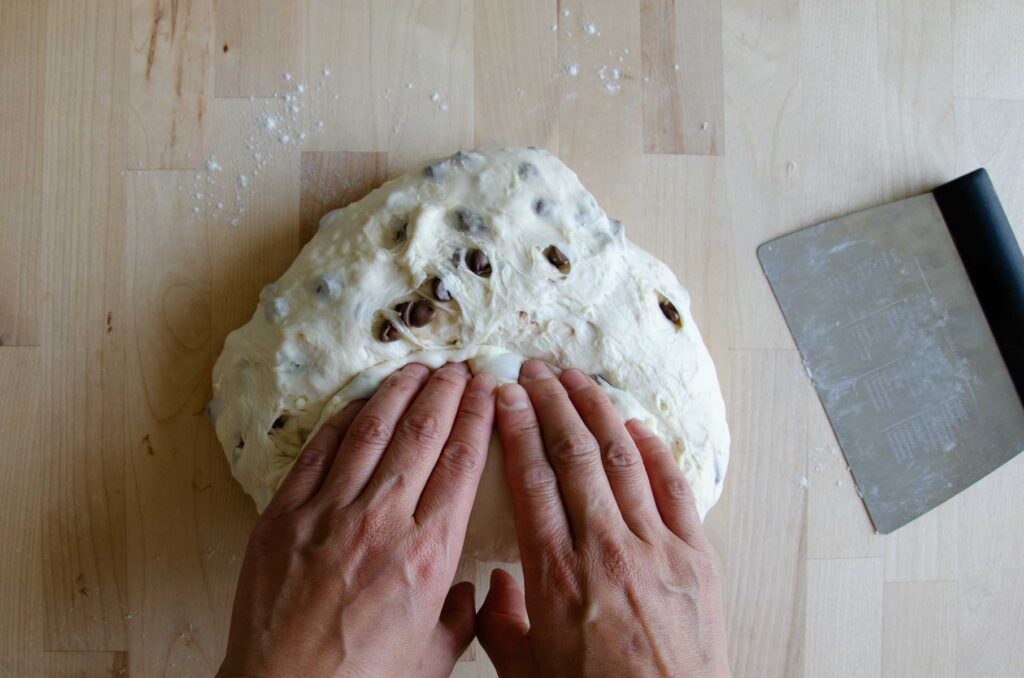
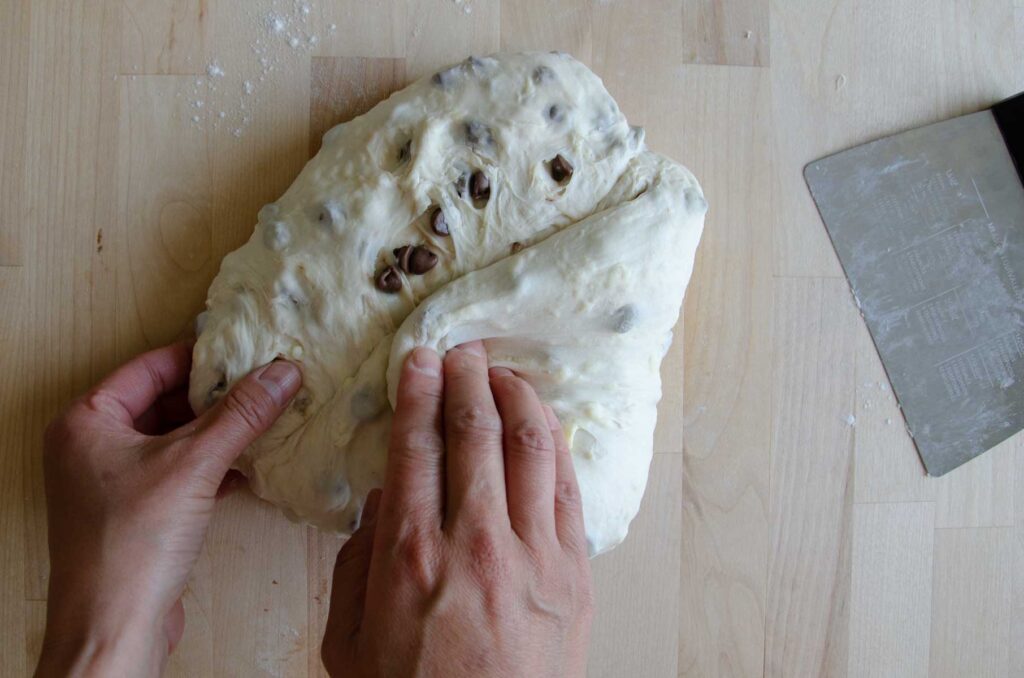
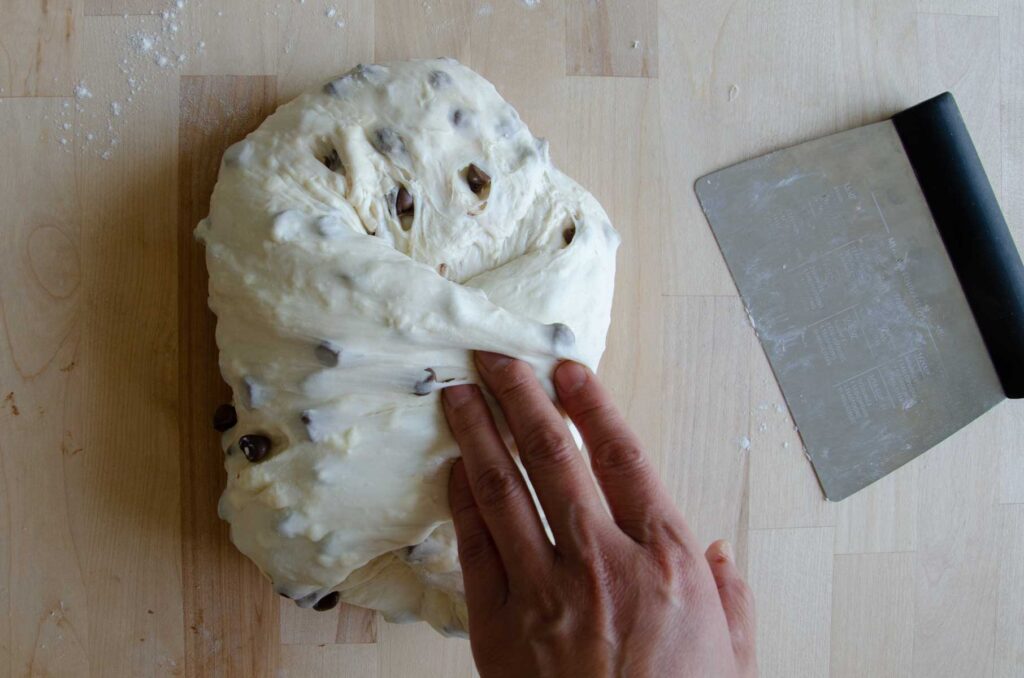
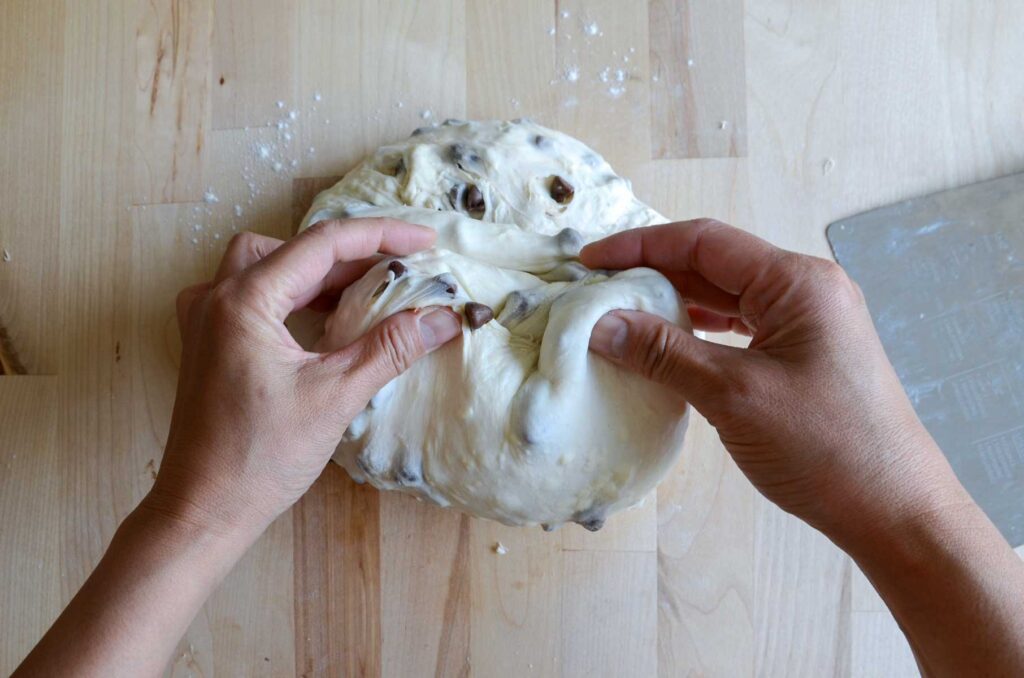
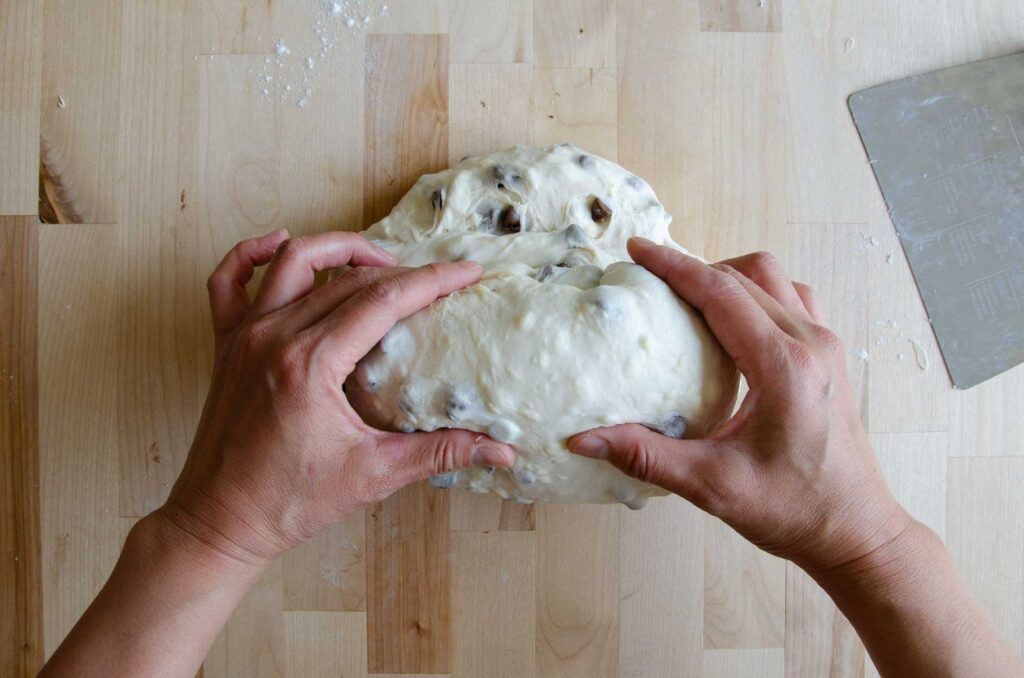
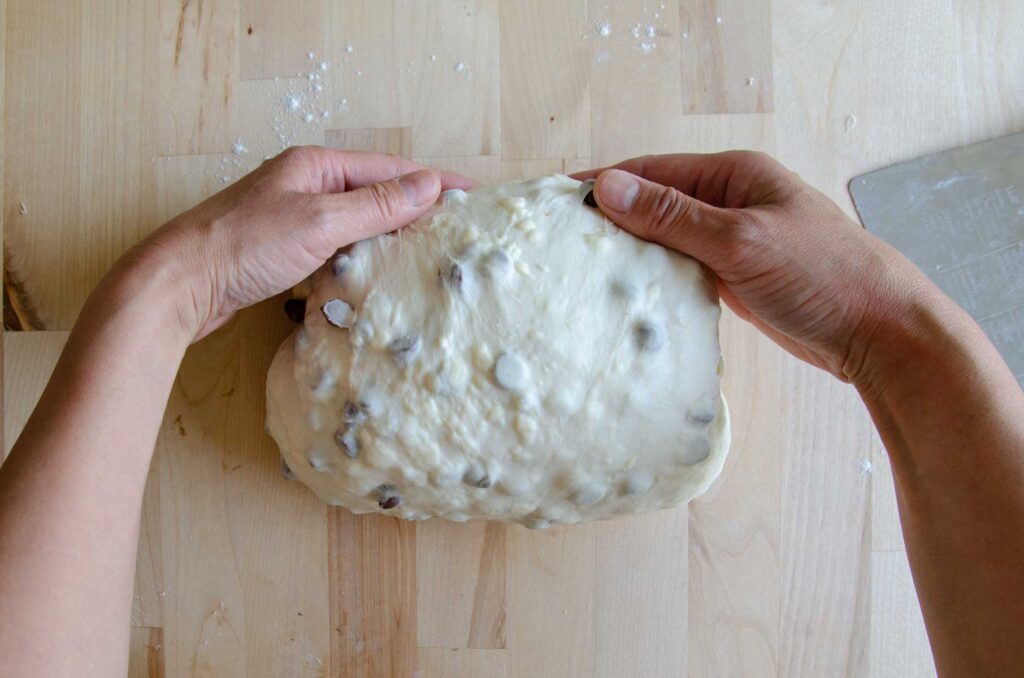
Fold the bottom of the dough up to the middle and gently press it into the dough. Pull the right side of the dough out a bit to stretch it before folding it over the middle of the dough. Repeat with the left side of the dough.
Starting from the bottom of the dough ball, roll the dough onto itself until it forms a ball. With both hands cupping the far side of the dough, pull it 6-8 inches toward yourself. Reposition your hands and shape the dough again. Continue until the dough is a round boule, with the surface of the dough stretched taut.
Cold Proof
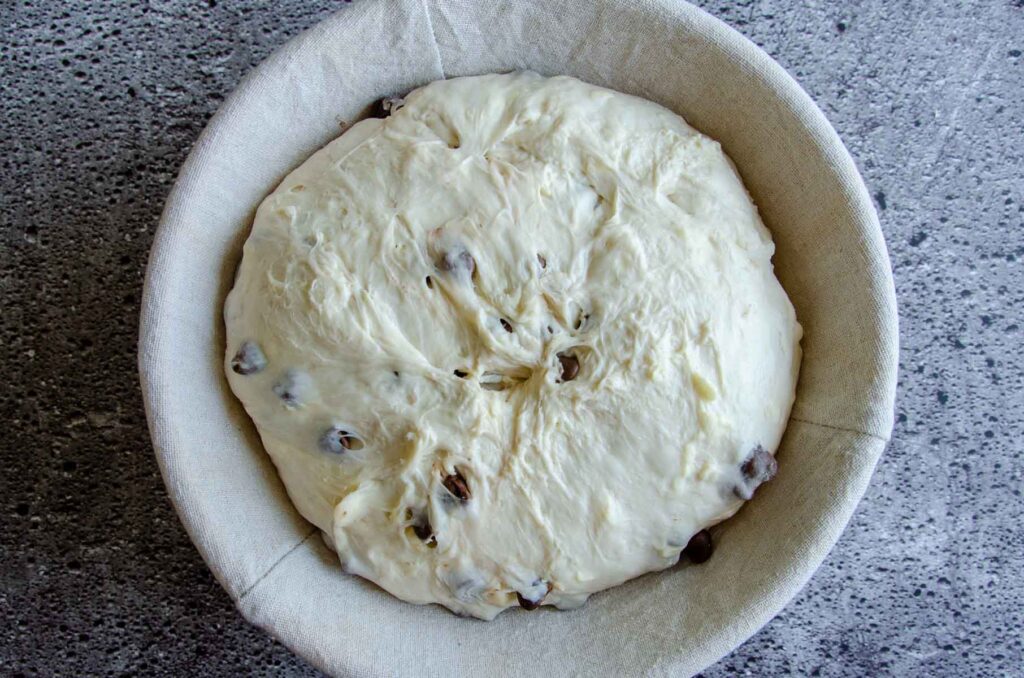
Use a bench scraper to lift the folded dough into the prepared banneton, with the seam side up. Pinch the seams together.
Place the banneton into a plastic bag and refrigerate for 8-24 hours. I like to do this step overnight.
You can skip the overnight cold proof and bake the bread the same day. Let the dough rise in the proofing basket inside a large plastic bag for a few hours or until the dough is airy and jiggles a bit. After the dough is done proofing, place it into the refrigerator while preheating the oven to let the butter cool a bit before baking. Cold dough prevent butter from leaking out and is easier to score.
What if You Don’t Have a Banneton?
While its nice to have, you don’t need a fancy proofing basket to bake good bread. After the dough is shaped, place the dough onto a piece of parchment paper with the seam side down. Then, using the parchment paper as handles, lift the dough back into the bowl. Cover the bowl and refrigerate.
Preheat the Oven
The following morning, preheat the oven to 450F°/232C° with a Dutch oven in the middle of the oven for 30 minutes.
Score and Bake
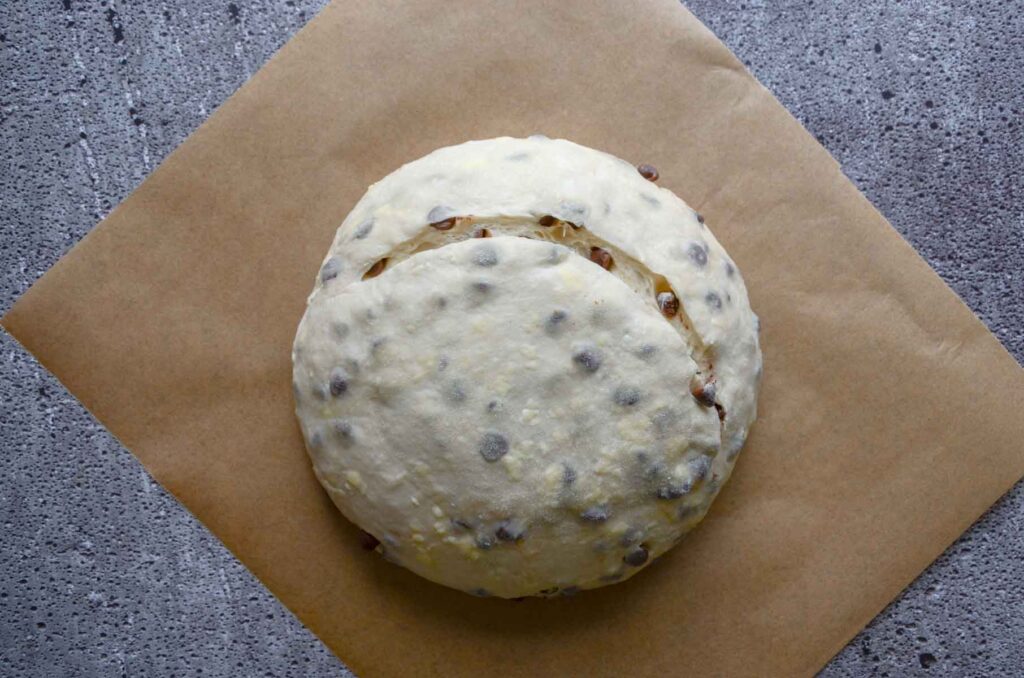
Turn out the chilled dough onto a piece of parchment paper. Score the top of the loaf roughly 1 inch deep with a lame or a sharp knife.
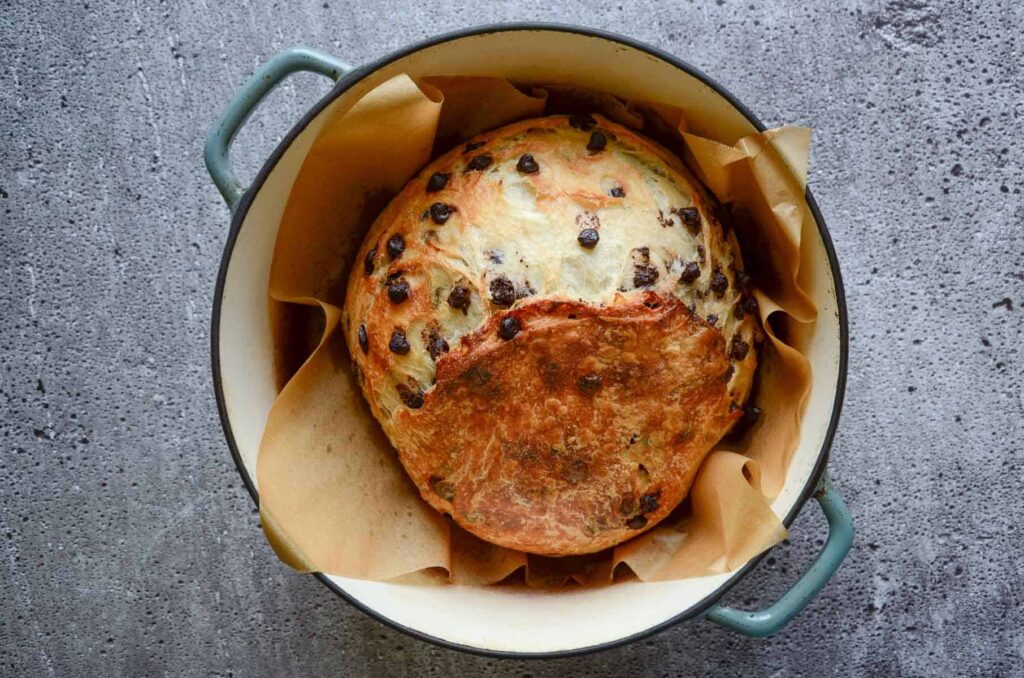
Carefully remove the hot Dutch oven from the oven and lift the bread using the parchment paper as handles, into the Dutch oven. Replace the lid and move to the oven. Lower the oven temperature to 425°F/218°C and bake with the lid on for 30 minutes.
Remove the lid and bake for 10-15 minutes. The bread is done when the internal temperature reaches 200°F/93°C and the top of the bread is golden brown.
Storage
Like most baked goods, they’re best the day they’re baked! Allow the bread to cool completely. Store bread in an airtight container and store at room temperature for up to 3 days.
Sourdough Croissant Recipe Tips
- Combining the flour and water before adding the salt and sourdough starter gives the flour time to hydrate. In addition, the enzymes are released to make the sugars more available once the starter is added, giving the gluten a chance to begin developing before weighing the dough down with butter.
- The exact rise time is largely driven by temperature. A cooler kitchen will slow the yeast activity and increase the rise time compared to a warmer kitchen. This bread recipe is made in a 72°F/22°C kitchen.
- Be sure to use parchment paper, as a little butter may leak out and cause a little bit of a mess in the Dutch oven.
- The added weight of the butter and chocolate chips will slow fermentation compared to a traditional loaf of sourdough bread, so don’t be alarmed when it takes longer than usual!
Chocolate Sourdough Croissant Bread Sample Schedule
| Day 1: 8:00 am | Mix the levain |
| 11:30 am | Autolyse the dough and rest |
| 12:00 pm | Mix salt in additional water, add to the autolyse dough along with the levain, and rest |
| 12:30 – 2:30 pm | 5 sets of stretch and folds, add grated butter on the 2nd and 3rd set of folds, and chocolate chips on the 4th set of folds. |
| 2:30 – 8:30 pm | Bulk ferment |
| 8:30 – 9:00 pm | Preshape, bench rest, and final shape the dough |
| 9:10 pm | Cold proof overnight |
| Day 2: 8:00 am | Preheat Dutch oven and bake |
Chocolate Croissant Sourdough Bread FAQs
Do I Need to Use a Kitchen Scale?
I know that buying a kitchen scale seems like one more thing, however, measuring by weight instead of volume ensures consistent sourdough bread doughs. Investing in an inexpensive scale is a great idea if you plan to bake sourdough bread regularly.
What Type of Butter Should I Use in Croissant Sourdough Bread Recipe?
In terms of what type of butter, I like to stick with grade AA American butter over European butter. With a higher fat content and less water, the European butter will leak more fat as it bakes. Not only are American butters less expensive, but they have a higher water content, and this water turns to steam in the oven, which is a good thing for sourdough croissant bread loaf.
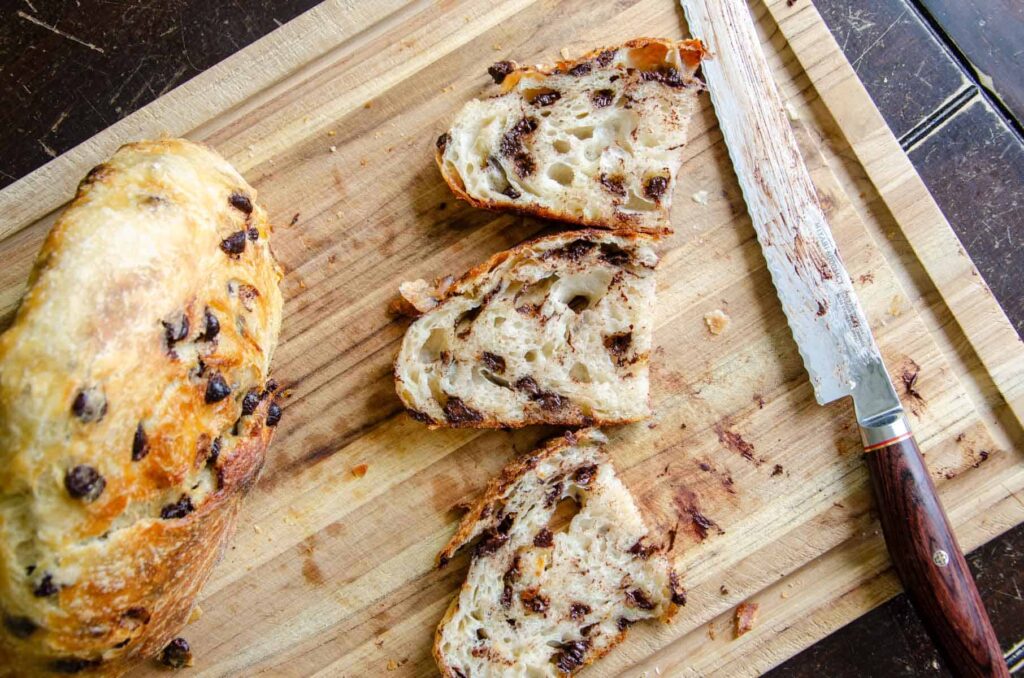
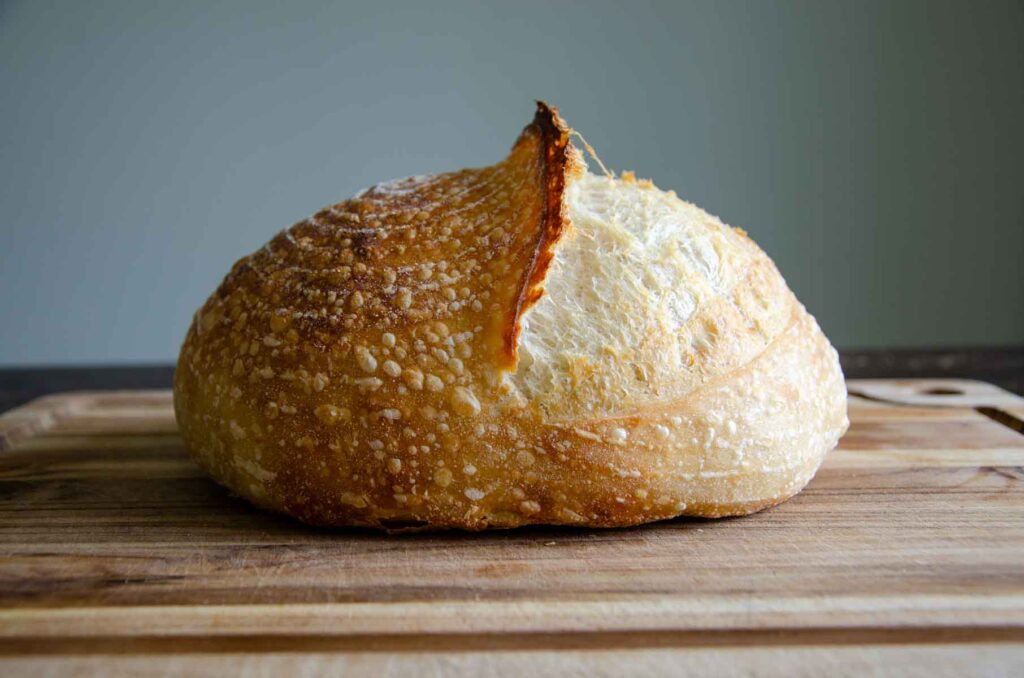


I’d love to hear from you! If you made this Chocolate Croissant Sourdough Bread recipe and loved it, I would love it if you gave it 5 stars! Happy Baking!
Chocolate Chip Sourdough Croissant Bread
Want to Save This Recipe?
Enter your email & I’ll send it to your inbox. Plus, get great new recipes from me every week!
By submitting this form, you consent to receive emails from Lockrem Homestead
Equipment
- kitchen scale
- large mixing bowl
- Dutch Oven
- Danish dough whisk
- box grater
- lame or sharp knife
- Digital thermometer
Ingredients
Levain:
- 42 g starter
- 42 g water
- 42 g all-purpose flour
Bread dough
- all of the levain or 125 g (½ cup) active sourdough starter
- 350 g water divided, 1½ cups
- 10 g salt 2 tsp
- 500 g bread flour 4 cups
- 113 g unsalted butter ½ cup
- 235 g chocolate chips 1½ cups
Instructions
Create the Levain
- 1:1:1 Levain: This recipe calls for a levain mixed the night before you mix the dough. Combine 42 g active starter, 42 g water, and 42 g all-purpose flour in a small bowl. Cover and let it sit at room temperature for 8 hours.
- The levain is ready when it has doubled in size, has lots of bubbles, and a slightly sour aroma.
- Grate 113 g (½ cup) unsalted butter into a small dish and refrigerate until ready to add to the dough.
Autolyse
- Add 320 g (1⅓ cups) water and 500 g (4 cups) bread flour to a large bowl and mix with a Danish dough whisk until a shaggy dough forms and all of the flour is incorporated. I found that it helped to use my hands to work the final bits of flour into the dough.
- Cover the bowl and rest for 30 minutes.
Mix the Dough
- Combine 10 g (2 tsp) salt with the remaining 30 g (2 tbsp) water and stir to dissolve the salt.
- Pour the salty water into the bowl over the dough with all of the ripe levain, and mix until fully combined. I find that my hands are the best tool for this job.
- Squeeze and turn the dough until the levain and liquid are adequately distributed throughout the dough. At this point, the dough can look a bit stringy and not fully cohesive; this is ok!
- Cover the bowl and let it rest for 30 minutes.
Stretch and Folds | Strengthen the Gluten
- Over the next 2 hours, the dough will transform from a rough, shaggy croissant dough to a smooth and elastic dough through 5 sets of stretch and folds.
- Grab the edge of the dough and lift it straight up before folding it over onto itself.
- Turn the bowl a quarter turn, and repeat, working your way around the sides of the bowl. Initially, the dough will be loose, but after 10-15 folds, the dough begins to come together.
- Continue to stretch and fold the dough roughly 30 times, or until the dough becomes resistant. This completes one set of stretch and folds.
- Cover the bowl and rest for 30 minutes.
- Continue stretching and folding the dough for a total of 5 sets with 30 minute intervals.
- On the second set of stretch and folds, add half of the grated butter over the top of the dough. Using the same stretch and fold method, incorporate the butter into the dough.
- Cover and rest for 30 minutes.
- Add the remaining grated butter to the dough on the third set of stretch and folds. Cover and rest for 30 minutes.
- Add the chocolate chips at the fourth set of folds, making sure the chips that fall to the bottom of the bowl get mixed in.
- For the fifth and final fold, the dough will be elastic and smooth, with the grated butter and chocolate chips distributed throughout the dough.
Bulk Ferment
- After the stretch and folds are completed, cover the bowl and let it rest at room temperature. The dough is done fermenting when you see plenty of air bubbles beneath the surface, and the edge of the dough where it meets the bowl domes down slightly.
Preshape
- Turn out the dough onto a lightly floured work surface.
- Using a bench scraper and one hand, rotate the dough while pushing the dough under with the bench scraper, into a boule shape.
Bench Rest
- Let the preshaped dough rest on the counter for 30 minutes uncovered. It’s normal for the dough to flatten a bit as it rests.
Shape
- Prepare your banneton by dusting it with a bit of rice flour to prevent the dough from sticking.
- Fold the bottom of the dough up to the middle and gently press it into the dough.
- Pull the right side of the dough out a bit to stretch it before folding it over the middle of the dough. Repeat with the left side of the dough.
- Starting from the bottom of the dough ball, roll the dough onto itself until it forms a ball.
Cold Proof
- Use a bench scraper to lift the folded dough into the prepared banneton, with the seam side up. Pinch the seams together.
- Place the banneton into a plastic bag and refrigerate for 8-24 hours. I like to do this step overnight.
Preheat the Oven
- The following morning, preheat the oven to 450F°/232C° with a Dutch oven in the middle of the oven for 30 minutes.
Score and Bake
- Turn out the chilled dough onto a piece of parchment paper. Score the top of the loaf roughly 1 inch deep with a lame or a sharp knife.
- Carefully remove the hot Dutch oven from the oven and lift the bread using the parchment paper as handles, into the Dutch oven. Replace the lid and move to the oven. Lower the oven temperature to 425°F/218°C and bake with the lid on for 30 minutes.
- Remove the lid and bake for 10-15 minutes. The bread is done when the internal temperature reaches 200°F/93°C and the top of the bread is golden brown.
Storage
- Like most baked goods, they’re best the day they’re baked! Allow the bread to cool completely. Store bread in an airtight container and store at room temperature for up to 3 days.
Notes
Do you have to use a levain in this recipe?
No, but if you have a well-maintained and frequently refreshed starter, you can substitute 125 g of active sourdough starter for the levain in the recipe.Tips
- Be sure to use parchment paper, as a little butter may leak out and cause a little bit of a mess in the Dutch oven.
- The added weight of the butter and chocolate chips will slow fermentation compared to a traditional loaf of sourdough bread, so don’t be alarmed when it takes longer than usual!
- Combining the flour and water before adding the salt and sourdough starter gives the flour time to hydrate. In addition, the enzymes are released to make the sugars more available once the starter is added, giving the gluten a chance to begin developing before weighing the dough down with butter.
- It’s important that the dough maintains a temperature of 70-72F/C. Similar to making other pastry dough, like rough puff pastry or croissants, it’s important that the layers of butter stay cool to prevent too much butter leakage during the bake time. Take the temperature using a digital thermometer to monitor the dough temp. Place the bowl in the fridge for 10 minutes to cool the dough down if it starts to get too warm.
- Because the dough is heavier than a traditional sourdough bread dough with the added butter and chocolate chips, the total bulk fermentation time may be longer than normal. Keep an eye on the dough’s temperature to make sure the butter doesn’t soften too much. Place the bowl into the refrigerator to cool the dough temperature as needed.
- You can skip the overnight cold proof and bake the bread the same day. Let the dough rise in the proofing basket inside a large plastic bag for a few hours or until the dough is airy and jiggles a bit. After the dough is done proofing, place it into the refrigerator while preheating the oven to let the butter cool a bit before baking. Cold dough prevent butter from leaking out and is easier to score.
This bread was SO yummy. The chocolate chips were perfectly melted and it was so fluffy and light. Saving this recipe for sure!!!
Thanks! I’m glad you enjoyed it!
If you thought the original sourdough croissant bread was good, you’ll adore the added chocolate in this loaf! Enjoy the baking and the eating, and leave you questions and comments here!
I loved the taste of this bread which was a big hit at a recent family gathering. The crust wasn’t as crispy/flaky as I would have liked and I’m wondering why. Does the dough only stay out of the fridge for 30 minutes before baking? It needed to bake longer than the time you suggested because the internal temperature wasn’t 200. I took it out of the oven though, and covered it with the lid to fully bake because the crust was getting too dark. The dutch oven fit the dough perfectly, should I have used a larger one? Thank you for the recipe. I will definitely be making it again.
I’m sorry the timing wasn’t accurate for you. All ovens are different, so be sure to take good notes for the next time you make it! I think that if the Dutch oven you used worked, then keep using it. As far as the dough coming out of the fridge, I usually take it out once the oven is done preheating so the dough stays really cold. You don’t want the butter to warm up before it goes into the oven. I hope this helps!
I made my normal favorite artisan recipe and added in the butter and chocolate chips. I then cooked 55 min in my Dutch oven… and it was perfect. I did ovenproof a bit, and it was so fluffy and flaky, definitely a great recipe!
I’m fairly new to sourdough baking, and I just want to thank you for this recipe!! The instructions were so easy to follow, and the bread came out almost perfectly! The bottom did get a little burned but that’s almost 100% user error… I forgot to put a pan in the bottom of my oven and I had to leave the taking out to my husband! I’m having it for breakfast right now! The layers are great, the chocolate inclusion came together better than any other I’ve tried, and the rise was awesome!! Thank you so so much!
You’re welcome and I’m glad you enjoyed it! Welcome to sourdough! I hope you try some other recipes and have fun experimenting! Every bake is valuable in some way, even if it doesn’t turn out the way you hoped.
Thanks! I’m making my second loaf of this now! Wondering about switching up the inclusions to dried cranberries and white chocolate chips… will report back!
Ooohh, let us know how it turns out!
Oh my goodness! I did white chocolate chips and dried cranberries and it is HEAVENLY!!
Yum! I’ll have to try it sometime!
Delicious!!!
Just amazing!
Thank you for a great recipe!
I’m so glad you liked it! You’re welcome!
Just made this and it came out super tasty! The crust was very buttery and flaky as I hoped. My loaf did require significantly longer baking…I used a Dutch oven as recommended but ended up baking for well over an hour at 425. I’m not sure what caused my need for such an extended bake but I’m happy with the end result and will definitely make this again!
I loved this bread! It is buttery and flaky! I used my already ready starter, and it worked just fine. It seems like it needed a little more proofing time, but everyone has eaten a slice and likes it! Some have gone back for seconds (including me…but I made the bread, I get dibs.)