
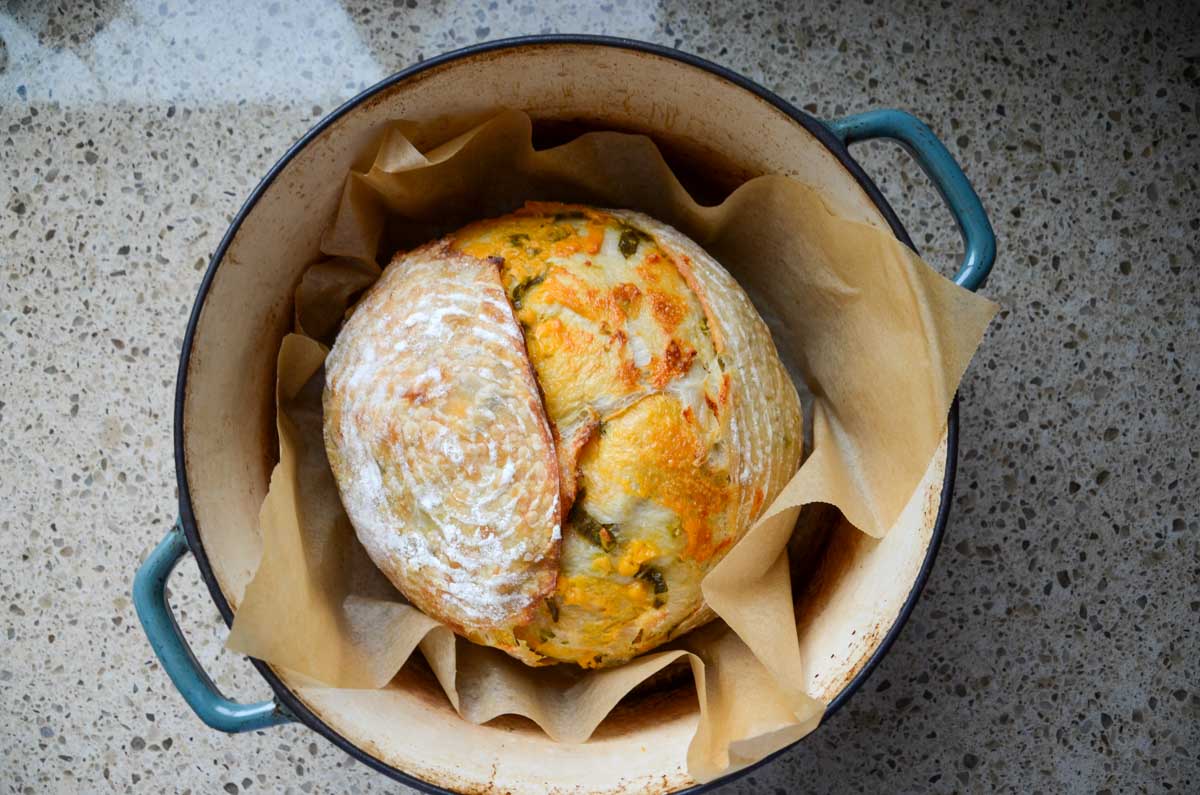
Jalapeño Cheddar Sourdough Bread Recipe
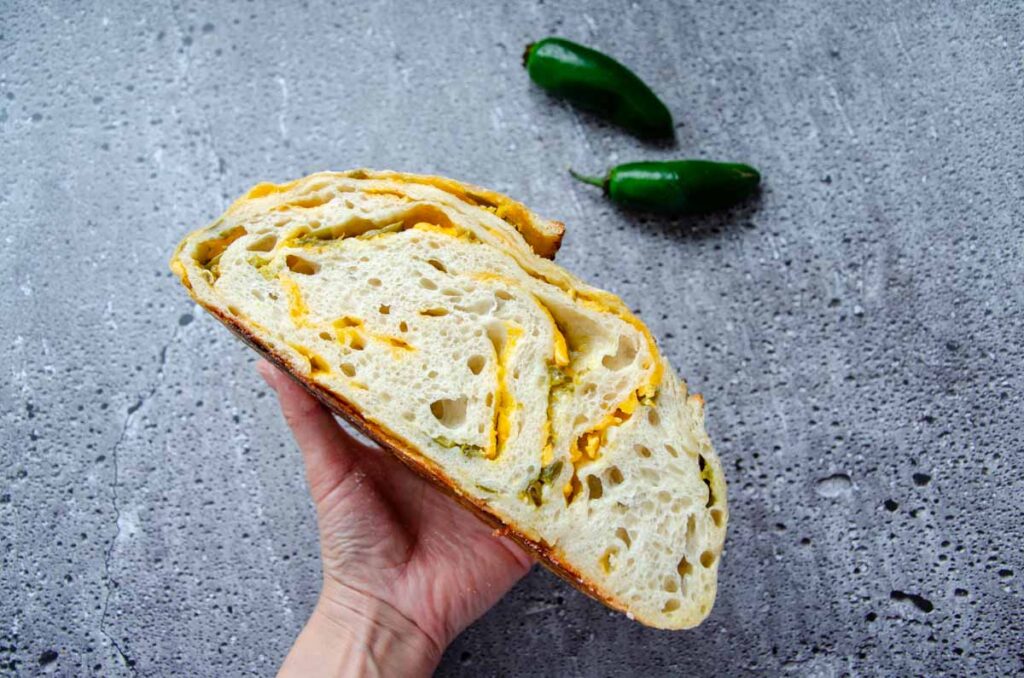
You’ll love this jalapeño cheddar sourdough bread recipe. This spicy, jalapeno studded cheesy sourdough bread is made with active sourdough starter for a soft, flavorful bread that’s absolutely delicious.
“Delicious! We will make this many times!” -Andrea
Save This For Later!
We’ll email this post to you so it doesn’t get lost in your open tabs!
By submitting this form, you consent to receive emails from Lockrem Homestead
New to Sourdough?
If you’re new to sourdough baking, these beginner-friendly guides will help you get started with confidence. Learn how to make a Sourdough Starter from Scratch, feed and maintain it with the Complete Sourdough Starter Guide, and bake your first loaf with this Easy Sourdough Bread Recipe. Together, these guides create a solid foundation for your sourdough journey.
My affection for sourdough continues. After years of making countless loaves of sourdough bread for my family, I can’t believe I’ve never added jalapenos and cheddar cheese to my bread dough.
At first, I tried fresh, diced jalapeno peppers with the seeds and white membrane removed. I loved the bright color of the peppers and the bread was slightly spicy. For the next loaf, I added diced pickled jalapenos and laminated the dough the same way as the first loaf. To my pleasant surprise, this second loaf had a major spicy flavor.
It’s nice to know that you can adjust the bread’s level of spiciness to meet your needs. It’s so easy and tasty that you’ll want to save this jalapeño cheddar sourdough recipe so you can make it over and over again!
Why You’ll Love This Jalapeño Cheddar Sourdough Bread Recipe
- Flavor – Spicy jalapeños are folded with sharp cheddar cheese for a fun twist on a classic sourdough artisan bread.
- Easy – Inclusions breads are so easy! You can add the inclusions during the stretch and folds, or laminate the bread, stretching it out before adding the inclusions and folding them up.
- Sourdough goodness – I love sourdough and all of its health benefits! The long ferment helps break down the phytic acid and gluten, making the bread easier to digest. What’s not to love about that?
- Versatile – Jalapeño cheddar sourdough bread can be a tasty side to enjoy with soups, made into a spicy grilled cheese sandwich, or on its own for a delicious snack!
Equipment You’ll Need for Sourdough Bread
- Bowl
- Kitchen scale – A vital tool for measuring sourdough bread dough ingredients. They’re not expensive and will help ensure accurate, consistent measurements.
- Danish dough whisk – I like how a Danish dough whisk cuts through the dough to incorporate the ingredients. A great tool if you plan to bake sourdough bread regularly.
- Lame – A special scoring tool that holds a sharp razor. You can also use a sharp knife, but a lame makes it easy for small, intricate scoring.
- 9″ Banneton basket – A banneton is a proofing basket that provides support for the bread dough as it proofs. Dust with a little bit of rice flour to prevent the dough from sticking.
- Parchment paper or dough sling
- 7 qt Dutch oven or larger – Using a Dutch oven is the best way for home bakers to create an artisan loaf of bread with a beautiful crust. The enclosed baking environment traps steam, allowing the crust to stay moist and expand.
- Digital thermometer – Use to read the bread’s internal temperature to know when the bread is done baking. Great for beginner bakers as they improve their bread-baking skills.
- Cooling rack
Ingredients
- Sourdough starter – Use active starter that has been fed recently and is full of bubbles, showing signs of fermentation.
- Flour – A strong bread flour with a protein content of 12-14 percent is best for a chewy sourdough bread. However, the bread is still delicious if you make it with all-purpose flour.
- Water – Use warm water during the cooler months to help the sourdough starter.
- Salt – Salt helps flavor the bread as well as helps build the gluten structure.
- Jalapeño peppers- Pickled jalapeños add more spicy flavor to the bread compared to fresh peppers.
- Cheddar – Use a good quality sharp cheddar and grate yourself.
How to Make Cheddar Jalapeño Sourdough Bread
Mix the Dough
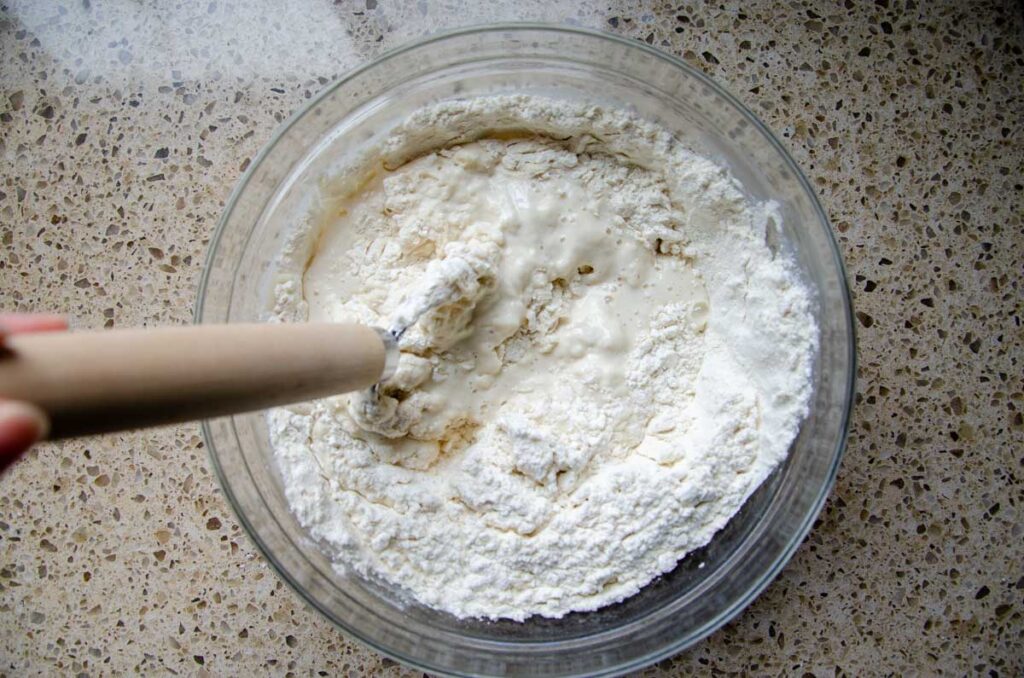
Add 125 g (½ cup) active sourdough starter, 500 g (4 cups) bread flour, 312 g (1 ⅓ cups) water into a large bowl. Combine using a Danish dough whisk until all ingredients are mixed.
Cover the bowl and let the dough rest for 30 minutes. This allows the flour to properly hydrate.
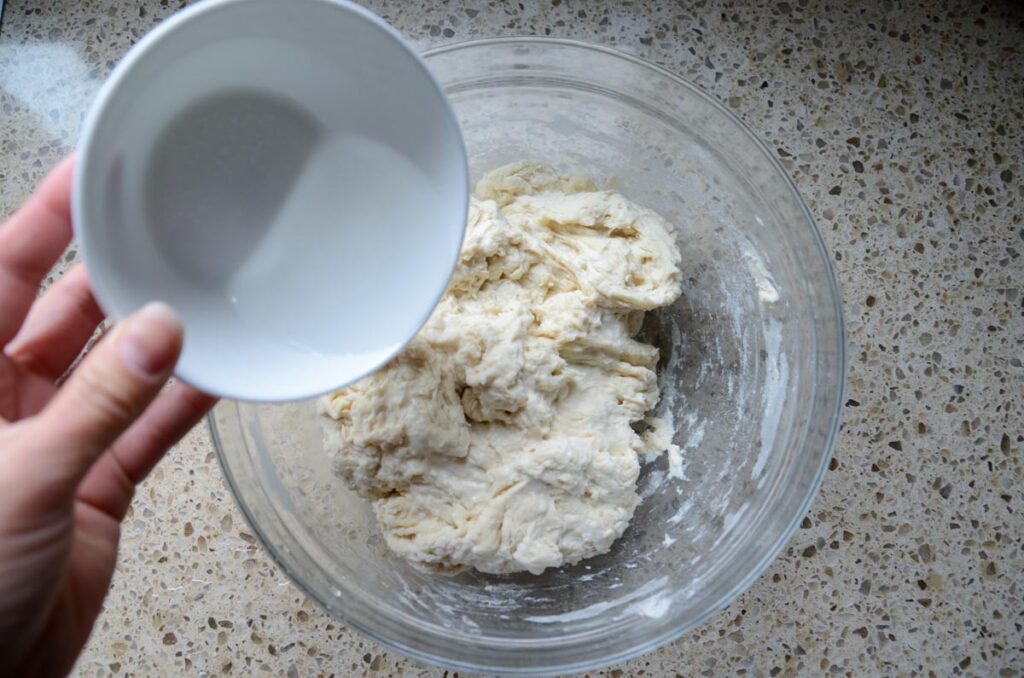
Add 15 g salt and 28 g (2 tbsp) warm water to a small bowl and stir to dissolve the salt. Pour the salt water into the bowl and pinch it into the dough until it’s completely mixed in. Cover and rest for 30 minutes.

Stretch and Fold
Stretch and fold the dough to strengthen the gluten. The dough begins as a shaggy dough and transforms into a smooth, elastic dough by the final set of stretch and folds.
Grab the edge of the dough and lift it straight up, stretching the dough, before folding it over onto itself in the middle of the dough. Rotate the bowl a quarter turn and stretch and fold the dough again. Repeat stretching and folding and rotating the bowl until the dough starts to feel resistant, roughly 6-8 folds.
Cover the bowl with a kitchen towel or a piece of plastic wrap. I like to use a plate as it’s easy to clean the dough from if it ferments to the point of over flowing. Let the dough rest for 30 minutes. This completes the first set of stretch and folds.
Continue for a total of 3 sets of stretch and folds with 30 minute intervals.


Bulk Fermentation
After the last set of stretch and folds, cover the bowl and allow it to bulk ferment in a warm place in the kitchen.
The dough is ready when you see bubbles beneath the surface of the dough, the edges of the dough are curved and slightly domed and it has almost doubled in size. In my 70° kitchen, it took 5 hours.


The exact amount of time this takes largely depends on the temperature of your kitchen. If the air temperature is warmer, the dough will ferment faster. However, if the air temperature is cooler, the dough takes longer to finish bulk fermenting.
Adding Inclusions
Turn the dough out onto a lightly floured work surface using a bowl scraper or silicone spatula. Stretch the dough into a 10 X 10 square. Sprinkle half of the cheddar cheese over the dough, leaving a 1-inch border. Follow with half of the diced jalapenos.
Fold the top half of the dough down to the middle of the dough. Next, fold the bottom of the dough up, overlapping the top half.


Sprinkle the remaining cheese and jalapenos over the dough. Roll the dough, starting at one end of the dough, until it forms a large ball.
Once the dough is rolled into a large ball, pinch the sides together, sealing the inclusions into the middle of the dough.


Shape
Gently shape the dough by cupping the far edge of the dough and pull it towards yourself. This creates tight surface tension which helps for a tall loaf. Keep shaping until the pinched ends are at the bottom of the ball of dough. Be gentle so that the top of the dough doesn’t rip, exposing any of the inclusions.
Make sure all of the cheese and jalapenos are tucked inside of the dough. Anything outside of the dough will melt and possibly burn, causing a messy crust. Using a dough scraper can help create tension in the dough, promoting a better consistent shape.
What if You Don’t Have a Banneton?
While its nice to have, you don’t need a fancy proofing basket to bake good bread. After the dough is shaped, place the dough onto a piece of parchment paper with the seam side down. Then, using the parchment paper as handles, lift the dough back into the bowl. Cover the bowl and refrigerate.
Cold Ferment | Second Ferment
Prepare a banneton by dusting it with a bit of rice flour to prevent the dough from sticking.
Lift the shaped dough into the prepared banneton with the top of the dough facing down and the seams facing up. Pinch together any open seams close.
Place the banneton in a plastic bag and refrigerate for 12 – 24 hours.

If you choose to bake the bread the same day you mix the dough, leave the dough to rise covered in the banneton in a warm place for a few hours until the dough is puffy, and jiggles when shaken a bit. Preheat the oven and bake as directed.
Score and Bake
The next day preheat the Dutch oven and lid at 450°F/230°C for 45 minutes.
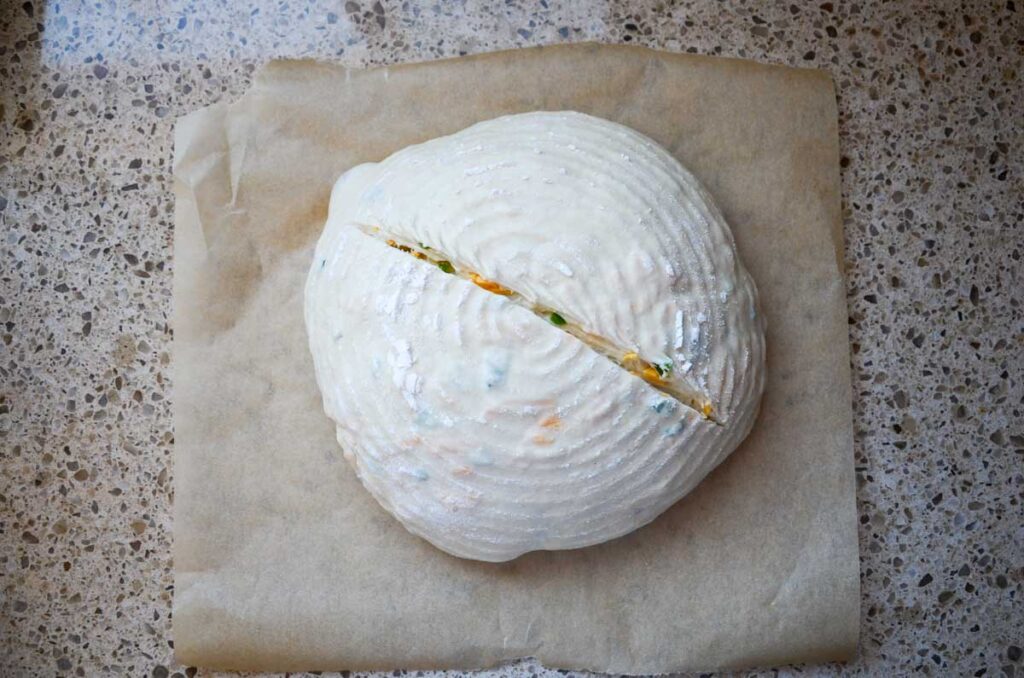
Remove the dough from the fridge, place a piece of parchment paper on the banneton, and flip it over, letting the dough fall onto the piece of parchment paper. Score the top of the dough with a sharp knife or razor blade. I find that a simple cut is best for inclusion loaves. Carefully lift the dough into the preheated Dutch oven, replace the lid, and place the Dutch oven back into the oven.
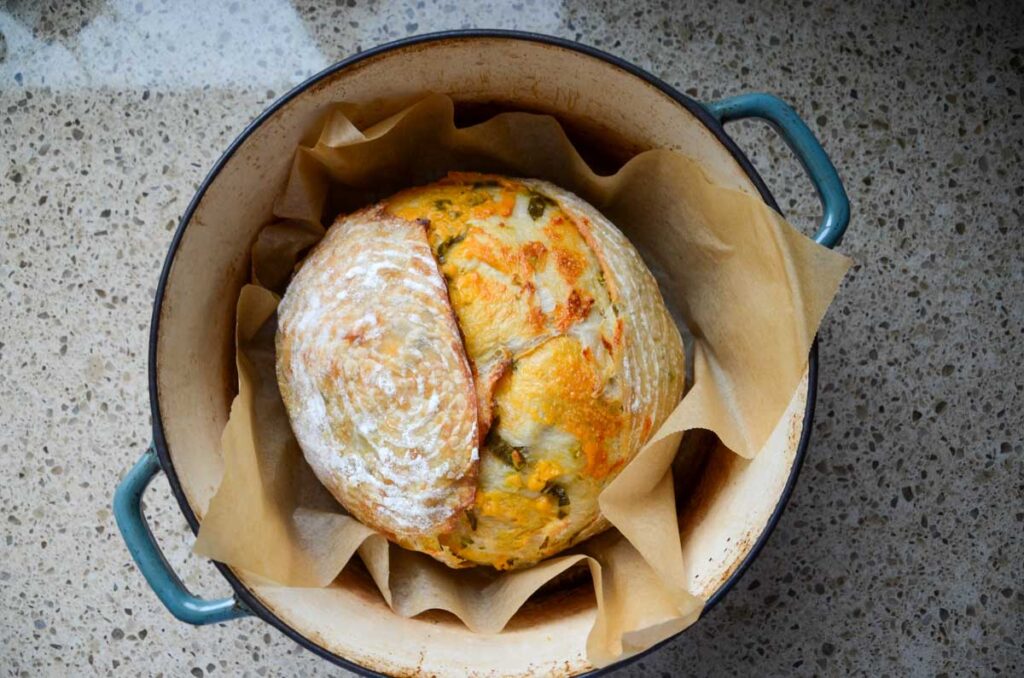
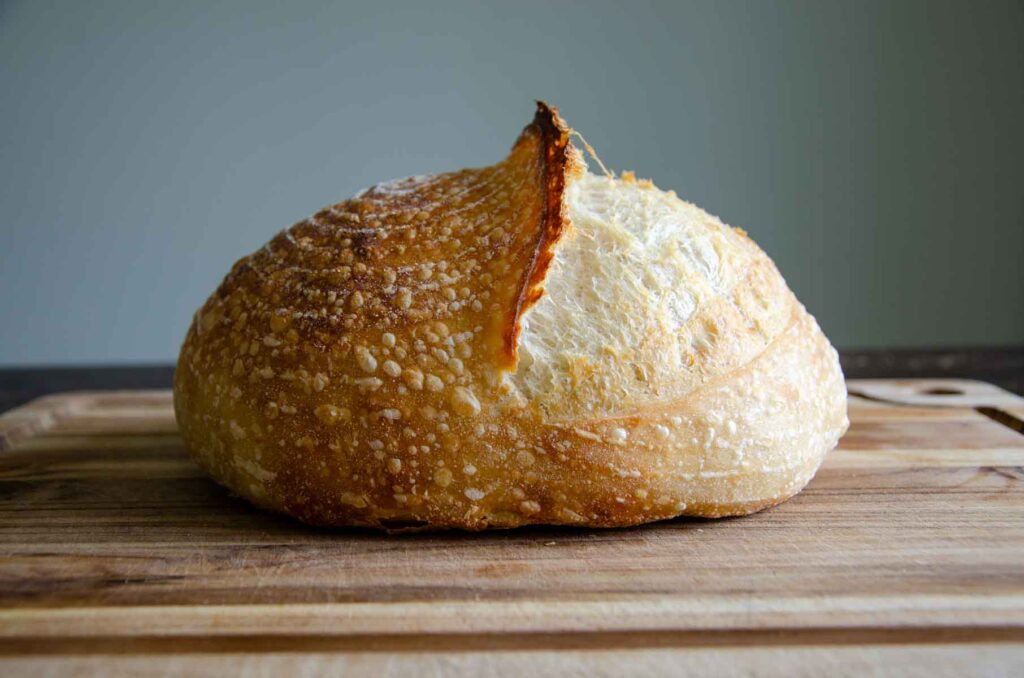
Bake for 35 minutes with the lid on. Remove the lid and bake for an additional 15 minutes. The bread is done when the top is golden brown and the internal temperature reaches 200°F with a digital thermometer.
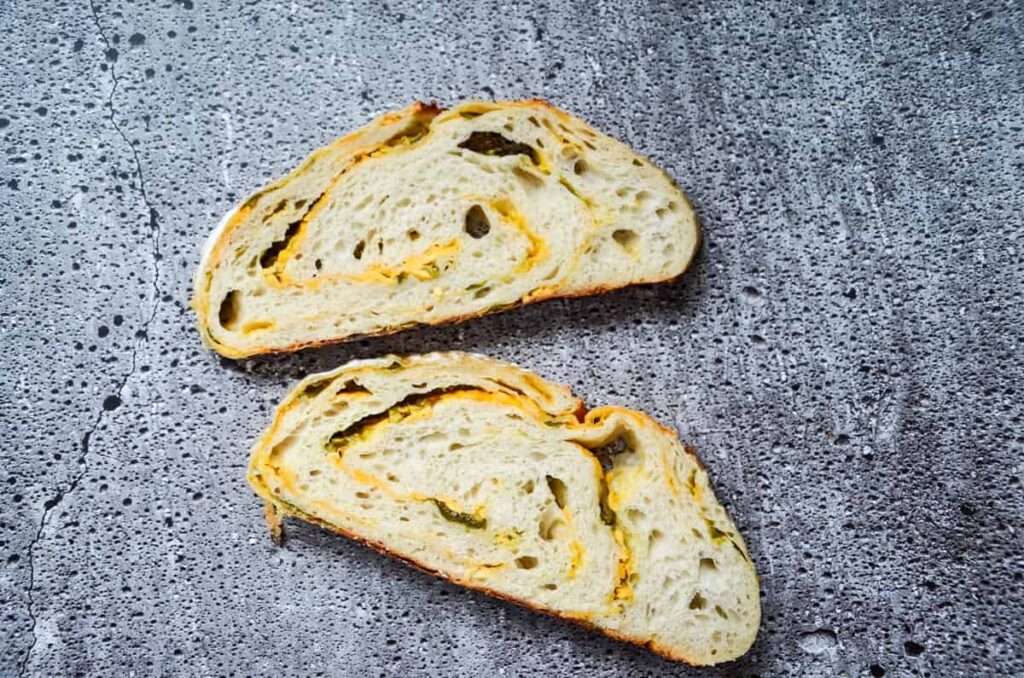
Remove the bread from Dutch oven and place on a wire rack. Cool completely before cutting to avoid a gummy texture.
Tips for Jalapeno & Cheese Sourdough Bread
- If using fresh jalapenos peppers, use caution when preparing them. I recommend wearing gloves during prep and not touching your eyes or face. The capsaicin oil is the reason why peppers have their heat, and will cause an uncomfortable burning, tingling sensation when it comes into contact with your skin or eyes.
- Buy a block of cheddar and shred it yourself. Preshredded cheese has anticaking agents.
- To reduce the spice level, remove the white membrane and seeds from fresh peppers.
Ways to Enjoy Jalapeno and Cheddar Sourdough Bread
- Build amazing sandwiches with your favorite sandwich fixings. Load it with meats, cheeses, and fresh toppings like tomatoes, lettuce, and pickles.
- Serve with a bowl of soup
- Dice, drizzle with a bit of oil, and bake to make flavorful croutons. Perfect for snacking or adding to salads.
Substitutions
- Use fresh jalapeños peppers or candied peppers in place of pickled jalapenos.
- Use your favorite cheese! I suggest pepper jack, Monterey Jack, or Gruyère.
- Cheddar cheese has a range of flavors. Mild cheddar is more subtle than sharp or extra sharp cheddar.
Sourdough Bread Sample Baking Schedule
Baking with sourdough can be a bit intimidating at first since so many variables are involved. But once you understand the process, it’s quite simple and highly flexible to accommodate your schedule. Here is a sample baking schedule.
| Day 1: 8:00 am | Mix the dough and rest for 30 minutes/prep the add-ins |
| 8:30 am | Mix in salt and water, rest for 30 minutes |
| 9:00 – 10:00 am | 3 sets of stretch and folds with 30-minute intervals |
| 10:00 am – 3:00 pm | Bulk ferment at room temperature |
| 3:00 pm | Add inclusions, shape the dough, and place it into a proofing basket |
| 3:10 pm – 8:00 am | Cold proof |
| Day 2: 8:00 am | Preheat Dutch oven |
| 8:45 am | Score and bake the bread dough |
Sourdough Bread FAQs
How Do I Store Sourdough Cheddar Jalapeno Bread?
Allow the bread to cool completely before placing cheddar jalapeno sourdough bread in a bread bag. Store at room temperature for up to 5 days. If you don’t plan to eat the bread quickly, slice the bread, place it into a freezer-safe plastic bag, and freeze it. This allows you to pull out one piece at a time.
Can I Substitute a Different Type of Cheese?
Yes, choose whatever type of cheese you enjoy. I like the flavor of sharp cheddar with the jalapenos, but if you choose another type of cheese, use a creamy variety like Gouda or pepper jack. Shredded cheese creates tiny bits of cheese in each bite, however, you can cube the cheese for larger pockets of melty cheese.
Do I Need to Use a Kitchen Scale?
I know that buying a kitchen scale seems like one more thing, however, measuring by weight instead of volume ensures consistent sourdough bread doughs. Investing in an inexpensive scale is a great idea if you plan to bake sourdough bread regularly.
What Type of Jalapeños Should I Use?
The beautiful thing about this bread is that you can use whatever type of jalapeño pepper you want. I like to use pickled jalapeño peppers since I have so many on hand and they’re easy to source. However, you can use fresh jalapeno peppers, slicing or dicing them before adding to the dough.
How Do I Keep the Bottom of My Sourdough From Burning?
Sometimes the bottom of the sourdough bread gets too hot in the oven and burns. If this happens, preheat the Dutch oven with a baking sheet on the rack beneath it. This will help shield the heat and prevent the bottom from getting too dark.

I’d love to hear from you! If you made this Jalapeno & Cheddar Sourdough Bread Recipe and loved it, I would love it if you gave it 5 stars! Happy Baking!
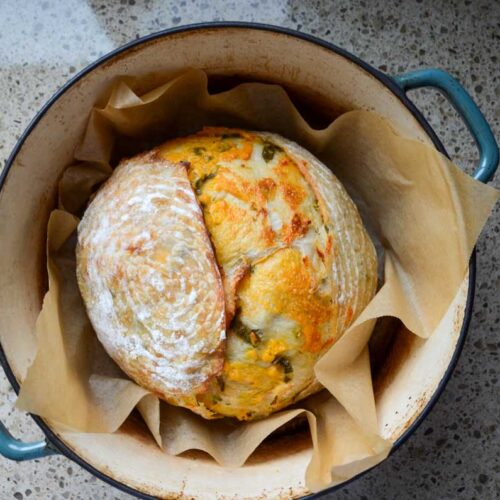
Jalapeño Cheddar Sourdough Bread
Want to Save This Recipe?
Enter your email & I’ll send it to your inbox. Plus, get great new recipes from me every week!
By submitting this form, you consent to receive emails from Lockrem Homestead
Equipment
- 1 Dutch Oven
- 1 mixing bowl
- 1 kitchen scale
- 1 Danish dough whisk
- 1 9" banneton or proofing basket
- 1 lame
Ingredients
- 125 g sourdough starter ½ cup
- 500 g bread flour 4 cups
- 312 g water 1⅓ cups
- 15 g salt 2 tsp
- 28 g water 2 tbsp
- 200 g cheddar cheese shred, 2 cups
- 150 g pickled jalapeno peppers ¾ cups, or 2 3" jalapeno peppers
Instructions
Mix the Dough
- Add 125 g (½ cup) active sourdough starter, 500 g (4 cups) bread flour, 312 g (1⅓ cups) water into a large bowl. Combine using a Danish dough whisk until all ingredients are mixed.
- Cover the bowl and let the dough rest for 30 minutes. This allows the flour to properly hydrate.
- Add 15 g salt and 28 g (2 tbsp) warm water to a small bowl and stir to dissolve the salt. Pour the salt water into the bowl and pinch it into the dough until it's completely mixed in. Cover and rest for 30 minutes.
Stretch and Fold
- Stretch and fold the dough to strengthen the gluten. The dough begins as a shaggy dough and transforms into a smooth, elastic dough by the final set of stretch and folds.
- Grab the edge of the dough and lift it straight up, stretching the dough, before folding it over onto itself in the middle of the dough. Rotate the bowl a quarter turn and stretch and fold the dough again. Repeat stretching and folding and rotating the bowl until the dough starts to feel resistant, roughly 6-8 folds.
- Cover the bowl with a kitchen towel or a piece of plastic wrap. (I like to use a plate as it's easy to clean the dough from if it ferments to the point of overflowing.)Let the dough rest for 30 minutes. This completes the first set of stretch and folds.
- Continue for a total of 3 sets of stretch and folds with 30 minute intervals.
Bulk Fermentation
- After the last set of stretch and folds, cover the bowl and allow it to bulk ferment in a warm place in the kitchen.
- The dough is ready when the top of the dough is domed and you see bubbles beneath the surface of the dough and it has almost doubled in size.
- The exact amount of time this takes largely depends on the temperature of your kitchen. If the air temperature is warmer, the dough will ferment faster. However, if the air temperature is cooler, the dough takes longer to finish bulk fermenting.
Adding Inclusions
- Turn the dough out onto a lightly floured work surface using a bowl scraper or silicone spatula. Stretch the dough into a 10 X 10 square. Sprinkle half of the cheddar cheese over the dough, leaving a 1-inch border. Follow with half of the diced jalapenos.
- Fold the bottom half of the dough up to the middle of the dough. Next, fold the top down, overlapping the bottom half.
- Sprinkle the remaining cheese and jalapenos over the dough. Roll the dough, starting at one end of the dough, until it forms a large ball.
- Once the dough is rolled into a large ball, pinch the sides together, sealing the inclusions into the middle of the dough.
Shape
- Gently shape the dough by cupping the far edge of the dough and pull it towards yourself. This creates tight surface tension which helps for a tall loaf. Keep shaping until the pinched ends are at the bottom of the ball of dough. Be gentle so that the top of the dough doesn’t rip, exposing any of the inclusions.
- Make sure all of the cheese and jalapenos are tucked inside of the dough. Anything outside of the dough will melt and possibly burn, causing a messy crust. Using a dough scraper can help create tension in the dough, promoting a better consistent shape.
Cold Ferment | Second Ferment
- Prepare a banneton by dusting it with a bit of rice flour to prevent the dough from sticking.
- Lift the shaped dough into the prepared banneton with the top of the dough facing down and the seams facing up. Pinch together any open seams close.
- Place the banneton in a plastic bag and refrigerate for 12 – 24 hours.
- If you choose to bake the bread the same day you mix the dough, leave the dough to rise covered in the banneton in a warm place for a few hours until the dough is puffy, and jiggles when shaken a bit. Preheat the oven and bake as directed.
Score and Bake
- The next day preheat the Dutch oven and lid at 450°F/230°C for 45 minutes.
- Remove the dough from the fridge, place a piece of parchment paper on the banneton, and flip it over, letting the dough fall onto the piece of parchment paper. Score the top of the dough with a sharp knife or razor blade. I find that a simple cut is best for inclusion loaves. Carefully lift the dough into the preheated Dutch oven, replace the lid, and place the Dutch oven back into the oven.
- Bake for 35 minutes with the lid on. Remove the lid and bake for an additional 15 minutes. The bread is done when the top is golden brown and the internal temperature reaches 200°F with a digital thermometer.
- Remove the bread from Dutch oven and place on a wire rack. Cool completely before cutting to avoid a gummy texture.
I love toasting this bread to get the maximum melt on those pockets of cheese! Delightful for sandwiches or served as a side with tomato soup! Try it and leave your questions and comments below!