
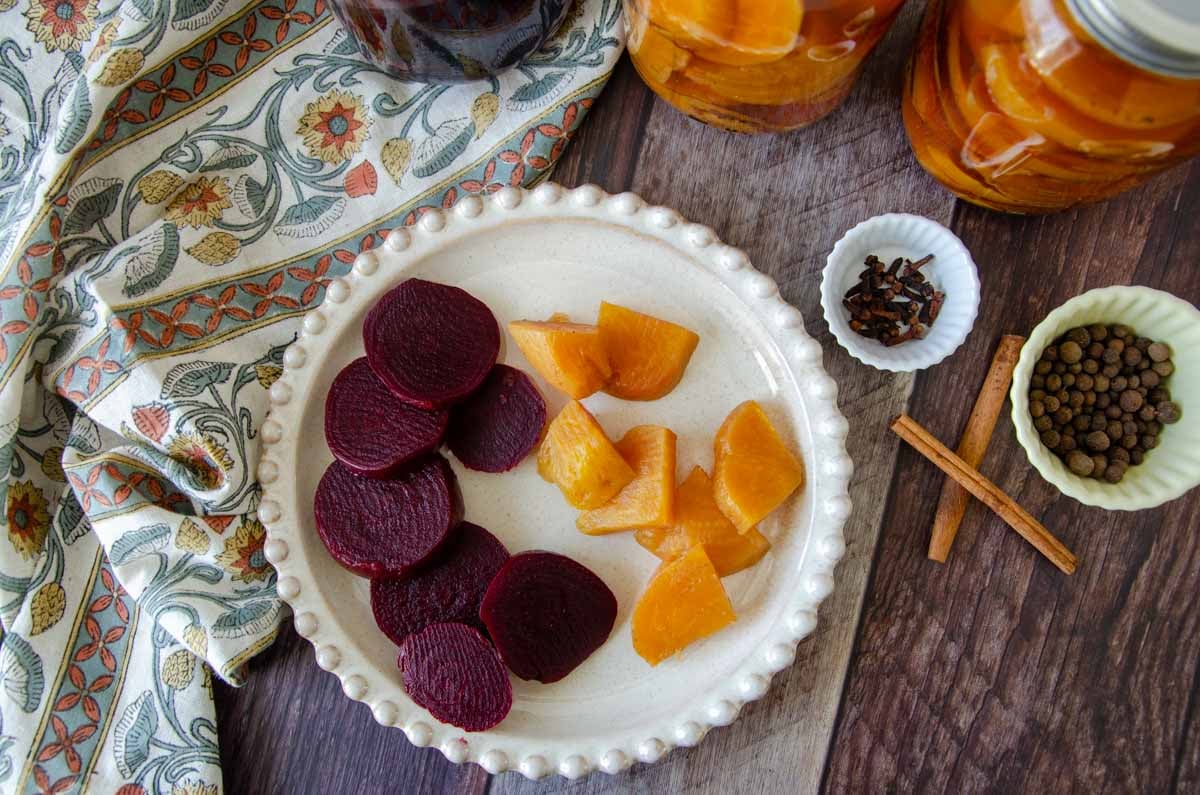
Pickled Beets Canning Recipe
Enjoy pickled beets throughout the year with this simple canning recipe. Beets are pickled using a vinegar and sugar brine and seasoned with spices before processing in a water bath canner, and made shelf stable.

New to Canning?
Canning is a great skill to learn to preserve summer’s bounty for long term storage. Become proficient and learn everything in this Water Bath Canning – A Step-By-Step Beginner’s Guide. Soon, bread and butter pickles, jams, and sauces will be lining your shelves.
Save This For Later!
We’ll email this post to you so it doesn’t get lost in your open tabs!
By submitting this form, you consent to receive emails from Lockrem Homestead
It’s the end of the growing season, and all of the harvest is pouring into the house faster than I can manage it. My counters are full of cucumbers, cantaloupe, tomatoes, and peppers.
After we’ve eaten our fill, the rest will be transformed into bread and butter pickles, refrigerator pickles, pickled peppers, and tomato sauce. It’s a labor of love that the whole family will enjoy throughout the coming months as winter settles in.
Why You’ll Love Pickled Beets
- Preserve – Pickling beets is a great way to preserve the harvest. Here, in the upper Midwest, we have a short growing season and need to make the most of the warm weather and then preserve what we grow to sustain us through the colder months.
- Easy – This pickled beets recipe for canning is simple and beginner-friendly. Because the pickling brine is so acidic, pickled beets can be preserved using a water bath canner.
- Delicious – The sweet, tart, warm flavor of beet pickles is a tasty treat, for sure! Even if you’re not a fan of traditional beets, pickling them may be a great way to introduce them. My family isn’t a fan of beets plain, but has come to enjoy the pickled variety. Their favorite way to eat pickled beets is my Autumn Beet Salad.
Equipment
- Water bath canner – Any type of large pot will work as long as it’s big enough for the canning jars to be fully submerged in water and they’re lifted off the bottom of a large stockpot. Use canning bands if your pot doesn’t come with a canning rack.
- Caning jars – Use pint or quart jars specifically for canning.
- Two piece lids – Use new lids to ensure a proper seal.
- Funnel
- Ladle
- Saucepan
- Chopstick
- Cutting board
- Sharp knife
- Jar lifter

Ingredients
- Beets – The best pickled beets start with fresh beets. In addition, I find that the smaller beets are usually more tender, but I will still pickle larger beets without issue. Red beets, golden beets, or candy-striped beets all make excellent pickled beets.
- Sugar
- Cinnamon
- Clove
- Allspice
- Salt – Use canning salt (sometimes called pickling salt) or sea salt for a clear brine, but not iodized salt which contain additives and can make the brine cloudy. If using kosher salt, you may need more of it since canning salt is much saltier than kosher salt.
- Vinegar – I prefer white vinegar, but you can also use apple cider vinegar. While I love to use homemade whenever I can, this isn’t the place to use apple scrap vinegar since the acidity can vary. For safe canning, the vinegar must be at 5% acidity.
- Water
How to Can Pickled Beets
Step 1: Prep
Fill a water bath canner halfway with water. Wash the jars and add them to the canner. Heat jars in simmering water until ready to use. Wash the lids with soapy water and set aside with the bands.
Scrub beets to remove any dirt and cut off the beet tops. Don’t discard the tops! They make excellent greens and are highly nutritious.


Step 2: Boil Beets
Place beets in a large pot and fill with enough water to cover the beets.
Place on the stove over medium-high heat until the water comes to a rapid boil, and then cover and reduce the heat to medium to simmer.
Cook the beets until they’re fork-tender, usually 30-45 minutes depending on the size of the beets.
Drain the beets and run them under cold water to help cool them and stop the cooking process.
Once the beets are cool enough to handle, the skins will slip right off.
Cut the large beets into slices or chunks using a pairing knife. If you have small beets, you can leave them whole.

Step 3: Make the Brine
When it comes to adding spices to the brine, you have two options.
- Spice Bag – First, you can make a spice bag. Add whole cloves, allspice berries, and cinnamon sticks to a few layers of cheesecloth and tie closed with a string. Add this bag of pickling spice to the pickling liquid of water, vinegar, salt, and sugar in a large saucepan, and cook for 15 minutes over medium heat. Discard the spice bag before adding the brine to the jars. This option leaves the pickling liquid clear but also requires you to have whole spices and cheesecloth.
- Powdered Spices – Add the powdered form of the spices right into the pickling brine. In a large saucepan, add sugar, ground cinnamon, ground allspice, ground clove, salt, vinegar, and water, and heat over medium-high heat until it comes to a boil. Reduce the heat and simmer for 15 minutes. This option leaves the brine speckled with the spices, but streamlines the process and uses common spices found in most pantries.


Step 4: Pack the Jars
Remove the jars from the canner. Then, pack the sliced beets and small whole beets into the hot jars, leaving ½ inch headspace. Place a funnel on the jars and ladle the hot brine into the hot jars, leaving ½ inch headspace.


Step 5: Debubble and Wipe the Rims
Use a chopstick or a small knife and remove the air bubbles.
Wipe the rims of the jars with a clean cloth. Add the lid to the jars and screw the bands until they’re fingertip-tight.


Step 6: Process the Jars
Place jar into the canner’s rack. Repeat until the remaining jars are filled, and slowly lower them into the boiling water canner with the water level 1 inch above the jars. Add extra water if necessary. Place the canner lid onto the canner and bring to a full rolling boil.
Process (boil) pint jars and quart jars for 30 minutes, adjusting for altitude. (The processing time begins once the water comes to a boil.) Turn off the heat and let the jars sit for 5 minutes.
Remove the jars with a jar lifter and place them on a heatproof surface to cool.

Step 7: Store the Jars
Leave the jars undisturbed for 12-24 hours. As the jars cool to room temperature, you’ll hear the lid create a seal as it’s pulled down with a pinging sound.
Once the jars are sealed, remove the band and wipe the jar with a clean cloth to remove any food debris caught under the band. Label the top of the jar with the name and date, and place it in a dark place. Wait at least two weeks before opening the beets to allow plenty of time for the flavors to develop.
The beets will be shelf-stable for up to a year.
Refrigerate any open jars.
Helpful Tips and Variations for Pickled Beets
- Wear gloves to reduce staining from the beets.
- Be sure to check for any signs of spoilage on the beets before cooking. Cut off any soft spots or blemishes and discard.
- Spicy – Add jalapenos, red pepper flakes, or habanero peppers to the jars for a bit of heat.
- Refrigerator pickled beets – Follow the directions to prepare the beets and pickling liquid. However, instead of processing the beets in the water bath canner, fill the jars with 1/4 inch headspace, add the two-piece lid (can reuse lids), and place them in the refrigerator for 1 month. These quick pickles are a great option if you have a small amount of beets and want to pickle a jar at a time. Store extra brine in the fridge until your next batch.
Ways to Enjoy Pickled Beets
Pickled beets are a great way to preserve beets with a warm, tangy flavor. Enjoy them in a variety of ways.
- Salads – Toss a few slices in some greens with goat cheese and crunchy walnuts.
- Sandwiches – Layer in a bit of sweet and tangy beets in your favorite sandwich or wrap.
- Grain bowls – Serve your favorite grain with a protein, roasted vegetables, and pickled beets.
- Relish Trays – Pickled beets are a great addition to relish trays and charcuterie boards, with their splash of color among deli meats, cheeses, and crackers.
- Snack – Enjoy a few slices right out of the jar. Great for an afternoon snack when you’re craving something sweet.

I’d love to hear from you! If you tried this Pickled Beets Canning Recipe, please leave a star rating and let me know how it went in the comments section below. Happy Canning!

Pickled Beets Canning Recipe
Want to Save This Recipe?
Enter your email & I’ll send it to your inbox. Plus, get great new recipes from me every week!
By submitting this form, you consent to receive emails from Lockrem Homestead
Ingredients
- 9 lbs beets 3 quarts or roughly 24 small beets
- 2 cups sugar
- 3½ cups vinegar
- 1½ cups water
- 1½ tsp salt
Spice Bag Option
- 2 sticks cinnamon
- 2-3 whole cloves
- ¾ tsp all spice berries
Powdered Spice Option
- 1 tsp ground cinnamon
- ½ tsp ground cloves
- 1 tsp ground allspice
Instructions
Prep
- Fill a water bath canner halfway with water. Wash the jars and add them to the canner. Heat jars in simmering water until ready to use. Wash the lids with soapy water and set aside with the bands.
- Scrub beets to remove any dirt and cut off the beet tops. Don’t discard the tops! They make excellent greens and are highly nutritious.
Boil Beets
- Place beets in a large pot and fill with enough water to cover the beets.
- Place on the stove over medium-high heat until the water comes to a rapid boil, and then cover and reduce the heat to medium to simmer.
- Cook the beets until they’re fork-tender, usually 30-45 minutes depending on the size of the beets.
- Drain the beets and run them under cold water to help cool them and stop the cooking process.
- Once the beets are cool enough to handle, the skins will slip right off.
- Cut the large beets into slices or chunks using a pairing knife. If you have small beets, you can leave them whole.
Make the Brine
- When it comes to adding spices to the brine, you have two options.
- Spice Bag – First, you can make a spice bag. Add whole cloves, allspice berries, and cinnamon sticks to a few layers of cheesecloth and tie closed with a string. Add this bag of pickling spice to the pickling liquid of water, vinegar, salt, and sugar in a large saucepan, and cook for 15 minutes over medium heat. Discard the spice bag before adding the brine to the jars. This option leaves the pickling liquid clear, but also requires you to have whole spices and cheesecloth.
- Powdered Spices – Add the powdered form of the spices right into the pickling brine. In a large saucepan, add sugar, ground cinnamon, ground allspice, ground clove, salt, vinegar, and water, and heat over medium-high heat until it comes to a boil. Reduce the heat and simmer for 15 minutes. This option leaves the brine speckled with the spices, but streamlines the process and uses common spices found in most pantries.
Pack the Jars
- Remove the jars from the canner. Then, pack the sliced beets and small whole beets into the hot jars, leaving ½ inch headspace. Place a funnel into the jars and ladle the hot brine into the hot jars, leaving ½ inch headspace.
- Use a chopstick or a small knife and remove the air bubbles.
- Wipe the rims of the jars with a clean cloth. Add the lid to the jars and screw the bands until they’re fingertip-tight.
Process
- Place jar into the canner’s rack. Repeat until the remaining jars are filled, and slowly lower them into the boiling water canner with the water level 1 inch above the jars. Add extra water if necessary. Place the canner lid onto the canner and bring to a full rolling boil.
- Process (boil) pint jars and quart jars for 30 minutes, adjusting for altitude. (The processing time begins once the water comes to a boil.) Turn off the heat and let the jars sit for 5 minutes.
- Remove the jars with a jar lifter and place them on a heatproof surface to cool.
Storage
- Leave the jars undisturbed for 12-24 hours. As the jars cool to room temperature, you’ll hear the lid create a seal as it’s pulled down with a pinging sound.
- Once the jars are sealed, remove the band and wipe the jar with a clean cloth to remove any food debris caught under the band. Label the top of the jar with the name and date, and place it in a dark place. Wait at least two weeks before opening the beets to allow plenty of time for the flavors to develop.
- The beets will be shelf-stable for up to a year.
- Refrigerate any open jars.
If you love beets like I do, make two batches with several colors of beets! I love the deep red that we usually associate with beets, but the golden ones are equally delicious! Imagine them lined up on your shelf. Stunning! I look forward to hearing from you, question and concerns alike!