
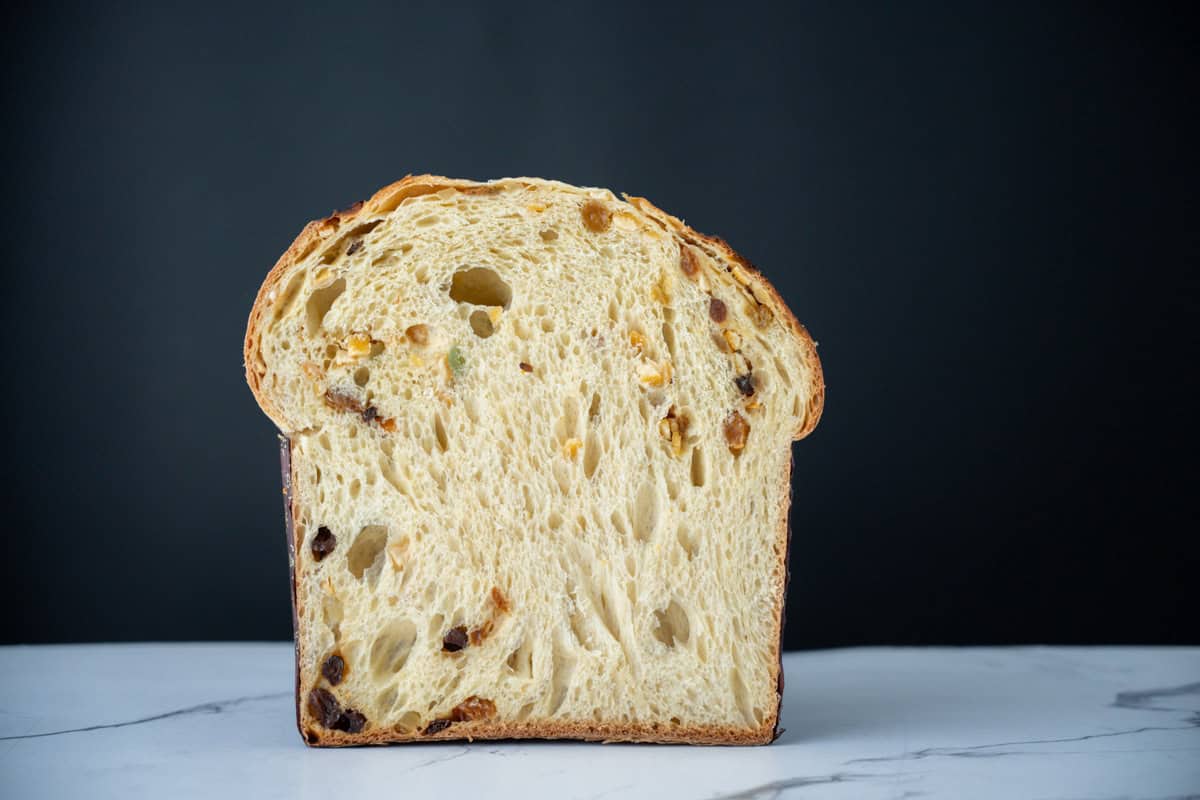
Easy Sourdough Panettone Recipe
A classic Italian dessert, this easy sourdough panettone recipe is a delicious enriched bread filled with egg yoks and butter for a soft and tender crumb that melts in your mouth. This festive dessert bread has a sweet orange flavor with plenty of candied fruit studded throughout.
Save This For Later!
We’ll email this post to you so it doesn’t get lost in your open tabs!
By submitting this form, you consent to receive emails from Lockrem Homestead
New to Sourdough?
If you’re new to sourdough baking, these beginner-friendly guides will help you get started with confidence. Learn how to make a Sourdough Starter from Scratch, feed and maintain it with the Complete Sourdough Starter Guide, and bake your first loaf with this Easy Sourdough Bread Recipe. Together, these guides create a solid foundation for your sourdough journey.
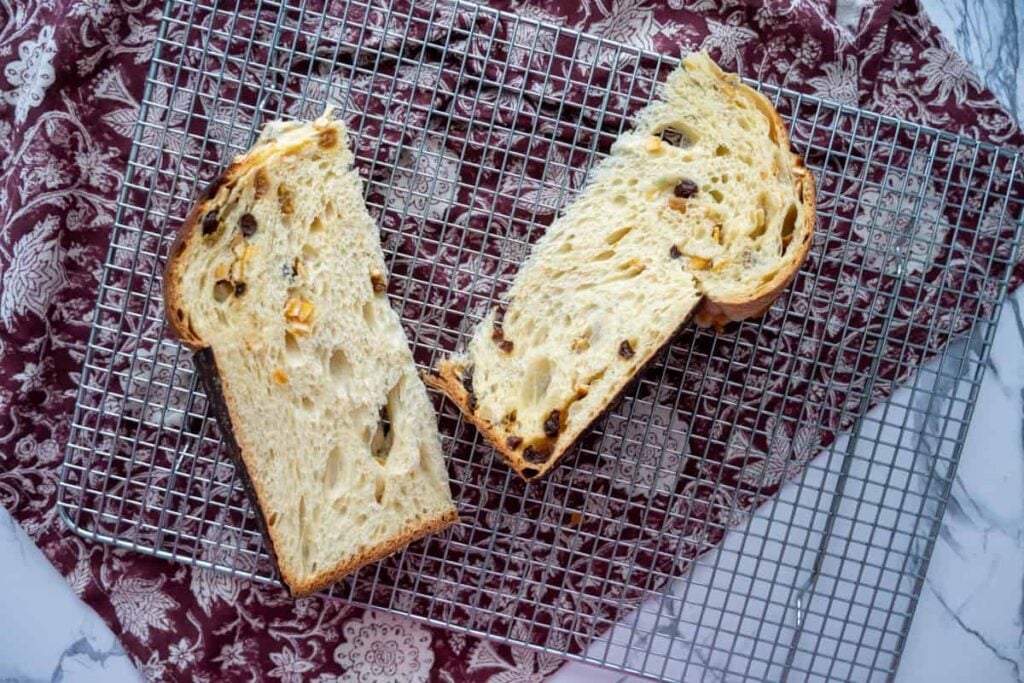
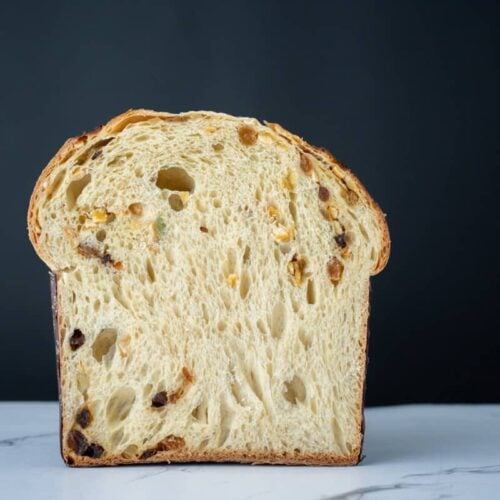
The first time I took a bite of panettone, its flavor reminded me of fruitcake, but had a light, airy texture, similar to brioche. Really, its the best of both worlds. Sweet pieces of candied fruit scattered throughout the soft, pillowy bread add just the right amount of texture and chew.
Pairing it with a little salted butter or a cup of strong, dark coffee helps balance the sweetness, making for a perfectly satisfying bite.
What is a Panettone?
Panettone is a tall, round enriched bread made with plenty of eggs, butter, and sugar, resulting in a tender, buttery crumb. A traditional panettone recipe calls for candied fruit, but there are plenty of variations on the classic, including versions made with chocolate, slivered almonds, and other types of candied fruit.
Between multiple days of building up the lievito madre, or stiff sourdough starter, two rounds of mixing doughs, each with their own bulk fermentation, its easy to see why this bread is a labor of love and set apart for festive occasions like Christmas and Easter.
This recipe distills the traditional panettone baking process down to basic sourdough techniques so any home baker can bake a loaf of panettone at home with success. best panettone recipe using sourdough starter
Why You’ll Love this Easy Panettone Recipe
- Easy – Mixing the dough in a mixer makes sourdough panettone come together easily.
- Delicious – There’s a reason why this Italian bread is enjoyed beyond its native country, it’s delicious! Sweet candied fruit throughout the soft, tender dough leaves you wanting another piece after your first bite.
- Festive – A grand bread with its domed top looks impressive for your holiday table.
Sourdough Panettone Ingredients
Fruit Filling
- Candied fruit – I used dried orange, citron, raisins and golden raisins, but you can use whatever variety of dried fruit you enjoy.
- Light Rum – If you prefer, you could use fruit juice instead.
- Hot water
Bread Dough
- Sourdough starter – Use active sourdough starter that’s risen and full of bubbles.
- Water
- Sugar – Sweetens and softens the bread dough
- Eggs – A combination of whole eggs and egg yolks create the perfect balance of richness and structure.
- Salt – Flavors the bread and helps gluten development.
- Extracts – Orange and vanilla extract add the traditional flavor instead of using Fiori di Sicilia.
- Orange zest – I suggest using organic oranges.
- Butter – Use softened unsalted butter
- Flour – The higher protein content in bread flour helps support the candied fruit filling. You can use all-purpose flour, but the bread might not rise as tall.
Tools You’ll Need
- Kitchen scale
- Large mixing bowl
- Stand mixer
- Panettone mold
- Metal skewers (optional)
How to Make Sourdough Panettone
Mix the Dough
Feed your sourdough starter and allow it to come to its peak.
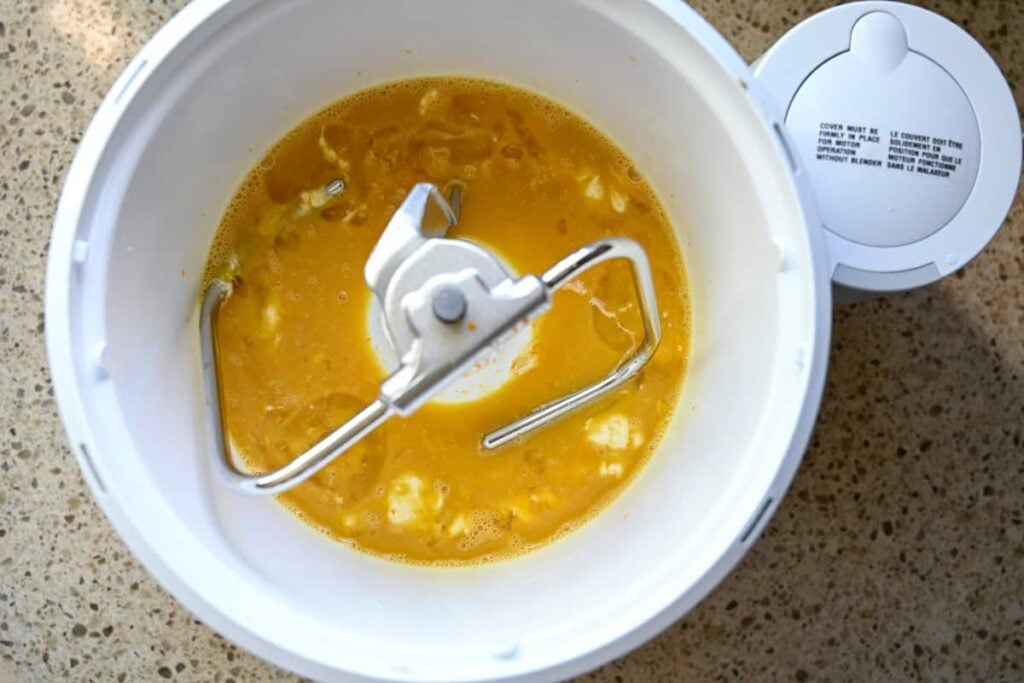
Add sourdough starter, eggs, sugar, water, vanilla extract, orange extract, orange zest, and salt to the bowl of a stand mixer fitted with a dough hook.
Mix on low speed for 30 seconds to break up the eggs and starter into the rest of the ingredients.
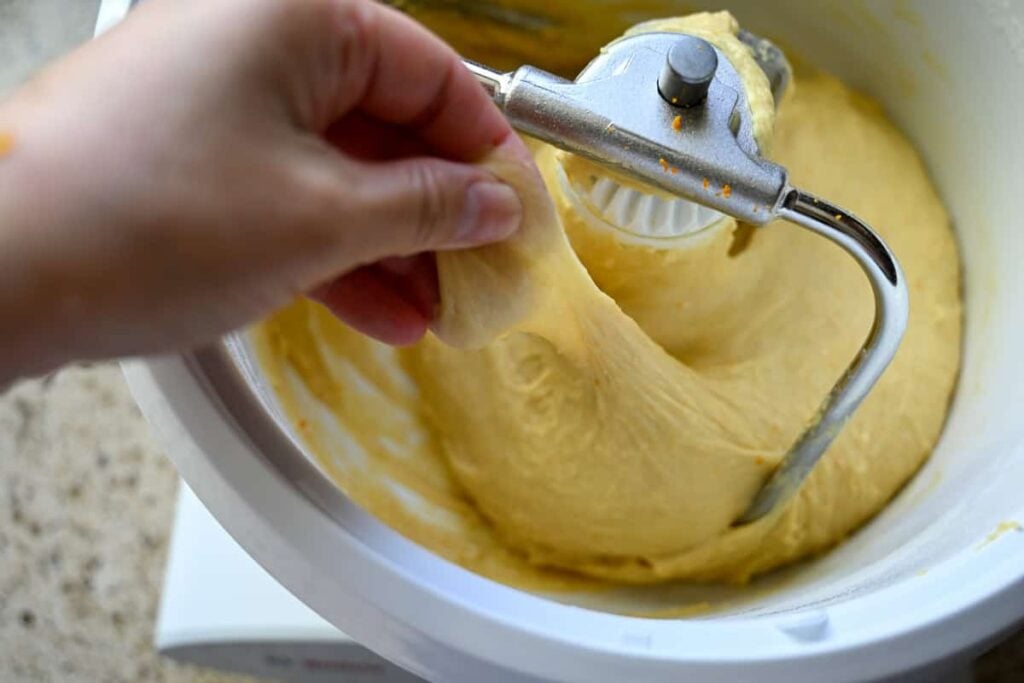
Next, add the bread flour and mix on medium-low speed for 15 minutes. In the first few minutes of mixing, the dough is shaggy and breaks easily when stretched. There’s little gluten development and needs more mixing.
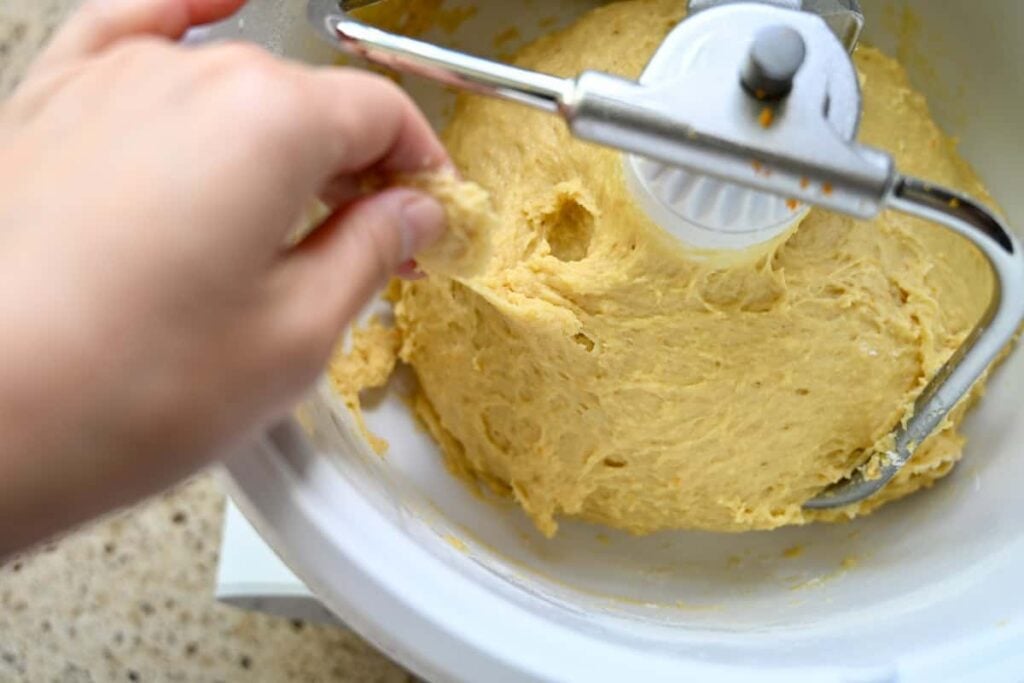
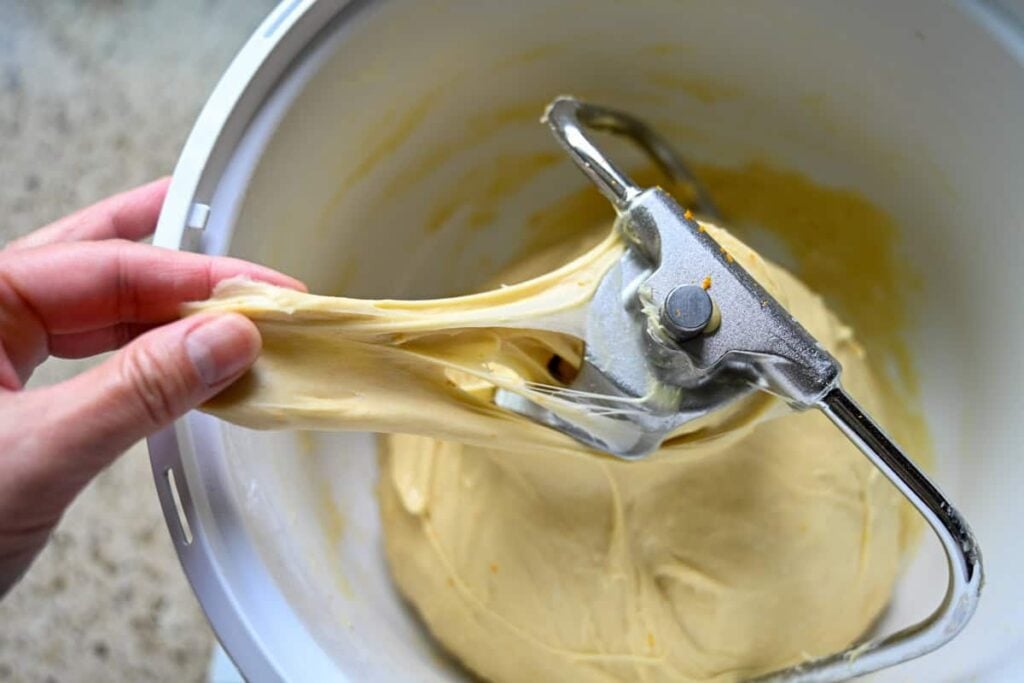
The dough is ready when it passes the windowpane test.
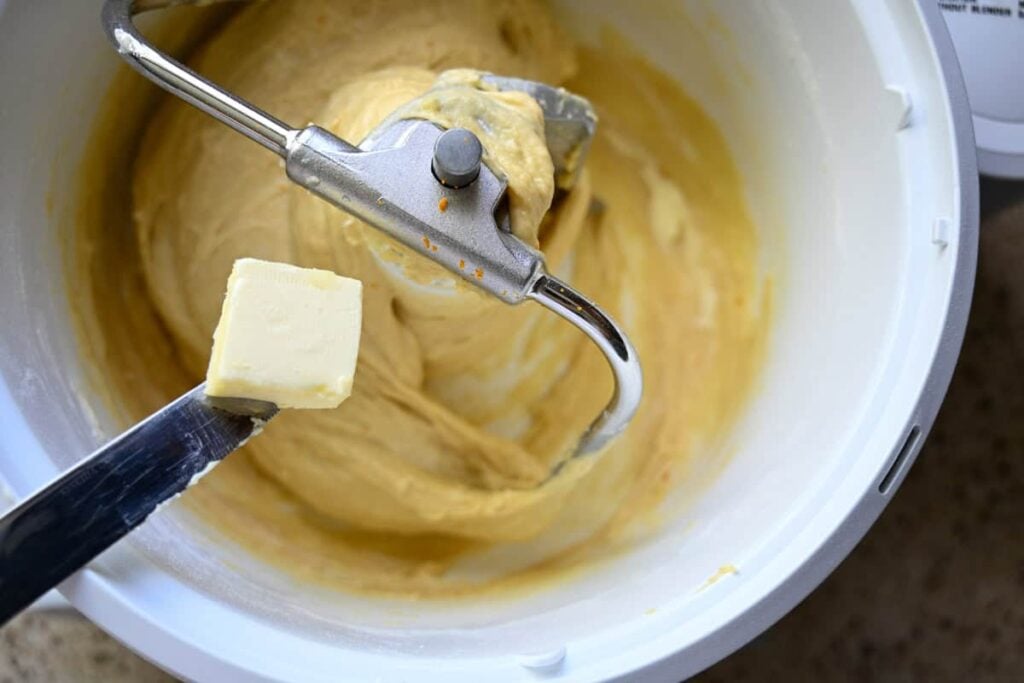
With the mixer on low, add the butter one tablespoon at a time, waiting until it’s fully incorporated before adding more. Once all of the butter is added, mix the dough for 30 more seconds or until the butter is fully worked in. At this point, the dough is silky and holds its shaped when stretched.
Prep the Dried Fruit
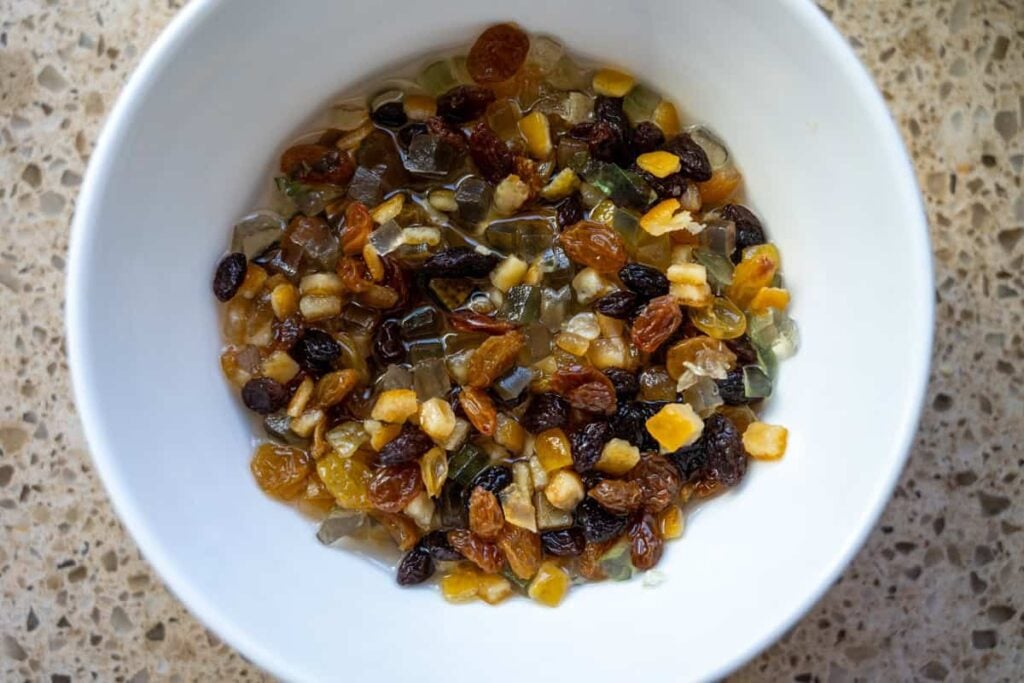
While the dough is mixing, prepare the dried fruit. Add the dried fruit to a small bowl with the rum and hot water. Cover and let soak overnight at room temperature.
Bulk Ferment
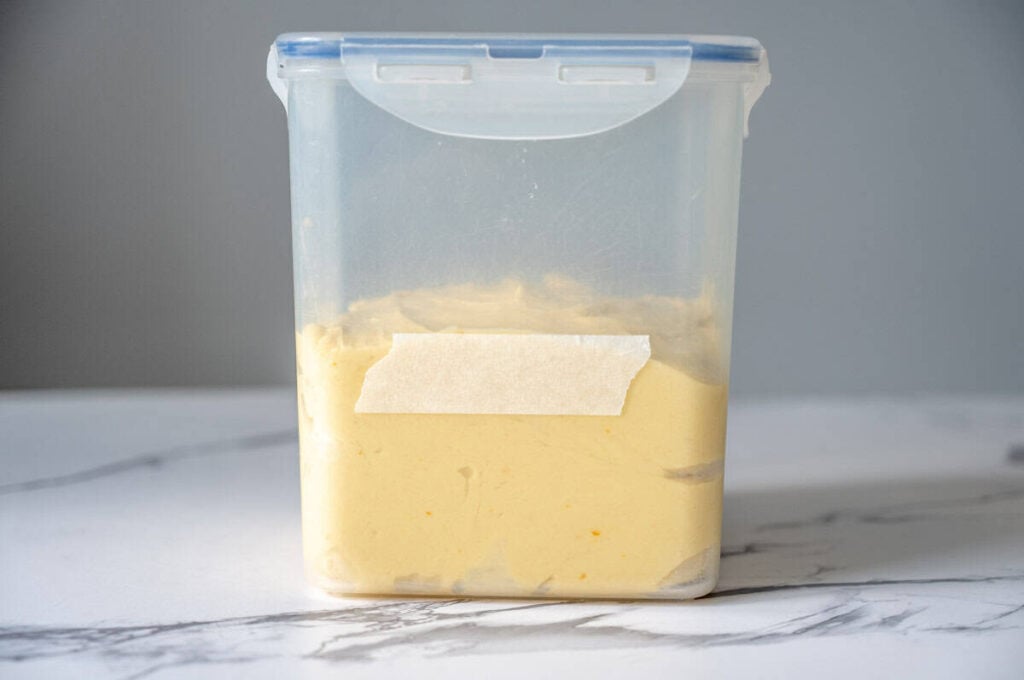
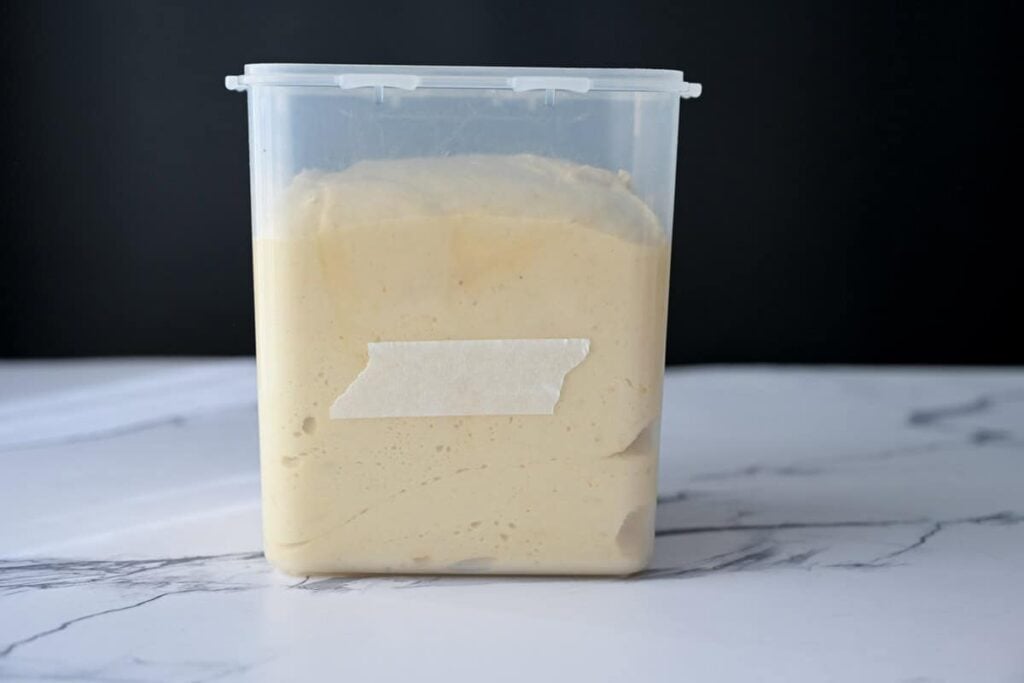
Transfer the panettone dough to a clean container and cover. Let rise overnight at room temperature. My kitchen was 72°C/22°F and it took about 14 hours to ferment.
Add the Dried Fruit
The next morning, the dough will have almost doubled in size. Drain the dried fruit through a mesh strainer.
Turn the dough out onto a floured work surface. Roll out the dough into a 12×18 rectangle, in a landscape orientation.
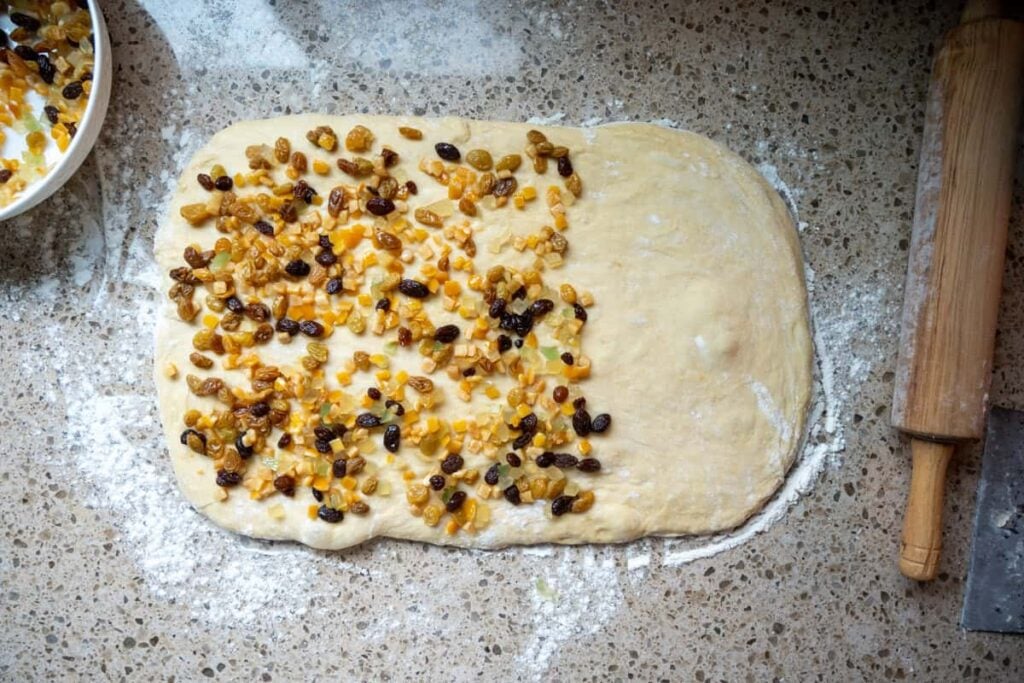
Add ¾ of the dried fruit to the left ⅔ of the dough, leaving the remaining ⅓ without fruit. Gently press the dried fruit into the dough with your hands or rolling pin.
Starting with the section of dough without fruit, perform an envelope fold to create layers of dried fruit. Fold the fruit-free ⅓ of the dough over the middle ⅓.
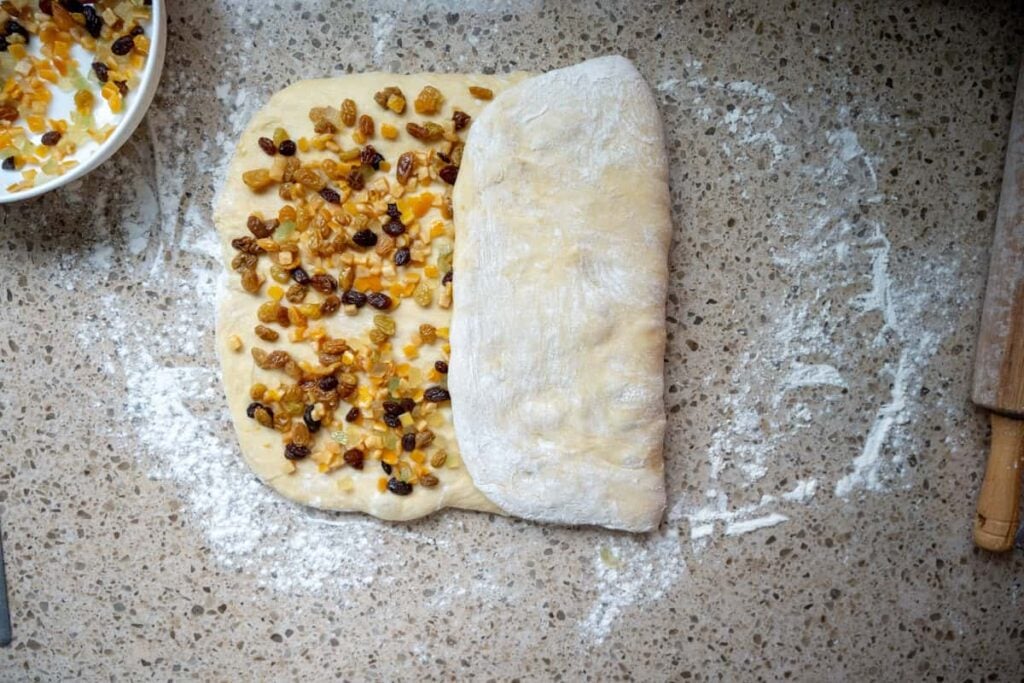
Then, fold the fruit-filled ⅓ over the middle. Scatter the remaining dried fruit over the bottom half of the dough, then fold the dough in half.
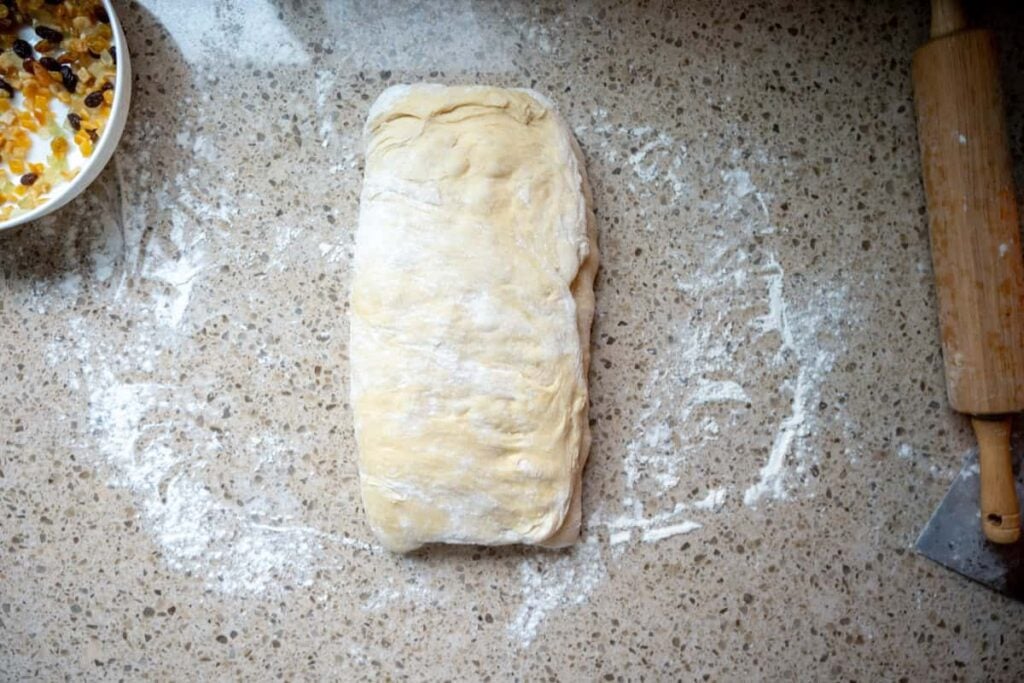
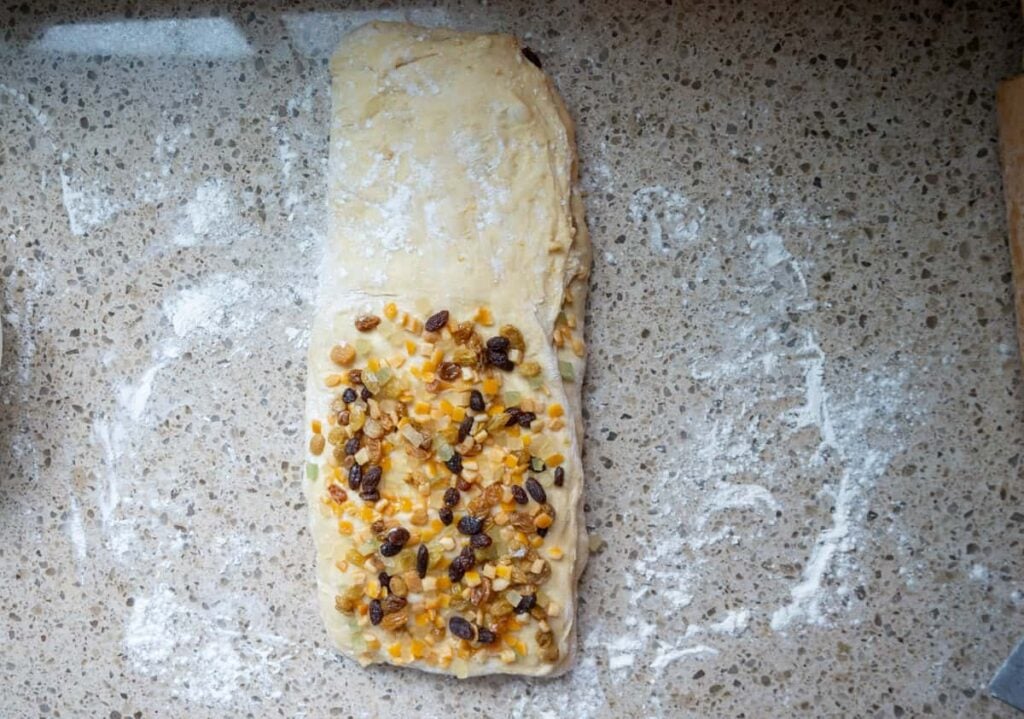
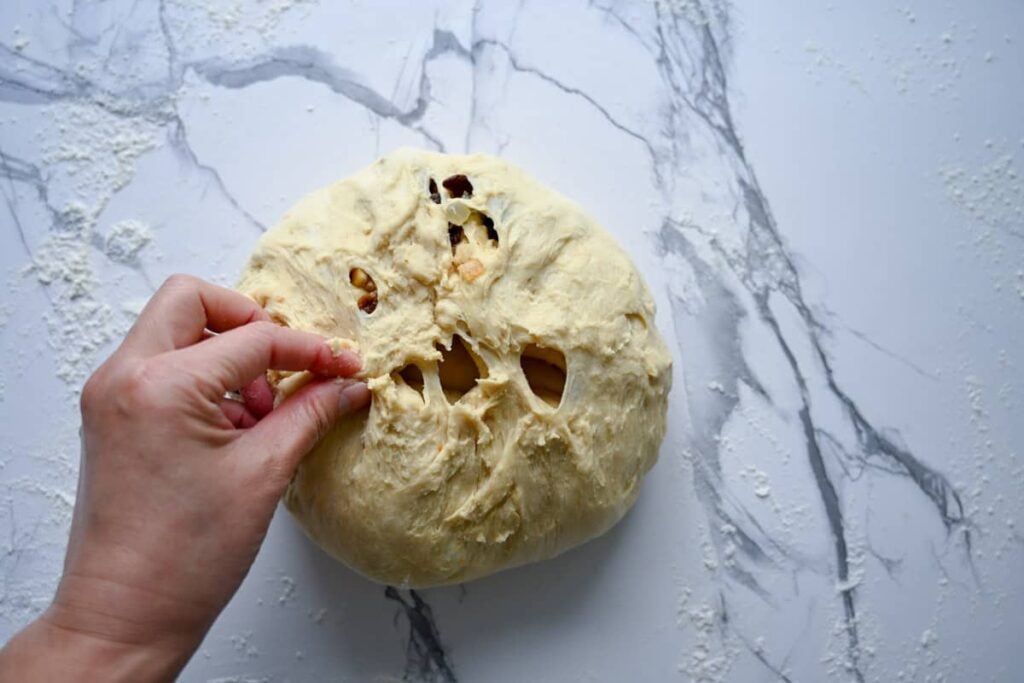
Gently flatten the dough to 1½ inches thick. Fold each corner toward the center and pinch them together to form a ball. Using a bench scraper, carefully flip the dough over and gently shape it into a neat round.
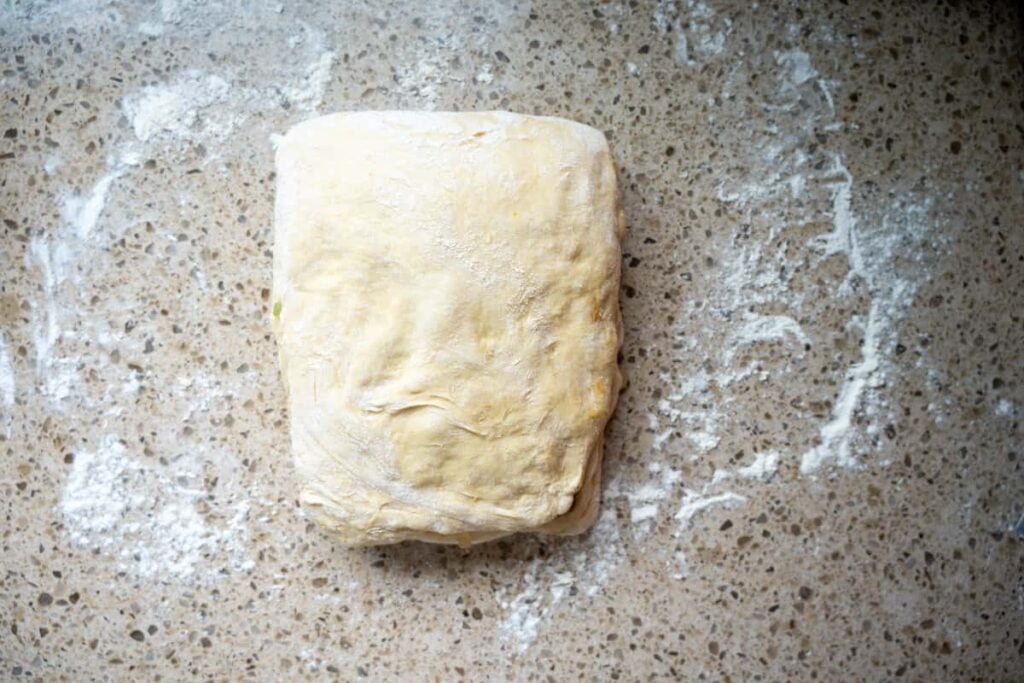
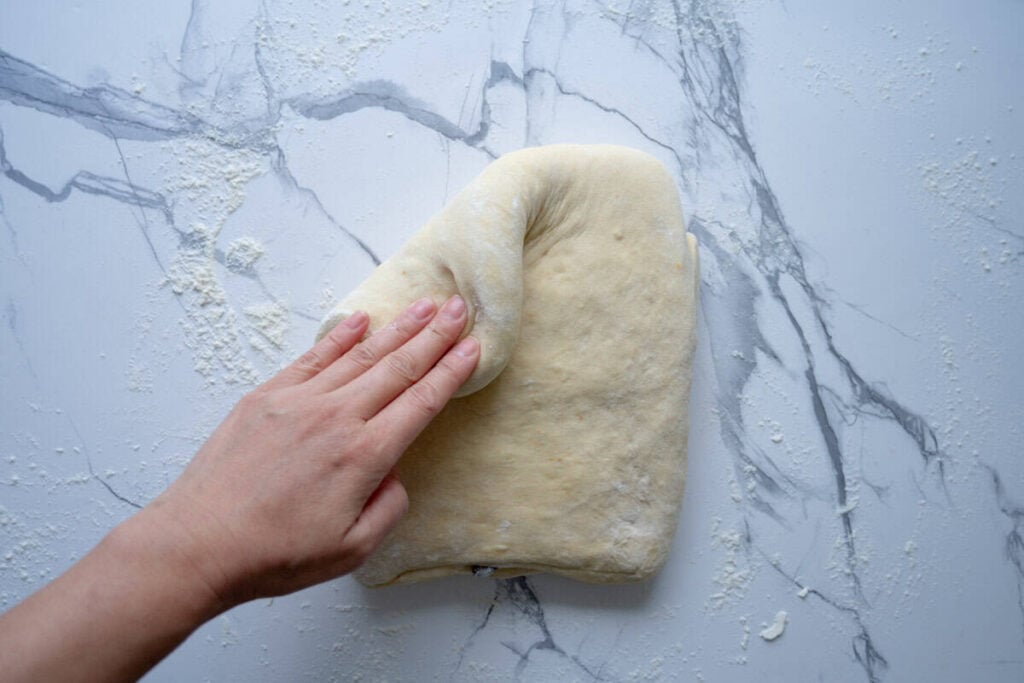
Proof
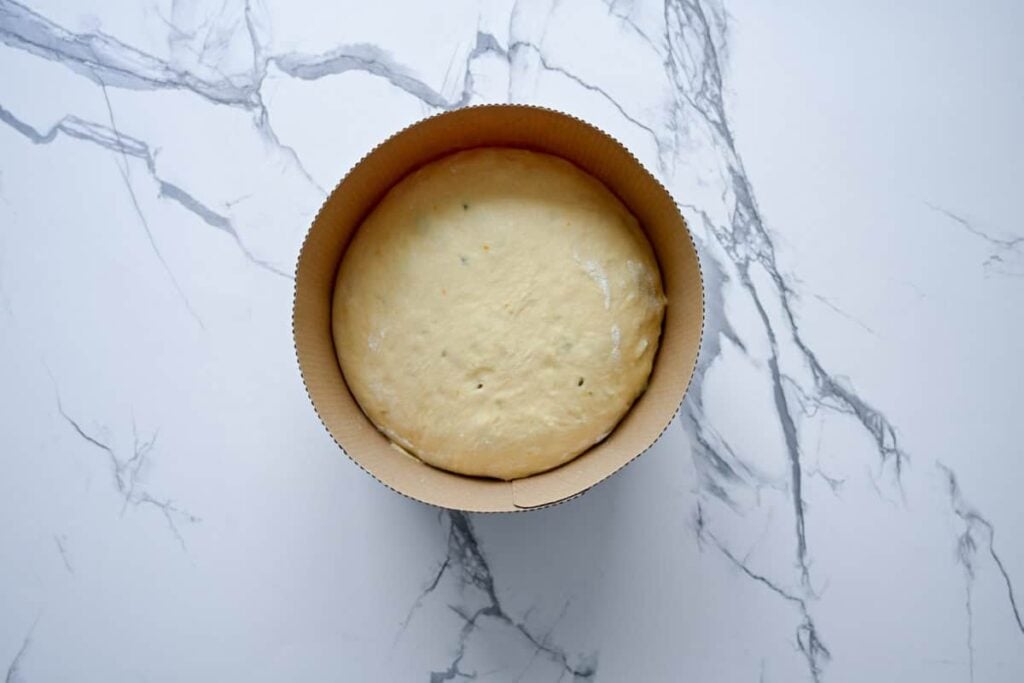
Grease the mold before lifting the dough into the panettone mold with the seam side down.
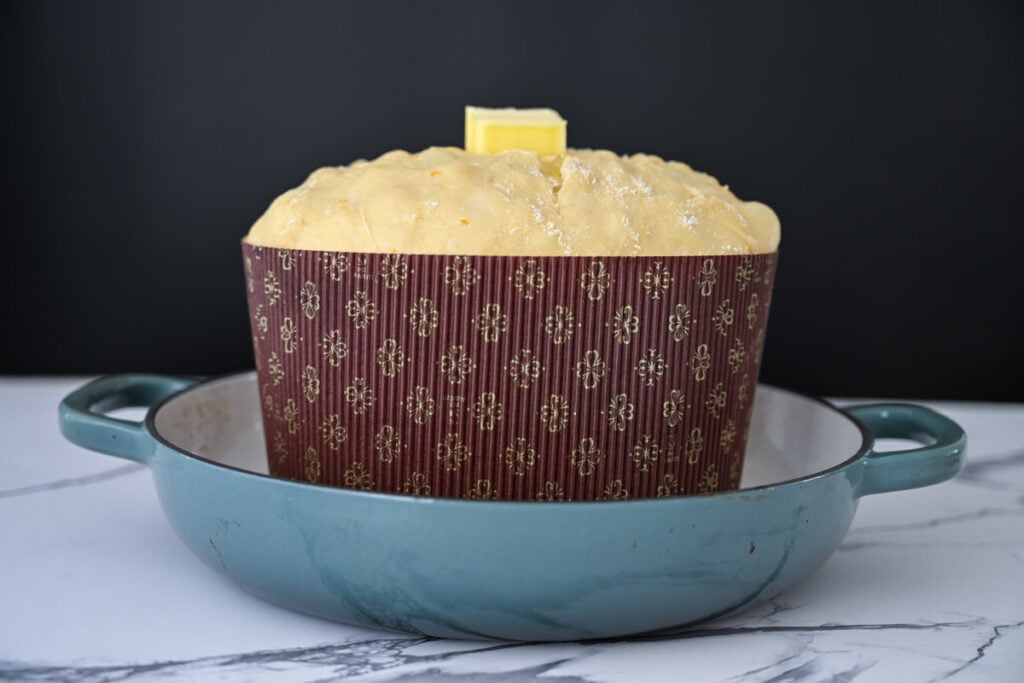
Let the dough rise until it’s risen above the lip of the mold.
Bake
Preheat the oven to 375°F/190°C.
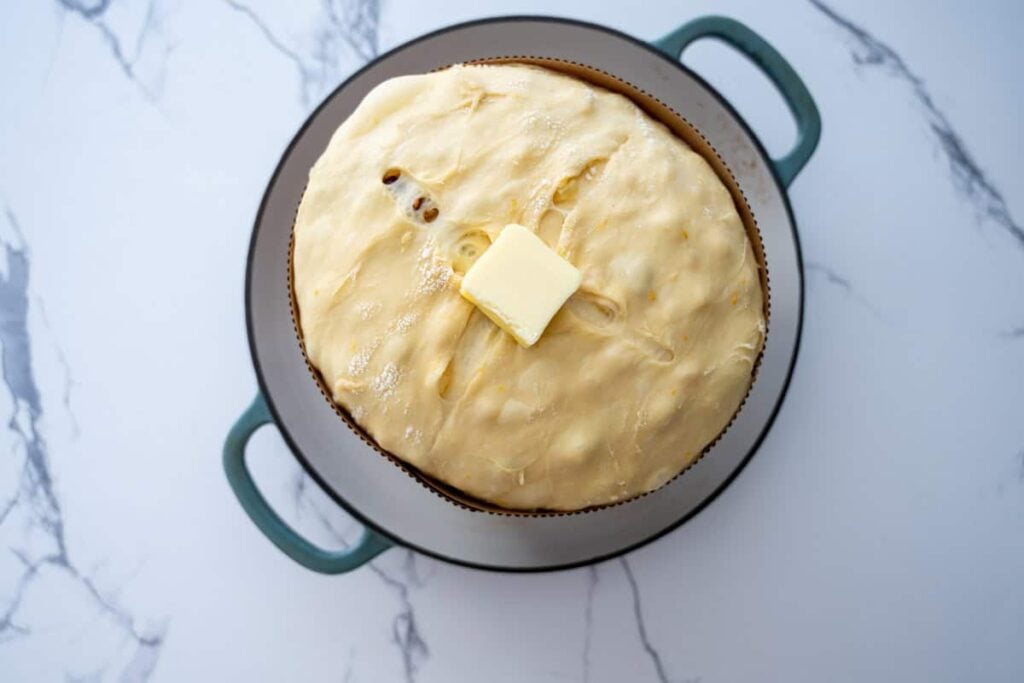
Score a cross on the top of the dough and place a pat of butter on top.
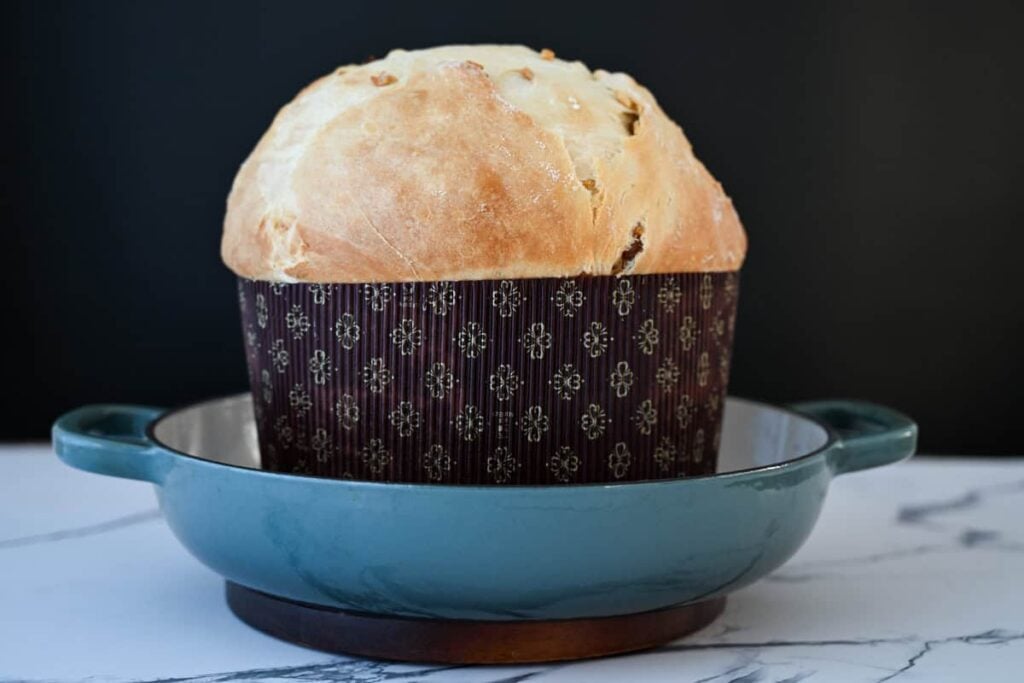
Place the mold onto a baking sheet or shallow baking dish and bake for 15 minutes. Reduce the oven temperature to 325°F/163°C and continue baking for 50-60 minutes. The bread is done when the internal temperature reaches 195°F/90°C.
Cool
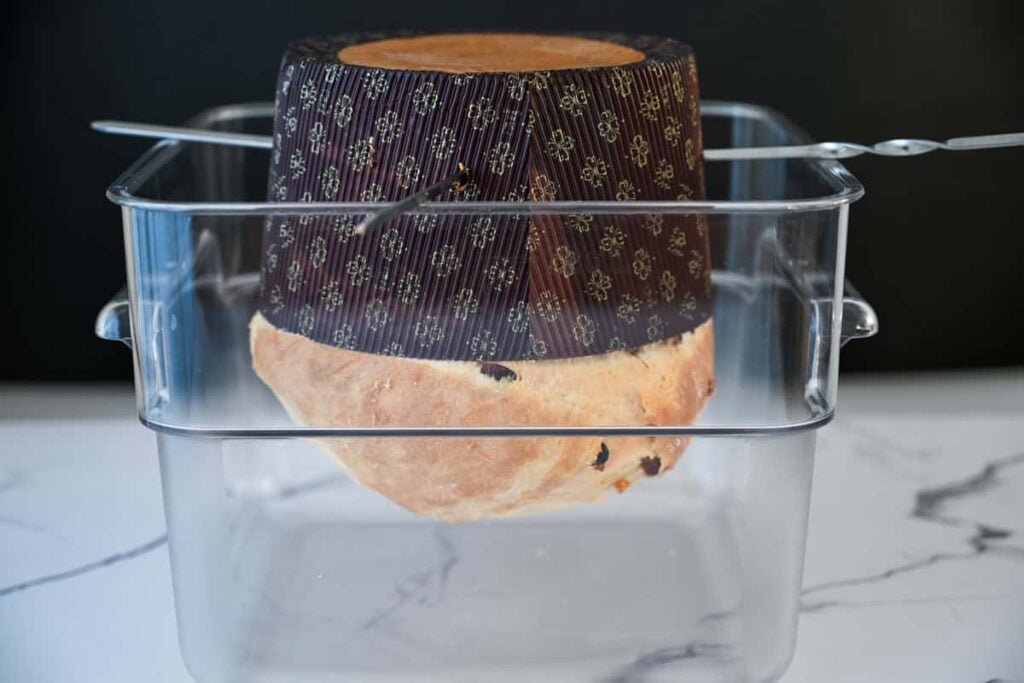
Remove the bread from the oven. Skewer the bread 1 inch above the bottom, and hang upside down to cool.
How to Slice and Serve Sourdough Panettone
Although panettone is slightly sweet, it’s more bread than cake. Slice panettone into thick or thin wedges. If you’re using a paper mold, you can slice right through it.
The bread is delightful with your morning cup of coffee or afternoon tea. Enjoy plain or serve with a smear of your favorite spread. My son likes to eat it toasted with butter, while I think it’s perfect on its own. Its delicious anyway you have it!
- Butter
- Cream cheese
- Mascarpone cream
- Whipped cinnamon honey butter
Sourdough Panettone Storage
Allow the bread to cool completely before placing in an airtight container. Store at room temperature for up to 3 days. Over time, the bread will dry out.
If you’re not going to enjoy within a few days, I suggest freezing the bread. Wrap the bread tightly in plastic wrap and label with the name and date, and place it into the freezer. Another option is to slice the bread and wrap in individual serving sizes to make it quick and easy to pull out one piece at a time.
Trouble Shooting Panettone Bread
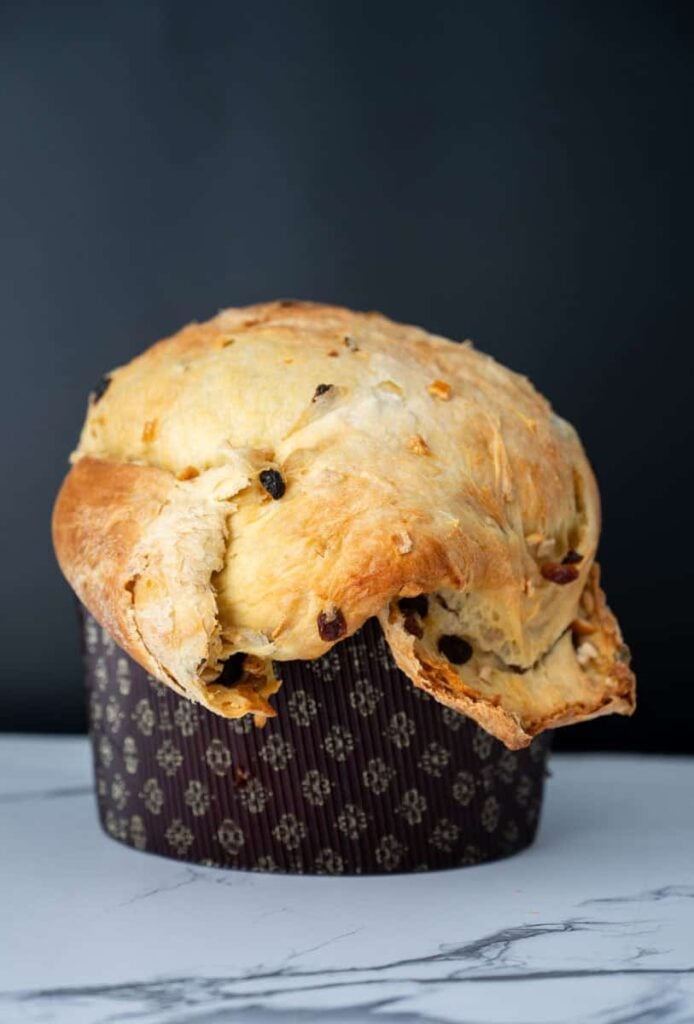
The biggest challenge I came across when making sourdough panettone was it erupting and spilling over the side of the mold while baking it. Although it doesn’t affect the flavor of the bread, it’s not the prettiest presentation. Unfortunately, this happens in the oven while it’s baking, and at this point, there’s not much you can do about it.
To resolve this issue, be sure that you proof the dough long enough.
Scoring the top of the dough deep enough to give the dough space to expand as it bakes.
Variations of Sourdough Panettone
- Fiori di Sicilia – An Italian panettone recipe has this Italian flavoring extract in place of the vanilla and orange extracts.
- Chocolate – Swap some or all of of the dried fruit for mini chocolate chips.
- Nuts – Add sliced almonds for an added crunch.
Helpful Tips for Panettone Sourdough Bread
- The dough is soft and tends to stick easily. Make sure your work surface is dusted with flour when rolling out the dough to make folding and shaping easier.
- Don’t rush the bread dough. Enriched bread doughs take longer to ferment and proof than traditional sourdough breads. Sourdough take longer to ferment and proof in cooler temperature.
- Because the enriched dough doesn’t have a lot of structure, quick and decisive actions are best when shaping. A bench scraper helps lift the dough.
- Once the bread dough is proofing in the mold, I like to place it in a large plastic container with a lid to keep the dough from drying out. You can also use a stock pot or an inverted deep bowl.
Sample Baking Schedule
| Day 1: 2:00 pm | Mix levain |
| 8:00 pm | mix panettone bread dough |
| 8:30 pm | bulk ferment |
| Day 2: 10:30 am | shape and add fruit |
| 10:45 am | Proof |
| 5:00 pm | Preheat the oven |
| 5:30 pm | Score the bread and bake |
| 6:45 pm | Hang upside down |
FAQs About Sourdough Panettone
Do I have to hang the Panettone upside down?
The sugar, butter, and eggs in the panettone make the bread’s structure fragile while hot. Like angel food cake, hanging the bread upside down to cool helps keep it from collapsing under its own weight and preserves a light crumb.
Is sourdough panettone easy to make?
Making a panettone is a time consuming process, but most sourdough bakers are familiar with the extended time frames. If you’re new to sourdough baking, this might not be the best bread to start with since its an enriched bread with multiple steps. Although it has many steps, don’t get overwhelmed with the numerous step-by-step instructions. With a bit of practice, you’ll begin to get the hang of it and enjoy delicious and beautiful dessert to serve for special occasions.
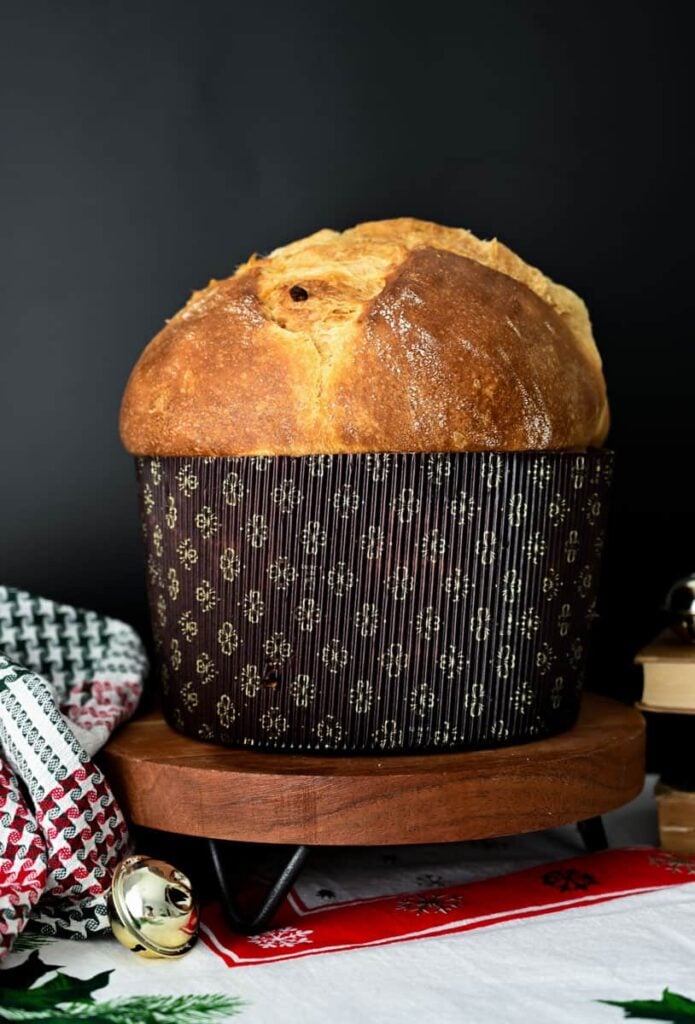

I’d love to hear from you! If you made this Easy Sourdough Panettone Bread recipe and loved it, I would love it if you gave it 5 stars! Happy Baking!
Sourdough Panettone
Want to Save This Recipe?
Enter your email & I’ll send it to your inbox. Plus, get great new recipes from me every week!
By submitting this form, you consent to receive emails from Lockrem Homestead
Equipment
- kitchen scale
Ingredients
Dried Fruit Filling
- 120 g candied orange peel ⅔ cup
- 60 g candied citron ⅓ cup
- 80 g golden raisins ½ cup
- 40 g raisins ¼ cup
- 45 g light rum ¼ cup
- 150 g hot water ¾ cup
Panettone Bread Dough
- 125 g sourdough starter ½ cup
- 133 g sugar ⅔ cup
- 3 large eggs
- 3 large egg yolks
- 188 g water ¾ cup
- 2 tsp vanilla extract
- ½ tsp orange extract
- 1 large orange zest
- 1 tsp salt
- 625 g bread flour 5 cups
- 170 g unsalted butter 12 T, 1½ sticks
Instructions
Mix the Dough
- Feed your sourdough starter and allow it to come to its peak.
- Add active sourdough starter, sugar, eggs, egg yolks, water, vanilla extract, orange extract, orange zest, and salt to the bowl of a stand mixer fitted with a dough hook.125 g sourdough starter, 133 g sugar, 3 large eggs, 3 large egg yolks, 188 g water, 2 tsp vanilla extract, ½ tsp orange extract, 1 large orange zest, and 1 tsp salt
- Mix on low speed for 30 seconds to break up the eggs and starter into the rest of the ingredients.
- Next, add the bread flour and mix on medium-low speed for 15 minutes. In the first few minutes of mixing, the dough is shaggy and breaks easily when stretched. It has little gluten development and needs more mixing. The dough is ready when it passes the windowpane test.625 g bread flour
- With the mixer on low, add the butter one tablespoon at a time. Mix until it disappears into the dough before adding more butter. Once you add all the butter, mix for 30 more seconds, or until the butter is fully incorporated. The dough becomes silky and holds its shape when stretched.170 g unsalted butter
Prep the Dried Fruit
- While the dough is mixing, prepare the dried fruit. Add the dried fruit to a small bowl and add the rum and hot water to it. Cover and let soak overnight.120 g candied orange peel, 60 g candied citron, 80 g golden raisins, 40 g raisins, 45 g light rum, and 150 g hot water
Bulk Ferment
- Transfer the panettone dough to a clean container and cover. Let it rise overnight at room temperature. My kitchen was 72°C/22°F and it took about 14 hours to ferment.
Add the Dried Fruit
- The next morning, the dough will have almost doubled in size.
- Drain the dried fruit.
- Turn the dough out onto a floured work surface. Roll out the dough to a 12×18-inch rectangle in landscape orientation.
- Add ¾ of the dried fruit to the left ⅔ of the dough, leaving the remaining ⅓ without fruit. Gently press the dried fruit into the dough.
- Starting with the section of dough without fruit, perform an envelope fold to create layers of dried fruit. Fold the fruit-free ⅓ of the dough over the middle ⅓. Then, fold the fruit-filled ⅓ over the middle.
- Scatter the remaining dried fruit over the bottom half of the dough, then fold the dough in half. Gently flatten the dough to 1½ inches thick.
- Fold each corner toward the center and pinch them together to form a ball. Using a bench scraper, carefully flip the dough over and gently shape it into a neat round.
Proof
- Grease the mold before lifting the dough into the panettone mold with the seam side down.
- Let the dough rise until it's risen above the lip of the mold.
Bake
- Preheat the oven to 375°F/190°C.
- Score a cross on the top of the dough and place a pat of butter on top.
- Place the mold onto a baking sheet or shallow baking dish and bake for 10 minutes. Reduce the oven temperature to 325°F/163°C and continue baking for 60-75 minutes. The bread is done when the internal temperature reaches 195°F/90°C.
Cool
- Remove the bread from the oven. Skewer the bread 1 inch above the bottom, and hang upside down to cool.
Notes
- The dough is soft and tends to stick easily. Make sure your work surface is dusted with flour when rolling out the dough to make folding and shaping easier.
- Don’t rush the bread dough. Enriched bread doughs take longer to ferment and proof than traditional sourdough breads. Sourdough take longer to ferment and proof in cooler temperature.
- Because the enriched dough doesn’t have a lot of structure, quick and decisive actions are best when shaping. A bench scraper helps lift the dough.
- Once the bread dough is proofing in the mold, I like to place it in a large plastic container with a lid to keep the dough from drying out. You can also use a stock pot or an inverted deep bowl.