
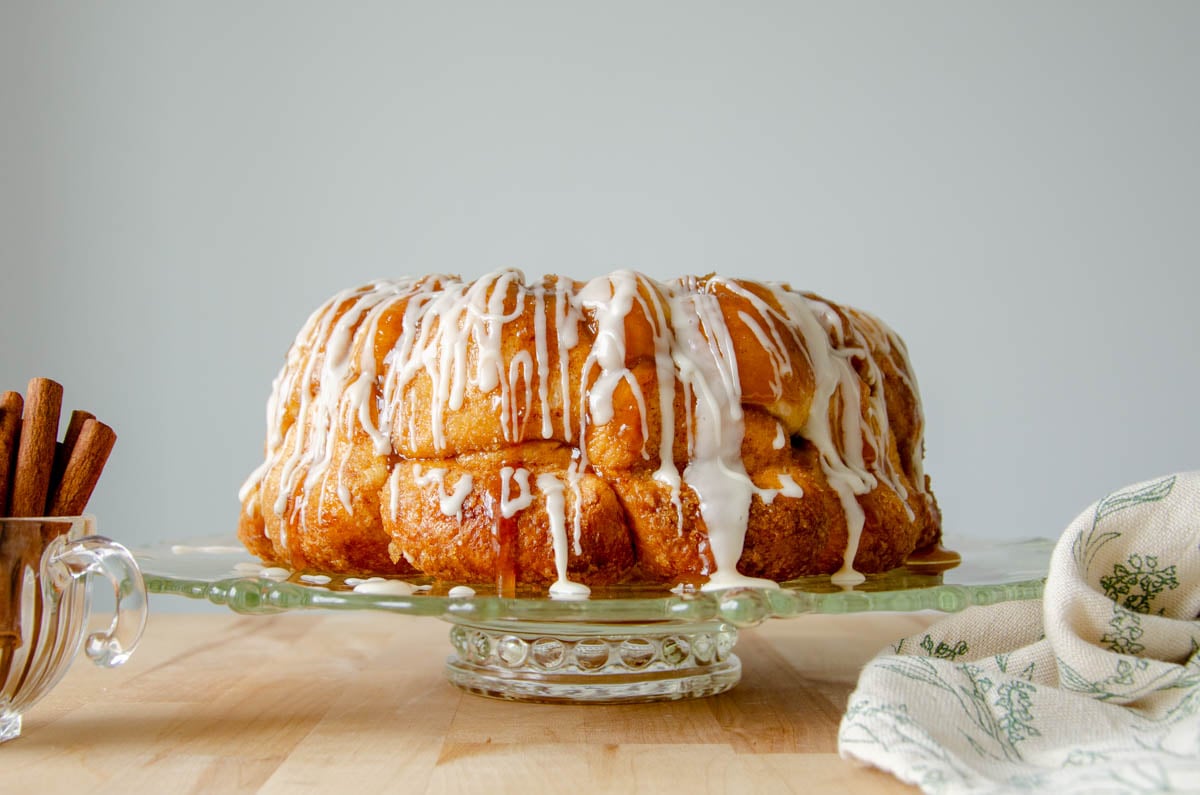
Homemade Sourdough Monkey Bread Recipe from Scratch
This homemade sourdough monkey bread recipe from scratch will become your new favorite treat! Throw those canned biscuits away and instead, make this sourdough cinnamon treat using real, whole ingredients.
Small balls of sourdough dough are tossed in a cinnamon sugar mixture before baking in a rich brown sugar and butter syrup. Add an optional vanilla glaze after it’s done baking for an extra indulgent treat. You can taste the homemade difference after just one bite!

Save This For Later!
We’ll email this post to you so it doesn’t get lost in your open tabs!
By submitting this form, you consent to receive emails from Lockrem Homestead
New to Sourdough?
If you’re new to sourdough baking, these beginner-friendly guides will help you get started with confidence. Learn how to make a Sourdough Starter from Scratch, feed and maintain it with the Complete Sourdough Starter Guide, and bake your first loaf with this Easy Sourdough Bread Recipe. Together, these guides create a solid foundation for your sourdough journey.
Having a sourdough starter is an invaluable ingredient in my kitchen, and I love incorporating it into as many recipes as I can. Not only does it create delicious food, but it’s also part of how I ensure my family is eating food that encourages gut health. Using a long fermenting process, sourdough recipes help reduce the phytic acid compared to bread baked with commercial yeast. In addition, because most of the effort is passive, it’s easy to weave into my daily life.
Sourdough monkey bread goes by many names: Hungarian coffee cake, cinnamon tear-and-share bread, cinnamon pull-apart bread, golden dumpling coffee cake, or bubble bread.
But whatever you want to call it, we can all agree on one thing: it’s delicious! Individual dough balls made using active sourdough starter are coated in a cinnamon sugar mixture and baked with a brown sugar caramel sauce until they’re fluffy and golden brown. Simple and delicious. I made this recipe for sourdough monkey bread twice this past week, and my family wasn’t sad about it. Not one bit!
More Sourdough Breakfast Recipes
Why You’ll Love Sourdough Monkey Bread
- Special Occasion – Even though I made this just because it was Tuesday, it doesn’t mean it’s not special enough to celebrate the most festive of days! Sourdough pull apart monkey bread is perfect for a special breakfast on Christmas morning, Easter morning, at bridal showers, or a quiet weekend away. Whatever the reason, you won’t regret making it!
- Sourdough Goodness – If you’ve been with Lockrem Homestead, you know that I love to bake using my sourdough starter any chance I can get, and this is no exception! The long bulk fermentation helps break down the phytic acid and makes the dough easier to digest. Plus, sourdough monkey bread with starter has the classic subtle sourdough tang that can’t be beat!
- Better Ingredients – You’ll often see monkey bread recipes that use canned biscuits for the dough portion. However, if I’m going to feed my family a treat, it’s worth the effort for it to be made using real, whole ingredients and not with ingredients like seed oils and preservatives.

Monkey Bread Ingredients
- Sourdough starter – Use an active sourdough starter to create a levain. If your sourdough starter is healthy and has been fed recently, you can use active starter in leiu of the levain.
- Sugar – Adding a touch of sugar lightly sweetens the dough, but also enriches it to produce a soft and tender bread crumb.
- Brown sugar – Creates a delicious caramel syrup that fills in the cracks of the dough as the monkey bread bakes.
- Water – Use filtered water for best results. If using tap water, allow it to sit at room temperature for 12-24 hours to let the chlorine evaporate out.
- Butter – Use unsalted butter to have full control over the salt levels.
- Salt – Flavors baked goods and helps with gluten development.
- Flour – The higher protein content in bread flour creates a strong gluten development. You can use all-purpose flour, but the bread will not bake as tall.
- Cinnamon – Wraps individual dough balls in a warm flavor that fills the whole house when baking.
- Powdered sugar – Sweetens the bread and adds a beautiful finishing touch.
- Vanilla extract – Flavors the vanilla glaze.
- Milk – A touch of whole milk creates a silky smooth glaze.

Tools You’ll Need
- Kitchen scale
- 12 cup bundt pan
- Bench scraper or sharp knife
- Saucepan
- Stand mixer
- Small bowl

How to Make Sourdough Monkey Bread
Prep
Mix the levain. Combine flour, active sourdough starter, and water into a clean container and cover. Leave at room temperature and allow to rise overnight.
Mix the Dough
The next morning, combine levain, water, flour, salt, and sugar in the bowl of a stand mixer fitted with the dough hook attachment. Mix on low speed until the dough forms a ball. Scrape down the sides of the bowl as needed.
Increase to medium-low speed, speed 3 on a kitchen aid mixer, and mix for 10 minutes. At this point, it’s normal for the dough to have a bit of extensibility and stretch a few inches before breaking.
Melt butter and add it to the bowl. Starting on low, gradually increase to medium speed to incorporate the butter. The dough will float in the melted butter at first, but after a minute or two, it begins to mix into the dough. When this happens, increase the speed to medium-high to fully work the butter into the dough. Continue to mix for an additional 2 minutes. The dough transforms into a soft and smooth dough.


Bulk Ferment
Transfer the dough to a clean container, cover, and move to a warm place. Let the dough rest for 3-5 hours or until the dough nearly doubles. The exact time will largely depend on the temperature of your kitchen.


Cold Ferment
Once the dough has doubled, place it into the refrigerator. I like to do this step overnight.
Shape and Assemble
The next day, heat the butter and brown sugar on the stove in a small saucepan over medium heat. As the butter melts, whisk the sugar into it. At first, the butter will separate from the sugar, but once it begins to simmer, it comes together. Simmer for 1-2 minutes. Remove from the heat and set aside while you prep the monkey bread dough.

Turn out the dough onto a lightly floured work surface. Using a bench scraper, divide the dough into 8 equal pieces. Then, divide those pieces into 4, for a total of 32 small pieces. Roll each piece of dough into little dough balls, pinching the ends together.
In a small bowl, combine sugar and cinnamon. Roll the dough pieces in the cinnamon sugar mixture until they’re completely covered. Arrange the pieces evenly in a greased bundt pan. Continue with the remaining dough balls.


Proof
Pour the brown sugar mixture over the top of the dough balls. Cover the top of the pan with a piece of plastic wrap and set it in a warm spot to proof for 2-3 hours. Once the dough rises to the top of the bundt pan, it’s ready to bake. The exact rise time will depend on the temperature.


Bake
Once the dough has proofed and risen to the top of the pan, preheat the oven to 350°F/177°C with the rack in the middle position.
Carefully remove the plastic wrap, place the pan into the preheated oven and bake for 40 minutes.
The bread is done once the top of the bread is golden brown, springs back when touched, and when the internal temperature reads 200°F/93°C with an instant-read thermometer inserted into the middle of the bread.


Cool and Glaze
Remove the bread from the oven and place it onto a wire rack to rest for 10 minutes before turning it out.
Place a large plate or cake stand on top of the bundt pan, and holding onto both, flip the pan and the plate over. The bread will release from the pan onto the plate.
Add an optional glaze. Combine powdered sugar, milk, and vanilla extract into a small bowl using a spoon. Drizzle the glaze over the top of the monkey bread.

Storage
Like most baked goods, sourdough monkey bread is best the day it’s baked. As more time passes, the bread will soften from the glaze. To store, first allow the monkey bread to cool completely. Then place the leftover monkey bread into an airtight container and store at room temperature for up to 3 days.
Helpful Tips for Monkey Bread
- If your kitchen is cool, then use a bread proofer to provide a warm place for the dough to ferment. Another alternative is to place the bowl into the oven with the light on.
- Don’t skip cold-proofing the dough. Cold dough is easier to divide and shape.
- Bake the bundt pan on a baking sheet to keep your oven clean and catch any drips that spill over the pan.
- Because the brown sugar syrup and vanilla glaze are both so sweet, balance them by sprinkling a touch of finishing salt over the top of the bread right before serving.

Sample Baker’s Timeline for Sourdough Monkey Bread Recipe
| Day 1: 8:00 am | Mix the levain and allow it to peak |
| 12:00 pm | Mix sourdough monkey bread dough |
| 12:30 pm | Bulk ferment |
| 4:30 pm | Cold Ferment |
| Day 2: 8:00 am | Divide and shape dough |
| 8:15 am – 11:15 am | Proof the dough |
| 11:00 am | Preheat the oven |
| 11:15 am- 11:55 am | Bake |
FAQs About Sourdough Cinnamon Monkey Bread
Can Monkey Bread be Frozen?
YES! Freezing Cinnamon Roll Monkey Bread is a great way to have homemade treats available when you’re short on time. Be sure to freeze without the vanilla glaze, adding it once it’s done warming in the oven.
Bake the monkey bread and allow it to cool to room temperature before wrapping in plastic wrap, followed by foil. Alternatively, you can place it into a freezer-safe bag and squeeze to remove as much air as possible. Label with the name and date, and place in the freezer for up to 3 months.
When ready to enjoy, thaw the monkey bread in the refrigerator overnight, or on the counter for 6 hours. Once completely thawed, place it on a baking sheet and heat at 250°F/121°C for 5-10 minutes. Keep an eye on it while it warms.
Remove from the oven and top with vanilla glaze.
Can Monkey Bread be Made in a Loaf Pan?
Yes, you can make monkey bread without a bundt pan. divide the dough between two 9×5 loaf pans before baking. You may have to adjust baking times.
What Does cinnamon roll Monkey Bread Taste Like?
Soft, tender individual pieces of dough are coated with plenty of cinnamon and brown sugar syrup before being baked and topped with a vanilla glaze. Warm from the oven, each bite of monkey bread resembles the best part of cinnamon rolls, the center swirl. It’s so good, you’ll have trouble enjoying just one bite!
Why is Monkey Bread Called Monkey Bread?
Sticky monkey bread got its name because of its tear-and-share quality, making it a delightful finger food. Though Americans call this soft, sticky pastry monkey bread, it has been around other parts of the world for many years with different names. Originally called a golden dumpling, this delightful pastry has morphed and transformed since coming stateside in the mid-1900s. Along the way, eating this bread grew in comparison to how a monkey would, and the name has since stuck.

I’d love to hear from you! If you made this Sourdough Cinnamon Monkey Bread Recipe and loved it, I would love it if you gave it 5 stars! Happy Baking!

Homemade Sourdough Monkey Bread Recipe from Scratch
Want to Save This Recipe?
Enter your email & I’ll send it to your inbox. Plus, get great new recipes from me every week!
By submitting this form, you consent to receive emails from Lockrem Homestead
Equipment
- 1 12 cup bundt pan
- 1 kitchen scale
- 1 bench scraper or sharp knife
- 1 stand mixer with a dough hook attachment
- 1 small bowl
- 1 saucepan
Ingredients
Levain
- 100 g all-purpose flour
- 100 g water
- 50 g active sourdough starter
Monkey Bread Dough
- 250 g all of the ripe levain, or active sourdough starter 1 cup
- 67 g sugar ⅓ cup
- 313 g warm water 1¼ cups
- 1 tsp sea salt
- 562 g bread flour 4½ cups
- 85 g unsalted butter 6 T
Cinnamon Sugar Mixture
- 2 tsp cinnamon
- 100 g sugar ½ cup
Brown Sugar Syrup
- 200 g brown sugar 1 cup
- 113 g unsalted butter ½ cup
Vanilla Glaze
- 90 g powdered sugar
- 20 g whole milk
- ½ tsp vanilla extract
- a pinch flaky salt (like Maldon sea salt flakes) optional for sprinkling over the top of the bread
Instructions
Prep
- Mix the levain. Add 100 g all-purpose flour, 50 g active sourdough starter, and 100 g water into a clean container and cover. Leave at room temperature and allow to rise 10-12 hours, or overnight.
Mix the Dough
- The next morning, combine 250 g all of the ripe levain, or active sourdough starter, 67 g sugar, 313 g warm water, 562 g bread flour, and 1 tsp sea salt in the bowl of a stand mixer fitted with the dough hook attachment. Mix on low speed until the dough forms a ball. Scrape down the sides of the bowl as needed.
- Increase to medium-low speed, speed 3 on a kitchen aid mixer, and mix for 10 minutes. At this point, it’s normal for the dough to have a bit of extensibility and stretch a few inches before breaking.
- Melt 85 g unsalted butter and let it cool for a few minutes before adding it to the bowl of the stand mixer. Starting on low, gradually increase to medium speed to incorporate the butter. At first, the dough will float in the melted butter, but after a minute or two, it begins to mix into the dough. When this happens, increase the speed to medium-high to fully work the butter into the dough. Continue to mix for an additional 2 minutes. The dough transforms into a soft and smooth dough.
Bulk Ferment
- Transfer the dough to a clean container, cover, and move to a warm place. Let the dough rest for 3-5 hours or until the dough nearly doubles. The exact time will largely depend on the temperature of your kitchen.
Cold Ferment
- Once the dough has doubled, place it into the refrigerator. I like to do this step overnight.
Shape
- The next day, heat 113 g unsalted butter and 200 g brown sugar in a small saucepan on the stove over medium heat. As the butter melts, whisk the sugar into it. At first, the butter will separate from the sugar, but once it begins to simmer, it comes together. Simmer for 1-2 minutes. Remove from the heat and set aside while you prep the monkey bread dough.
- Turn out the dough onto a lightly floured work surface. Using a bench scraper, divide the dough into 8 equal pieces. Then, divide those pieces into 4, for a total of 32 small pieces. Roll each piece of dough into little dough balls, pinching the ends together.
- In a small bowl, combine 100 g sugar and 2 tsp cinnamon. Roll the dough pieces in the cinnamon sugar mixture until they're completely covered. Arrange the pieces evenly in a greased bundt pan. Continue with the remaining dough balls.
Proof
- Pour the brown sugar mixture over the top of the dough balls. Cover the top of the pan with a piece of plastic wrap and set it in a warm spot to proof for 2-3 hours. Once the dough rises to the top of the bundt pan, it's ready to bake. The exact rise time will depend on the temperature of your kitchen.
Bake
- Once the dough has proofed and risen to the top of the pan, preheat the oven to 350°F/177°C with the rack in the middle position.
- Carefully remove the plastic wrap and place the pan into the preheated oven. Bake for 40 minutes. The bread is done once the top of the bread is golden brown, springs back when touched, and when the internal temperature reads 200°F/93°C with an instant-read thermometer inserted into the middle of the bread.
- Remove the bread from the oven and place it onto a wire rack to rest for 10 minutes before turning it out.
- Place a large plate or cake stand on top of the bundt pan, and holding onto both, flip the pan and the plate over. The bread will release from the pan onto the plate.
- Add an optional glaze. Combine 90 g powdered sugar, 20 g whole milk, and ½ tsp vanilla extract into a small bowl using a spoon. Drizzle the glaze over the top of the monkey bread.
Storage
- Like most baked goods, sourdough monkey bread is best the day it’s baked. As more time passes, the bread will soften from the glaze. To store, first allow the monkey bread to cool completely. Then place the leftover monkey bread into an airtight container and store at room temperature for up to 3 days.
Notes
- If your kitchen is cool, then use a bread proofer to provide a warm place for the dough to ferment. Another alternative is to place the bowl into the oven with the light on.
- Don’t skip cold-proofing the dough. It becomes easier to divide and shape once it’s cold.
- Bake the bundt pan on a baking sheet to keep your oven clean and catch any drips that spill over the pan.
- Because the brown sugar syrup and vanilla glaze are both so sweet, balance it by sprinkling a touch of finishing salt over the top of the bread right before serving.
Sticky, cinnamon-y, and perfect for sharing! You’re family and friends will be licking their fingers and asking for more! Share what you’re making your monkey bread for, or any questions you came across while baking it! I look forward to hearing from you!