
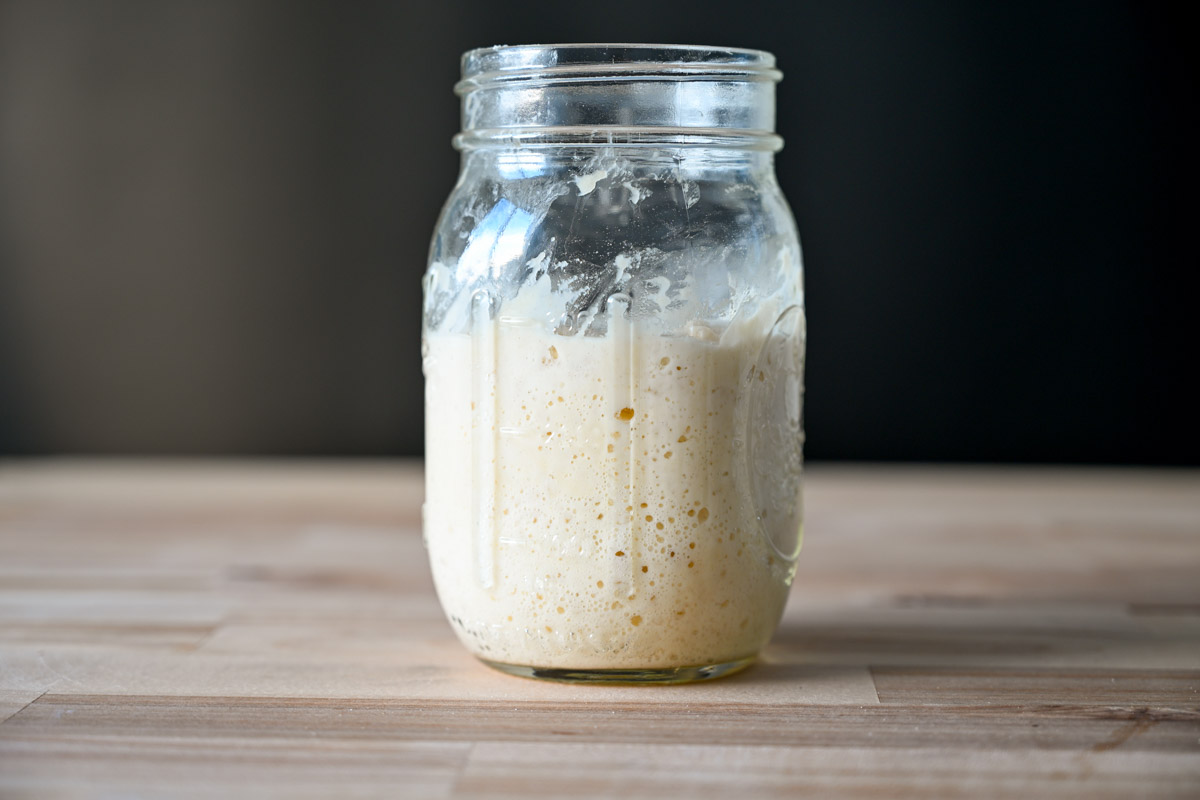
Sourdough Starter Ratios (With Calculator)
Learn what sourdough starter feeding ratios are and how you can adjust them for greater success in your sourdough baking. This guide explains what sourdough feeding ratios are, which ratios work best for baking vs. maintenance, and includes a simple calculator. You’ll also learn how to adjust feedings to control fermentation speed so it fits your routine, baking schedule, and goals.
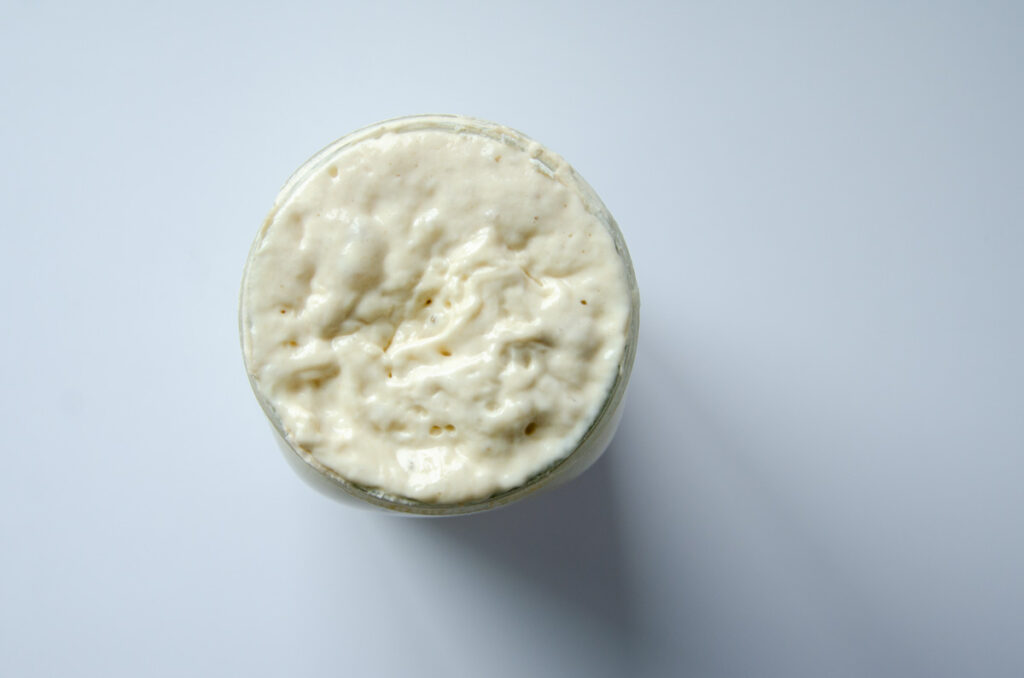
The sourdough starter is the foundation for baking sourdough bread. Maintaining a sourdough starter requires regular feedings of flour and water to keep the sourdough culture of wild yeast and bacteria alive and healthy.
But how much flour and water do you need when you go to feed your sourdough starter? Should it always be the same amount? How does a feeding ratio of 1:1:1 differ from 1:3:3, and why would you use one over the other? This guide answers all of these types of questions.
If you’re new to sourdough baking, I suggest starting with reading How to Make Sourdough Starter and The Complete Sourdough Guide.
What is a Sourdough Starter Feeding Ratio?
A ratio is a calculation used to compare two or more numbers in relation to one another. In baking, we use ratios to compare every ingredient to the weight of flour in a recipe.
This is true in sourdough baking, too. When maintaining a sourdough starter, it needs frequent feedings to keep it healthy. A portion of the mature starter is carried over with fresh flour and water. The rate at which the starter comes to maturity, or its peak, is dependent on the amount of each ingredient in relation to the others.
Bakers use the term feeding ratio to refer to the proportion of sourdough starter, flour, and water in each feeding, based on weight and not volume.
The feeding ratio is always written in this order: Starter : Flour : Water.
This allows you to understand the ingredients without writing them out every single time.
NOTE: This guide uses all-purpose flour in all of its examples. Different flours will affect the fermentation rate. If you use rye flour, whole wheat flour, or other varieties, be sure to adjust the amount of time the starter peaks.
Understanding Common Sourdough Starter Ratios for Feeding
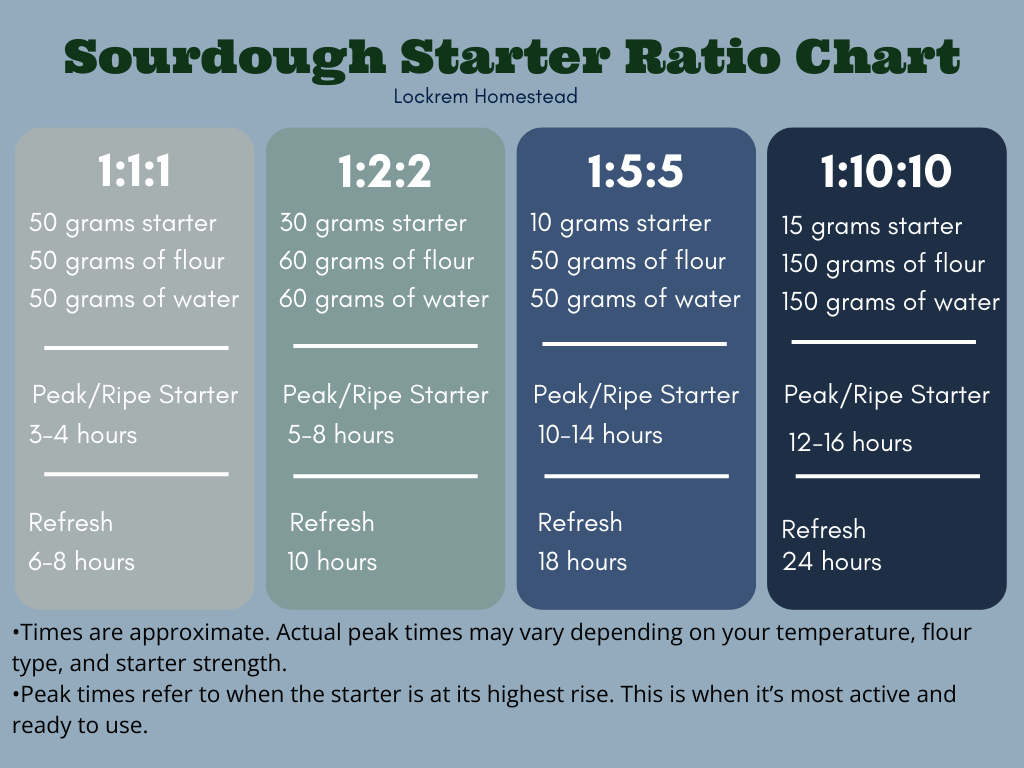
When learning to bake with sourdough, it’s common to see a 1:1:1 feeding ratio. This is one part starter, one part flour, and one part water. I teach an equal parts feeding ratio for those early in their sourdough journey. It’s simple and peaks quickly, making it easy to see how a starter behaves as you learn the basics of sourdough. Once you’re familiar with what the starter is doing, you can adjust the ratios to fit your needs.
Giving the sourdough starter more food (flour) in relation to the amount of starter means it will take longer to go through its food supply. Only when it’s done eating through all of the food does it come to its peak.
The easiest way for me to understand this concept was to compare it to a real-world scenario familiar to me.
Imagine you have to feed 10 people. If you give them 1 apple each, 10 apples total, they don’t have that much food per person and will eat through the apples pretty quickly. However, if you give them 5 apples each, 50 apples total, it will take them much longer. And even longer with 10 apples each, or 100 apples. Can you see how it’s expressed as the same ratios? The same is true with sourdough starter, just at a microscopic level.
A 1:5:5 ratio takes longer to come to its peak than 1:1:1 because there’s a larger ratio of food compared to the microbes. The greater the last two numbers, the more time the starter takes to eat through the food and come to maturity.
Below are two example feeding ratios and how they can be expressed in weight.


As you can see, you can adjust both the amount of starter and the amount of flour and water to achieve the desired ratio.
Option 2 examples use the same ratios, but different weights, yielding a much larger amount of starter. This offers the flexibility for those wanting to scale up their bread production.
Calculating Sourdough Starter Feeding Ratios and Peak Times
Now you know what feeding ratios are, but what do you do with this information?
The greatest benefit to understanding different feeding ratios is that you can plan baking sourdough around your schedule, instead of your life around sourdough. Learn how to calculate sourdough starter ratios so you’re in the driving seat. Never again do you need to wonder when the starter is ready. If you maintain the temperature and feeding ratio, you know when it peaks and is ready to use for baking.
It’s easy to recalculate with the same desired amount of starter.


For those who want their starter to ripen on a shorter timeline, choose a lower ratio (e.g., 1:1:1 or 1:2:2)
With a smaller ratio, the microbes have a smaller amount of food, so they eat through it and come to maturity in less time. This is helpful if you need your starter to be ready on a short timeline, in as little as 3 or 4 hours. However, because it has less food, it exhausts its food supply at a faster rate and needs to be refreshed more frequently.
For those who want their starter to ripen on a Longer Timeline, Choose a higher ratio (e.g., 1:4:4 and above)
Here, the inverse is true. With higher feeding ratios, the living microbes have a larger portion of food and take longer to eat through it and come to peak. This is helpful if you want to have a large gap of time between when you feed and use the starter. For example, feed the starter at night, so it peaks and is ready to use the next morning.
Here, the starter can go longer without a refresh. A high feeding ratio is a good choice for those wanting to keep their starter at room temperature.
Use this information to plan feeding your sourdough starter based on when you want it to peak.
Sourdough Starter Maintenance Ratios (Long Term Care)
Feeding a sourdough starter to use in a recipe isn’t the only consideration. You also need to factor in feeding the starter for storage. There are a few different sourdough starter feeding ratios based on how often you plan to bake, where you plan to store the starter, and how much starter you keep as seed for the next feeding.

1:1:1 maintenance Feeding ratio (All of the feeding ratios assume 75°f/24°c-78°f/25°c)
In this sourdough starter maintenance routine, the starter peaks usually within 3-4 hours. Because the microbes eat through their food supply quickly, this feeding ratio only lasts around 6 hours before it needs to be refreshed again.
For feeding maintenance, you’d have to feed the starter multiple times a day if kept at room temperature. Since colder temperatures slow fermentation, storing sourdough starter in the fridge extends the time between feedings. Here, you can stretch the feedings to weekly.
1:5:5 maintenance feeding ratio
In this feeding ratio, the starter usually peaks within 10-14 hours. Because there is more food than microbes, it takes longer to peak, extending the time between feedings to 18 hours.
Maintenance feedings are reduced to twice a day compared to the 1:1:1 feeding ratio. This ratio requires some devotion, but it is easy to weave into your daily kitchen routine with one feeding at breakfast time and the other as you clean up dinner.
Again, if you want to extend the time between feedings, you can place the starter in the fridge. Here, it can go a few weeks before refreshing.
1:10:10 maintenance feeding ratio
With such a large food supply, this feeding ratio peaks at 12-16 hours and can go up to 24 hours before another feeding. Some use this feeding ratio and never place their starter into the fridge.
However, if you need to take a break from using your sourdough starter, place it in the fridge. With this feeding ratio, it can go 2-3 months between feedings.
Sourdough Starter Hydration Ratio
The sourdough starter ratios can affect the hydration of your sourdough starter, but only if you choose to change them. A 100% hydration starter, also called a liquid starter, is the most common, and is when the flour and water remain the same. For example, 1:1:1 and 1:10:10 are both 100% hydration because the proportions of flour and water are equal.
You can adjust the ratios and change the hydration levels by adding more or less water. A lower hydration sourdough starter, called a stiff sourdough starter, has a higher proportion of flour relative to starter and water, and can be written 1:2:1. Here, there’s twice as much flour as there is starter and water, which delays the starter coming to maturity.
I like to keep my starter’s hydration at 100%. Most recipes are written with this ratio unless otherwise noted. Also, it makes it easy to incorporate into sourdough discard recipes. Changing it means you’ll need to account for the difference by adding more or less flour and water in recipes.
Sourdough Starter Ratios Common Mistakes
- Measuring – Using volume-based measurements, like cups or tablespoons, instead of measuring by weight using a kitchen scale, yields improper feeding ratios for sourdough starter, resulting in inconsistent results. In addition, ingredients have different densities, so you can’t use one singular measurement for starter, flour, and water. For example, 1 cup of flour weighs 125 grams, compared to 1 cup of water, which weighs 250 grams.
- Too Little Flour – Feeding your starter with too little flour means your starter isn’t getting the food it needs, and over time, this leads to a weak and acidic starter. If it smells like acetone or has a layer of hooch on the top, it’s hungry and needs more food. The weak starter will have a difficult time fermenting and will produce a dense, gummy bread.
- Temperature – The speed of the fermentation process is temperature-dependent. The starter’s activity increases in warmer temperatures and comes to a peak much sooner than the same feeding ratio at a cooler temperature.

FAQs
Do I feed my sourdough starter the same amount every day?
No, feel free to adjust how much you feed the sourdough starter based on how soon you want to the starter to peak.
What is the best feeding ratio for sourdough starter?
I often get asked what is the best ratio to feed my sourdough starter? To which my answer is that there isn’t just one ratio used to have a successful sourdough starter. Your baking schedule, how you plan to store the starter, and how often you want to feed it are all factors determining which sourdough ratios to feed work best for you.
The main thing to remember when choosing a ratio is to use one that will provide the starter enough food to carry it through to the next feeding without starving.
Can I use ratios with a Levain too?
Yes! Use the same concepts of feeding ratios to create a levain.
The levain will take more or less time depending on the feeding ratio you use and your kitchen’s temperature. If this seems overwhelming, keep it simple and use the feeding calculator above.
How much starter should I keep?
I like to maintain a small portion of starter, so I use less flour to maintain it. Typically, I keep 30 – 50 grams of starter. Using ratios, it’s easy to scale up the small amount of starter to whatever amount you need.
Can I change feeding ratios?
Yes! Use the guide to help you adjust the feeding ratio routine to fit your baking needs.
Final Thoughts | The Best Sourdough Starter Ratio for You
Mastering the art of sourdough starter maintenance using feeding ratios is a pivotal step for any home baker. However, there are no perfect ratios for feeding sourdough starter for every single bake.
Like so many other aspects of sourdough, there are many variables to consider. How much time and effort you devote to mastery largely depends on your goals.
The best way to learn is to jump in, practice, and take good notes. Note your home’s temperature conditions and how the bread dough behaves accordingly. Then, experiment by changing one variable at a time, and note what happens.

If this guide was helpful, I’d love to hear about it! Let me know what feeding ratio you use!
You can find my sourdough calculator in the main menu! Pin it to keep in your back pocket, or ask any questions you have on sourdough starter ratios in the comments below. Happy baking!