
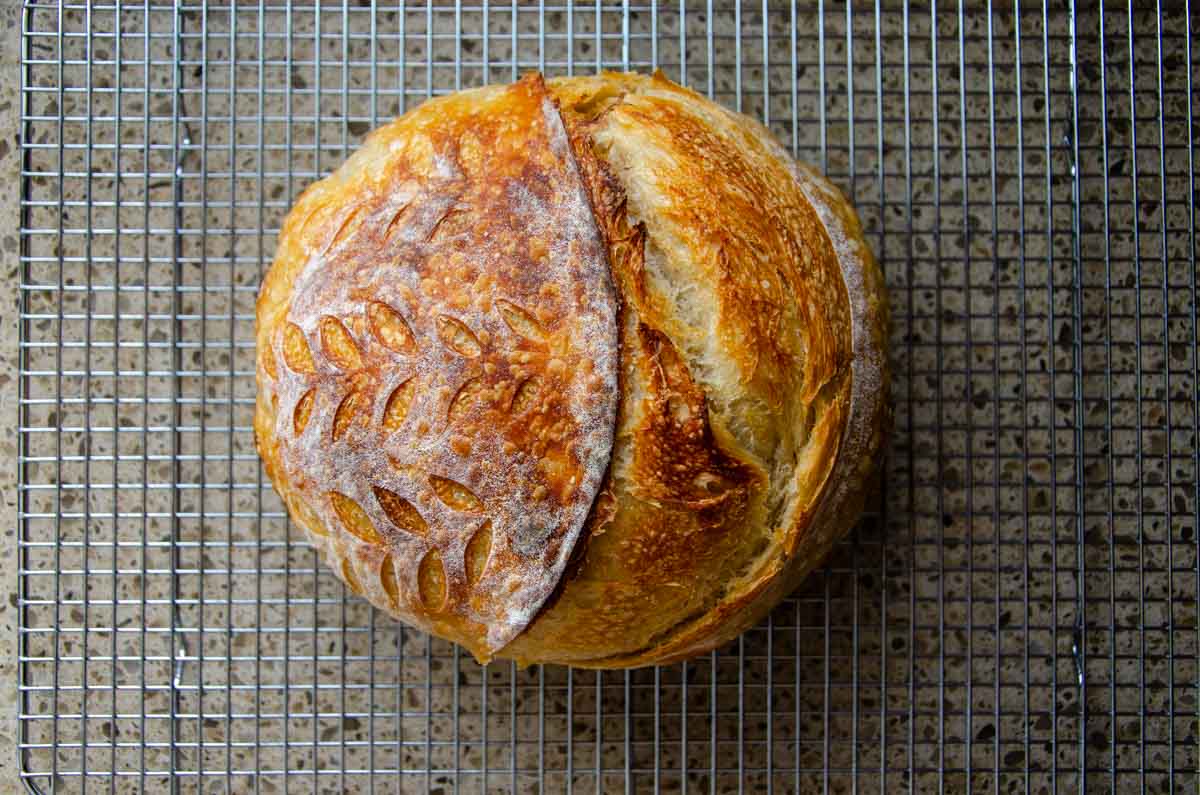
How To Freeze Sourdough Bread Dough
Learn how to freeze sourdough bread dough with a few simple steps to enjoy loaves of freshly baked sourdough bread without the fuss.
This post may contain affiliate links. As an Amazon Associate, I may receive a small commission, at no cost to you, if you make a purchase. Please read our disclosure policy.
Years ago when I was beginning my homemaking journey as a young wife, I stumbled upon frozen bread dough. I never knew it existed, but it was amazing! It not only gave me a glimpse into what homemade food could taste like, but it made freshly baked bread a reality in those early days.
That frozen bread dough was a shortcut to having freshly baked bread. This was my introduction to baking bread and after that first loaf of bread, I was hooked! I now knew that freshly baked bread was delicious and completely worth the effort! It was such a far stretch from the white Wonder Bread that I grew up on.
Fast forward a few years, and I was no longer buying the frozen bread dough, but moved forward to making my own bread. Recently, these two worlds had converged. I wanted to know if I could freeze sourdough bread dough before baking it. Since I knew that I could successfully freeze sourdough discard, I didn’t see any challenges with freezing sourdough dough.
Freezing suspends the bread-making process, allowing you to bake the bread when you want it. This is a useful skill for home bread bakers to have, so they have the flexibility to control their schedule.
Since then, I’ve come to love making food from scratch and baking homemade bread. Within the past few years, that bread baking journey evolved into learning more about sourdough bread.
Can You Freeze Sourdough Bread Dough?
Before you can bake sourdough bread, you need to create a sourdough starter, a living culture full of wild yeast and lactic acid bacteria. This culture requires nothing more than time, water, and flour to survive. Once fed and given the chance to ferment, this live culture produces carbon dioxide gas, causing bread to rise.
Now you may wonder, if keeping a sourdough starter means that you’re tied to a regular feeding schedule and baking bread. What do you do when if you have a busy schedule?
In my personal experience, baking with sourdough is extremely forgiving. If you need to take a break, then dehydrate your starter until you’re ready to pick it back up again. Or freeze sourdough starter or discard.
Somewhere along my sourdough journey, I knew that you could freeze sourdough starter discard, but I began to wonder, can you freeze sourdough dough?
After a bit of trial and error, I discovered that you can freeze bread dough. However, timing and technique are both important to the end results. You must freeze sourdough bread dough, after the first rise and after you’ve shaped it into its final form.
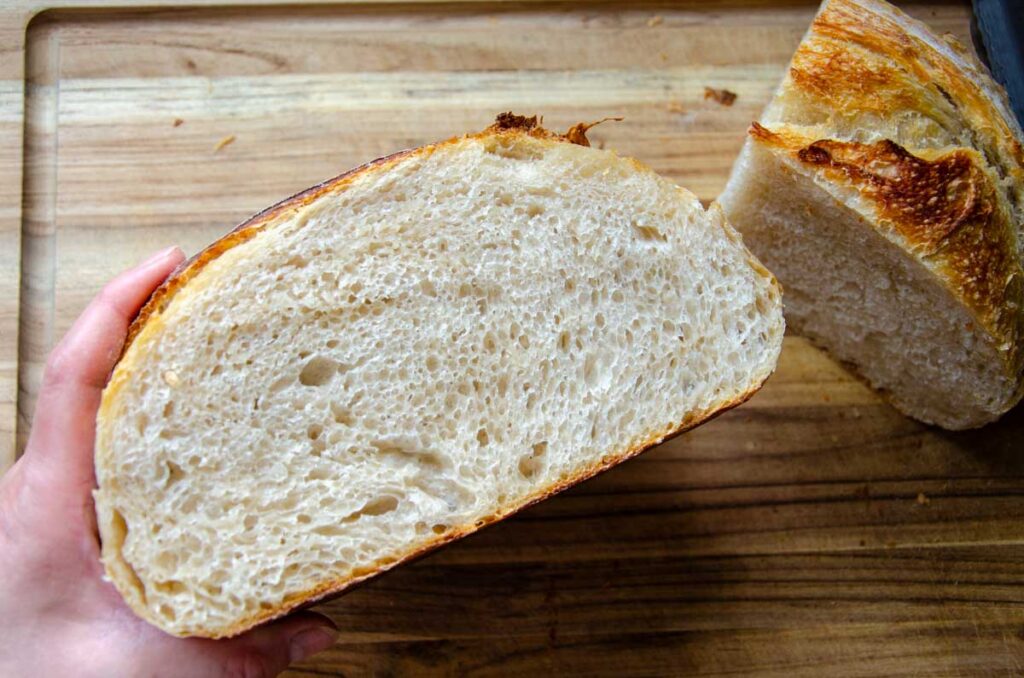
Be sure to have proper expectations. Baking a loaf of sourdough bread from frozen dough won’t produce the same results as a freshly mixed sourdough bread. Freezing the dough can weaken the gluten structure and yeast, so the bread has a tighter crumb and a smaller rise. But in the end, you will enjoy freshly baked homemade sourdough bread, and that’s a win in my book!
Freezing Sourdough Dough Benefits
- Delicious – Having frozen dough in the freezer frees up a few steps in the bread making process, so you can enjoy a fresh loaf of sourdough bread, warm from the oven.
- Just like freezing sourdough starter, freezing sourdough bread dough slows the wild yeast and the lactic acid bacteria in the sourdough starter without killing it. This
- Quality bread – Let’s be honest, making food from scratch is more work than prepackaged or prepared foods from the store. While it takes more time and effort, you often end up with a higher quality product. Making bread from scratch means you have total control over the quality of ingredients you choose to feed your family.
- Convenient – Mixing many loaves of dough all at one time and placing some into the freezer means you make the mess once while having multiple loaves to enjoy at a later date. This is a great option to enjoy fresh sourdough bread during busy seasons like the holidays!
Overview
Learn how to create a flavorful loaf of sourdough bread with flour, salt, water, active sourdough starter, and time.
- Mix the bread dough
- Let the dough rise one time
- Shape the dough
- Prepare the pan
- Freeze
- Protect
How To Freeze Sourdough Bread Dough
Make the Sourdough Dough
Follow the directions on your sourdough recipe.
Make the dough and build up the gluten with a series of stretch and folds. Then, allow it to bulk ferment.
Shape the Dough
Turn the dough out onto a lightly floured work surface and shape the dough like you normally would.
Freeze
Once the bread dough is properly shaped, you have two options for freezing the dough.
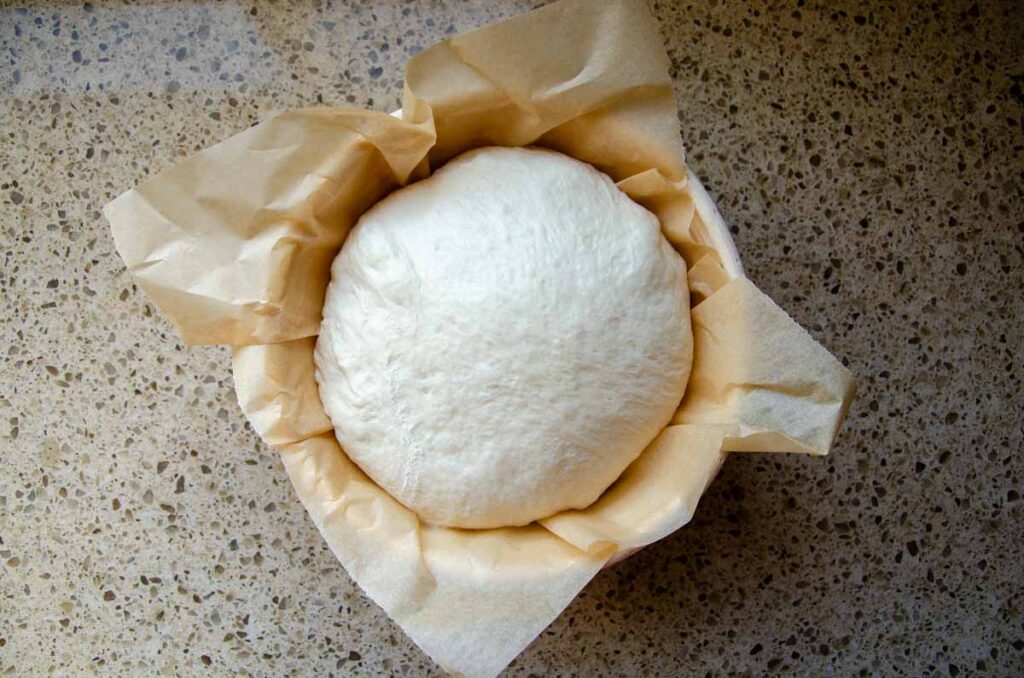
- Freeze in a banneton – Place the shaped sourdough dough onto a piece of parchment paper and lift the sourdough dough, using the parchment paper as handles, into the banneton or a large bowl. Wrap the banneton in a large plastic bag. I like to use a 2.5 gallon slider food storage bag.
- Freeze without a banneton – The other option is to place the shaped sourdough dough onto the center of a piece of plastic wrap and lift the sides over the dough. Then, wrap the dough in a second layer of plastic wrap for extra protection.
Place the wrapped dough into the freezer. Allow the dough to freeze solid, usually takes 2-3 hours. Once the dough is completely frozen, remove the dough from the bowl or banneton, and wrap in a few layers of plastic wrap or place it into a freezer-safe bag (like a freezer ziplock bag).
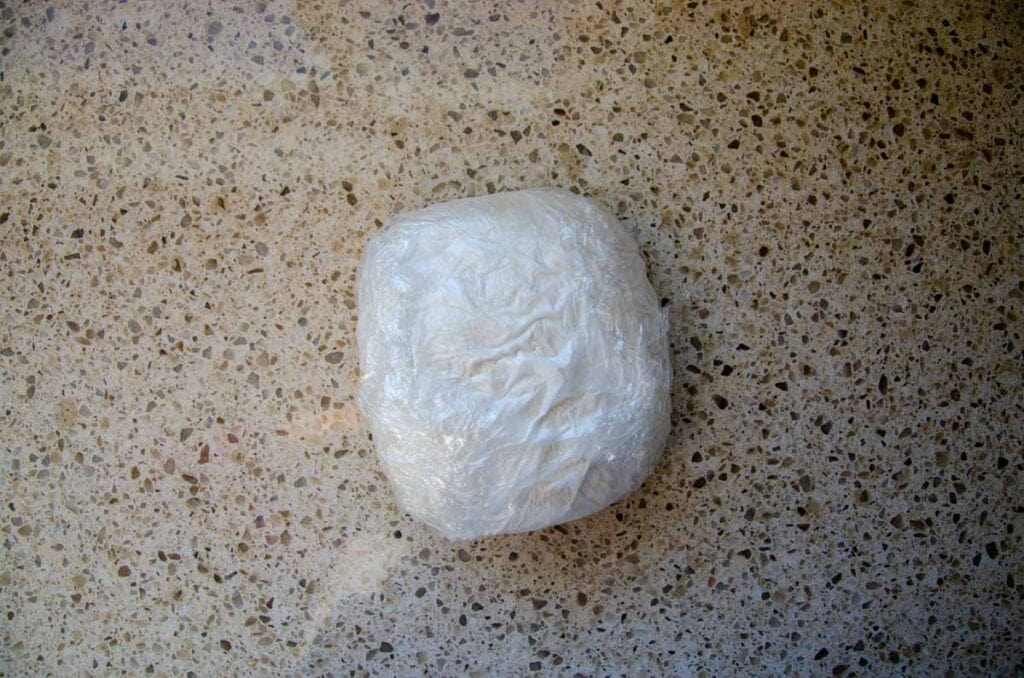
Label with the name, date, and return to the freezer.
Thaw the Dough and The Final Proof
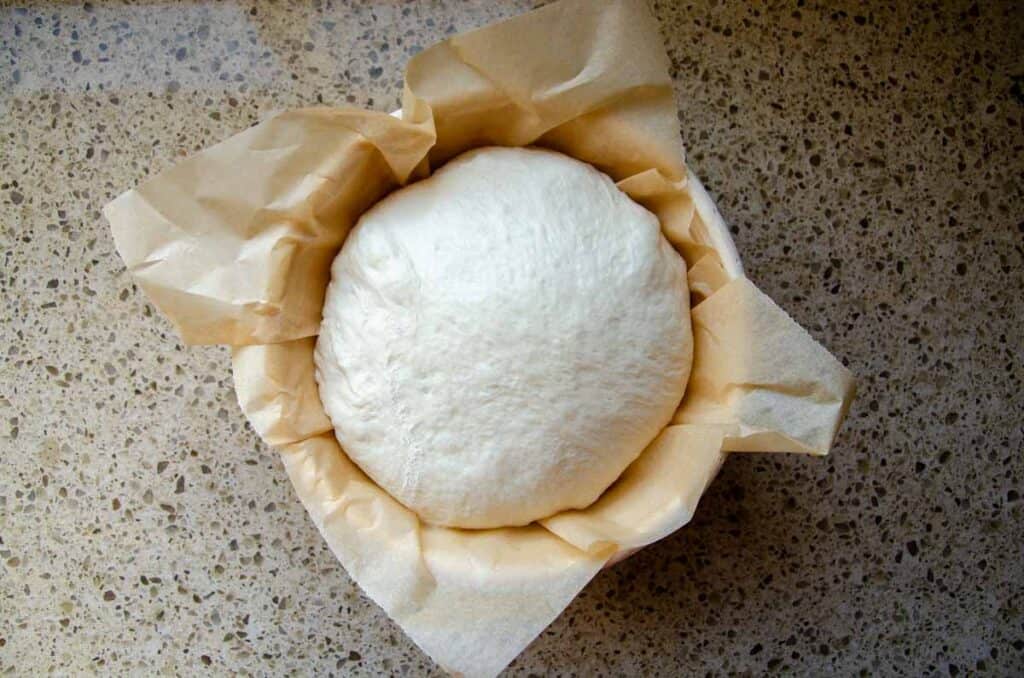
Remove the dough from the freezer bag and place it in a banneton or parchment-lined bowl. Once the dough is thawed, continue to move forward with your baking process.
- Option 1: Thaw at room temperature. Cover the bowl and place it in a warm spot in the kitchen to thaw and rise. Initially, the dough has to thaw before it is ready for its second rise. My bread dough was ready to bake after 9 hours of thawing and proofing.
- Option 2: Thaw in the refrigerator. Cover the bowl and place in the refrigerator to thaw. The dough will take 12-18 hours to thaw (I generally do this step overnight and wake to the dough completely thawed and ready for its second rise.)
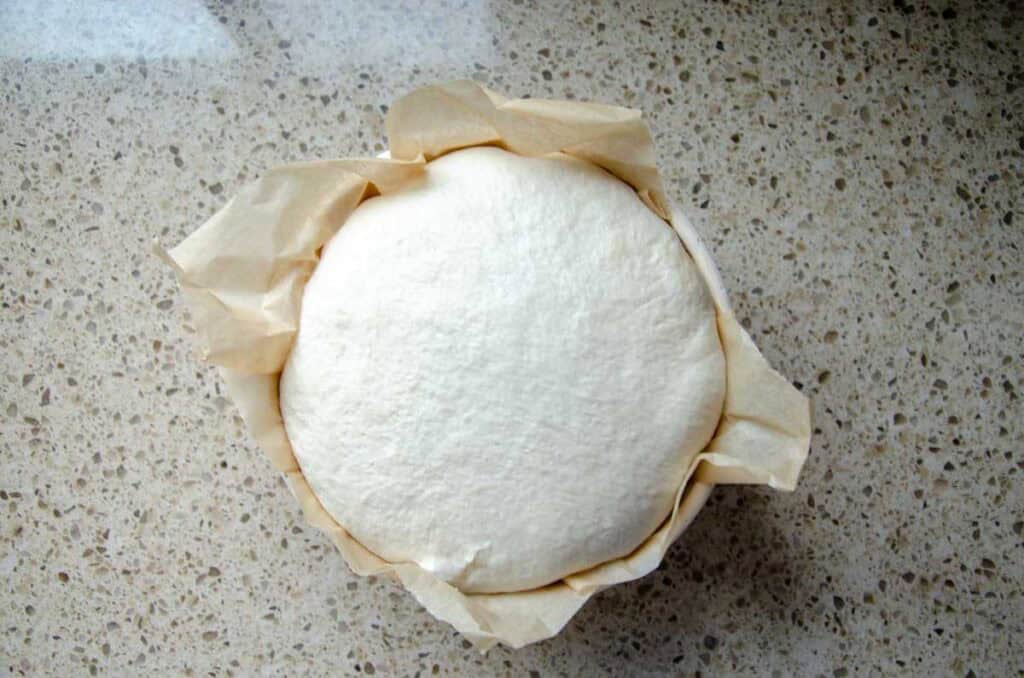
After the bread dough thaws, it needs to have its second rise.
The bread dough will behave a bit differently than when you make a fresh loaf of sourdough bread, so be prepared that it may not rise quite as tall.
Bake
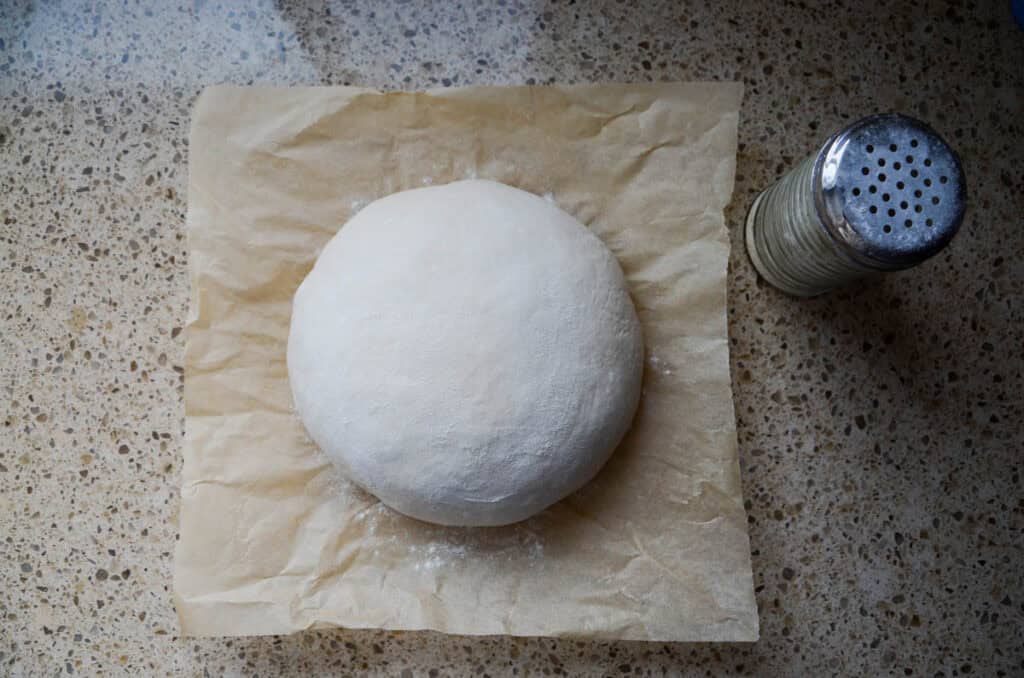
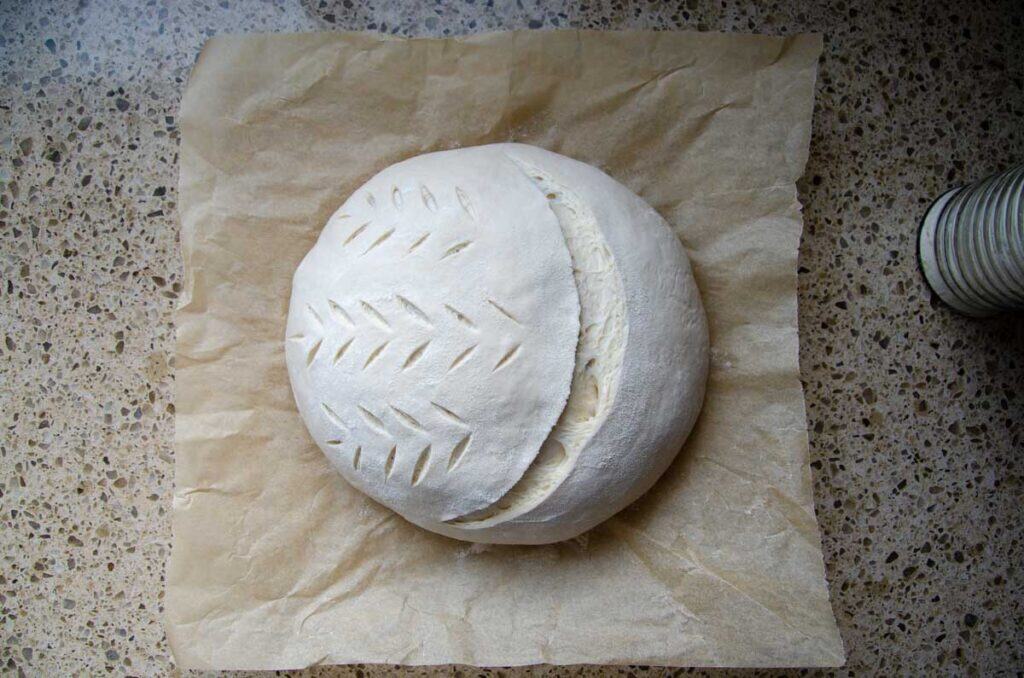
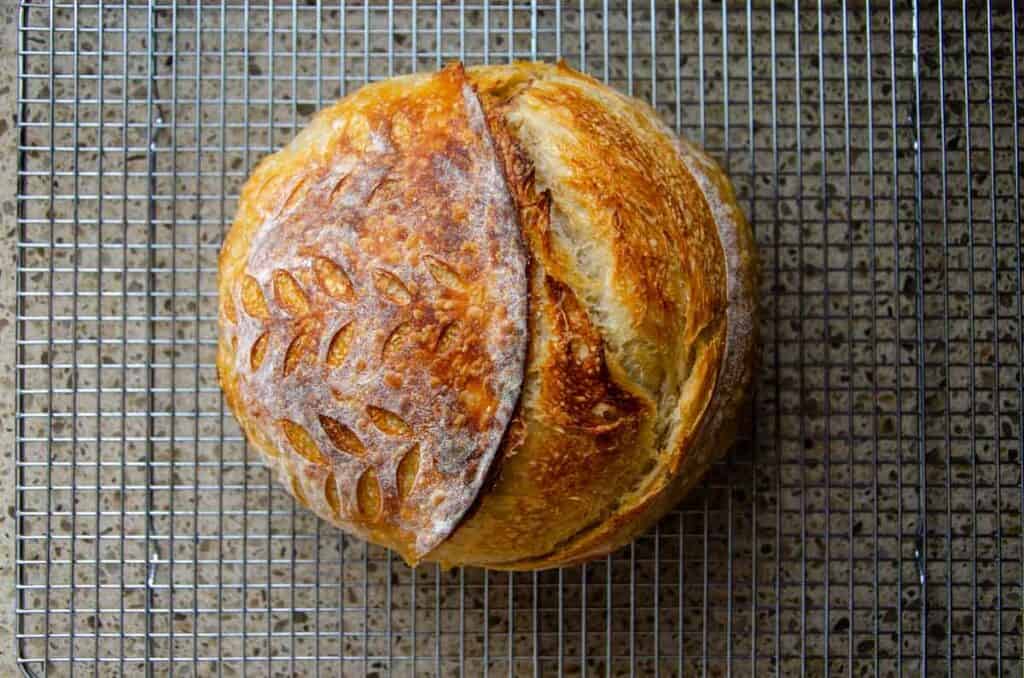
When the bread is light and fluffy and shows signs of proofing, preheat the Dutch oven to 450°F/230°C for 45 minutes. Transfer the dough onto a piece of parchment paper if using a proofing basket. Score the bread with a bread lame and lift it into the hot Dutch oven. Place the lid onto the Dutch oven and return back to the oven.
Bake the bread according to the directions.
Cool
Place the sourdough bread on a wire rack to cool before cutting.
Tips
- Err on the side of under fermenting the dough before freezing. The dough still needs plenty of time to thaw and go through its second proof. If the dough over ferments, then it won’t rise much and will result in a flat loaf.
- Remove as much air as possible from the freezer bag to avoid freezer burn.
- Be sure to start with a mature sourdough starter to ensure an adequate dough rise.
- Sometimes the dough loses its shape as it thaws and needs to be reshaped before baking.
Other Dough You Can Freeze
- Pizza dough – Freezing sourdough pizza dough makes pizza night a breeze.
- Cookie dough – This is one of my favorite shortcuts! Freezing cookie dough balls means that you can enjoy fresh baked cookies anytime.
- Sourdough Starter – Having a frozen starter means that you always have a sourdough starter in the event something should happen to yours. Because accidents do happen from time to time.
- Sourdough Discard – Freezing sourdough discard in a 1/2 cup silicone mold allows you to have sourdough discard in ready-to-use portions, making baking sourdough discard recipes a breeze.
FAQs
Can I freeze sourdough bread?
If you can freeze sourdough dough, the next natural question you might be asking is if you can freeze sourdough bread.
Yes! Sourdough bread freezes really well. It’s a great way to keep an abundance of baked sourdough bread since homemade bread doesn’t contain preservatives.
Allow the sourdough bread to cool to room temperature after baking to avoid ice crystals from forming. Then, wrap the whole loaf in multiple layers of plastic wrap and place it in the freezer. This is the best option for large families like mine, who will go through the bread quickly.
However, if you’re household takes a bit longer to work through bread before it spoils, you might want to slice the sourdough loaf before freezing. This allows you to remove a few slices of bread at a time without thawing the entire loaf.
Can You Freeze Sourdough Starter?
Yes and it’s a good idea to do if you haven’t already. I like to keep frozen starter on hand in the event something happens to your sourdough starter.
Another easy way to ensure you always have sourdough starter is to keep dehydrated sourdough starter.
Will dough rise after being frozen?
Yes, but not in the same way as a freshly mixed sourdough dough. Freezing the dough can weaken the yeast and affect the strength of the gluten, resulting in a less impressive rise, and a denser loaf.
How long can you freeze sourdough bread dough?
Frozen sourdough dough can last for up to a month in the freezer.
Leading up into holiday season, I make a ton of bread and freeze it! It’s easy to pull out to thaw for a soup dinner with friends, a Thanksgiving potluck, or a family French toast breakfast! Tell me how you use it in the questions and comments below!