
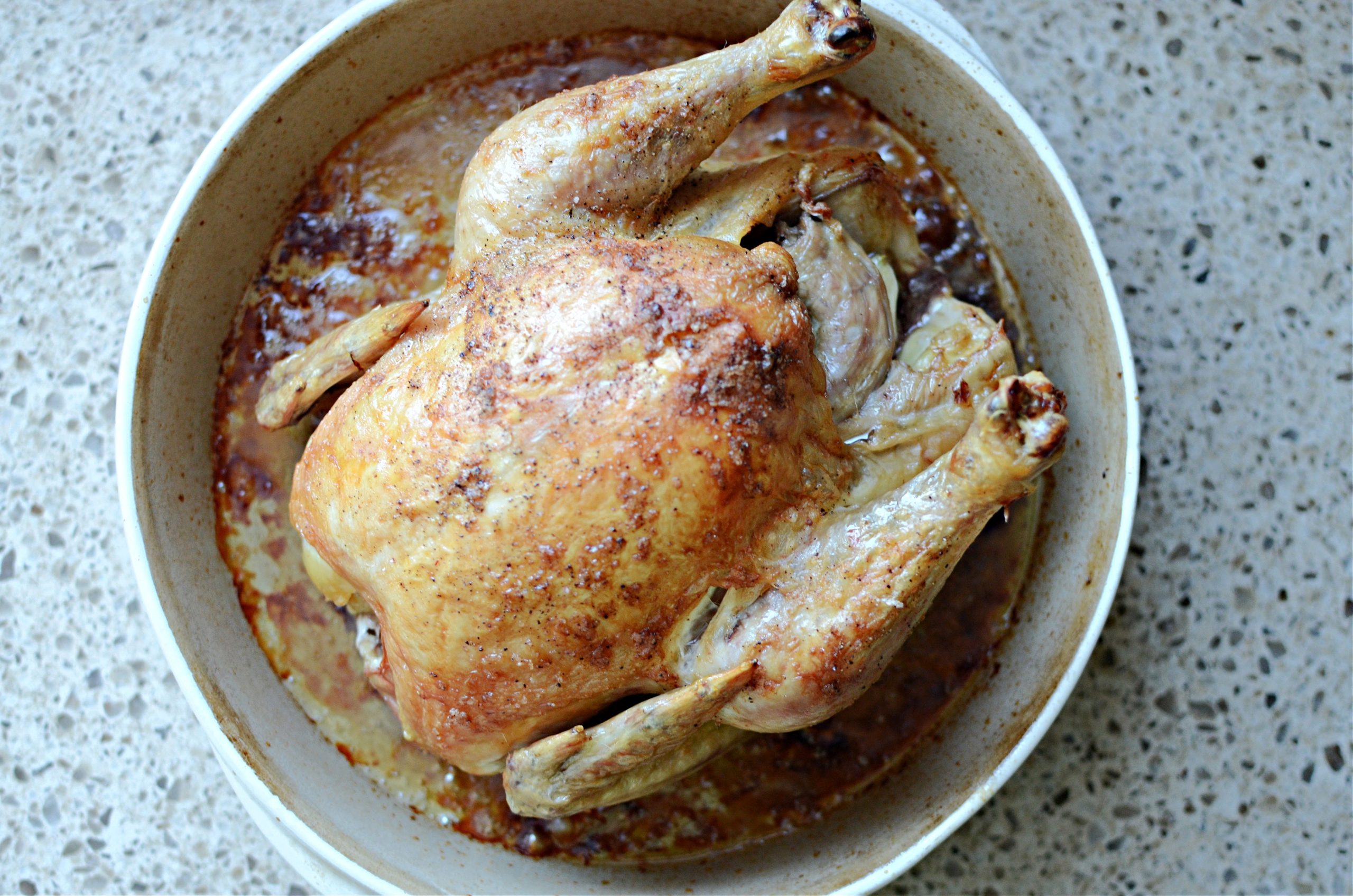
How to Roast a Perfect Whole Chicken Every Time
This is the best roast chicken recipe! Learn how to roast a chicken with crispy skin that’s full of flavor every single time. With a few simple ingredients to add flavor, this simple roast chicken recipe delivers juicy breast meat, crispy skin, and is easy enough that anyone can master.
This post may contain affiliate links. As an Amazon Associate, I may receive a small commission, at no cost to you, if you make a purchase. Please read our disclosure policy.
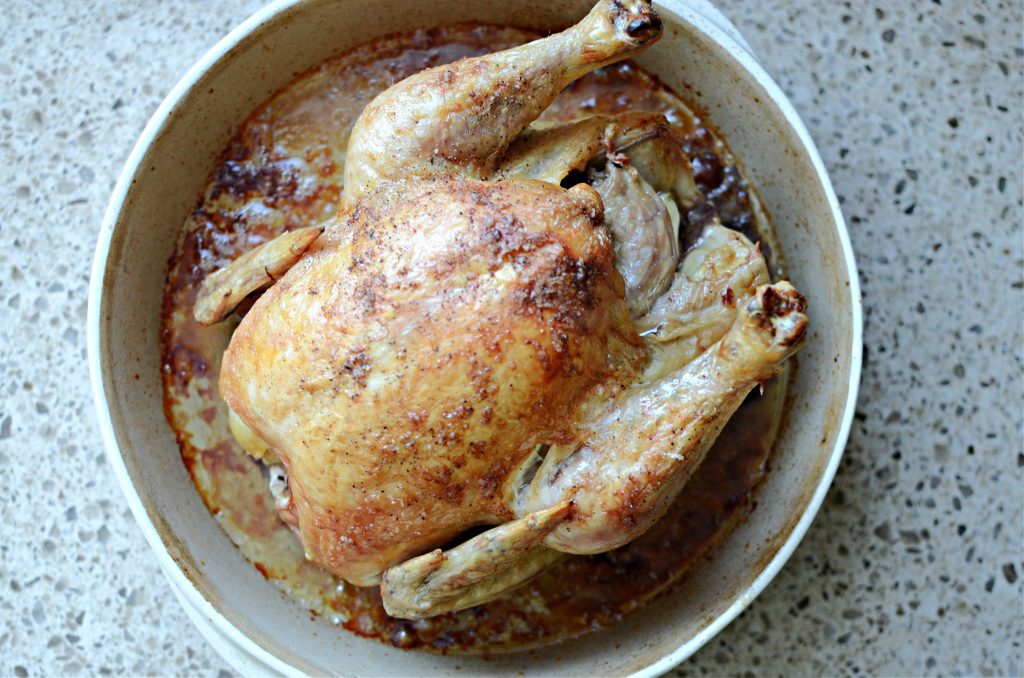
Of all the chicken recipes there are, one of the staples of every home cook should have is how to roast a perfect whole chicken with confidence. You can carve it and enjoy juicy pieces of roast chicken with a side of mashed potatoes or sourdough mac and cheese. Or shred the meat to use in your favorite hotdish or chicken burritos. Either way, you’re sure to fall in love with its unbeatable flavor and crisp skin.
Once you realize how easy this roast chicken is to make, you may find that you no longer need to stop at the grocery store for a rotisserie chicken for an easy chicken dinner.
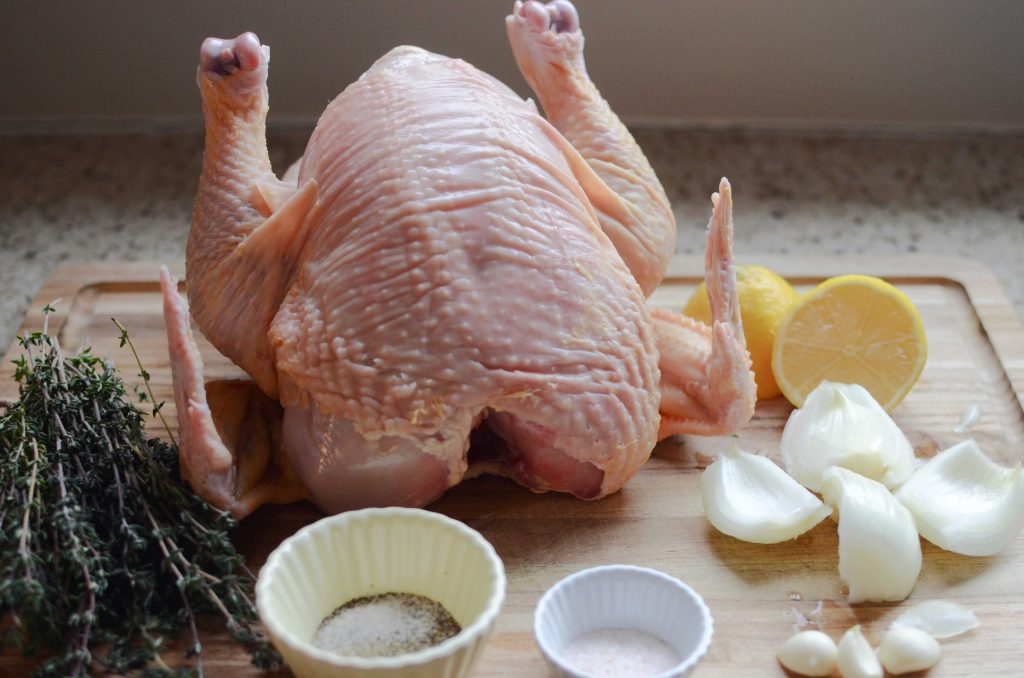
Perfect Whole Roasted Chicken Ingredients
- Chicken – A whole chicken roughly 4-6 lbs. Smaller chickens will need less roasting time, so be sure to check for doneness 15 minutes before the suggested time.
- Onion – I like to use yellow onions because that’s what I grow, but you can also use white onions, or sweet onions.
- Garlic – Use raw, fresh garlic cloves for maximum flavor.
- Butter – Melt unsalted butter and pour over the top of the chicken for extra crispy chicken skin.
- Lemon – The lemon adds a brightness to the chicken.
- Thyme – Thyme and chicken are a match made in heaven for me, but you can also use other aromatics. Any fresh herbs like sage, rosemary, or oregano would all be excellent choices.
- Salt – I like to use sea salt, but kosher salt or Himalayan salt are great options.
- Black pepper – Just a touch of black pepper to season the cavity of the chicken.
How to Make the Best Whole Chicken
Prepare
Preheat the oven to 425°F/218°C.
First, remove giblets and neck bone and set aside. (Don’t discard these! Use them to make bone broth. If you’re short on time, toss them in a freezer bag to save so they’re ready next time you’re making broth.) Check the skin and remove leftover pinfeathers that are still in the skin, and discard.
Rinse the chicken under warm water, making sure to get the inside of the chicken too. Pat the skin dry with paper towels.
Peel and quarter the onion. Peel the garlic cloves. Cut the lemon in half.
In order to have flavorful meat, it’s important to season the meat properly. When food is lacking flavor, it’s most often because it hasn’t been properly seasoned. Adding enough salt and pepper, along with aromatics, will greatly improve the flavor of your chicken. I’ve found it best to prep your seasonings, measure out what you will need into a small bowl before your hands get dirty touching raw chicken.
Assemble
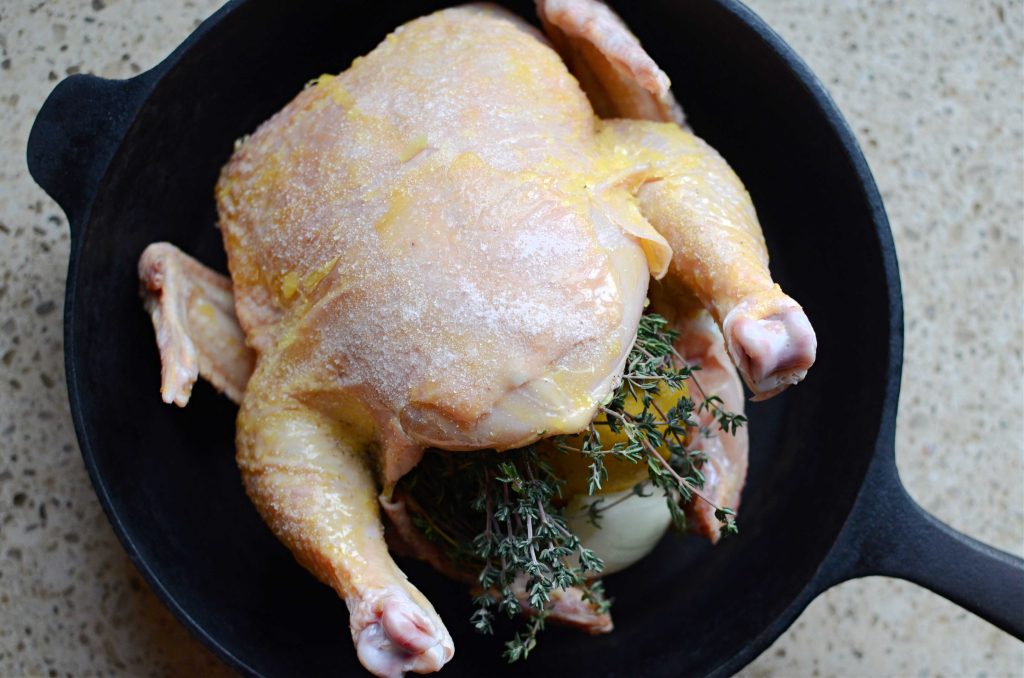
Place the whole chicken in a large cast iron skillet, large roasting pan, or stoneware baking dish with the breast side up.
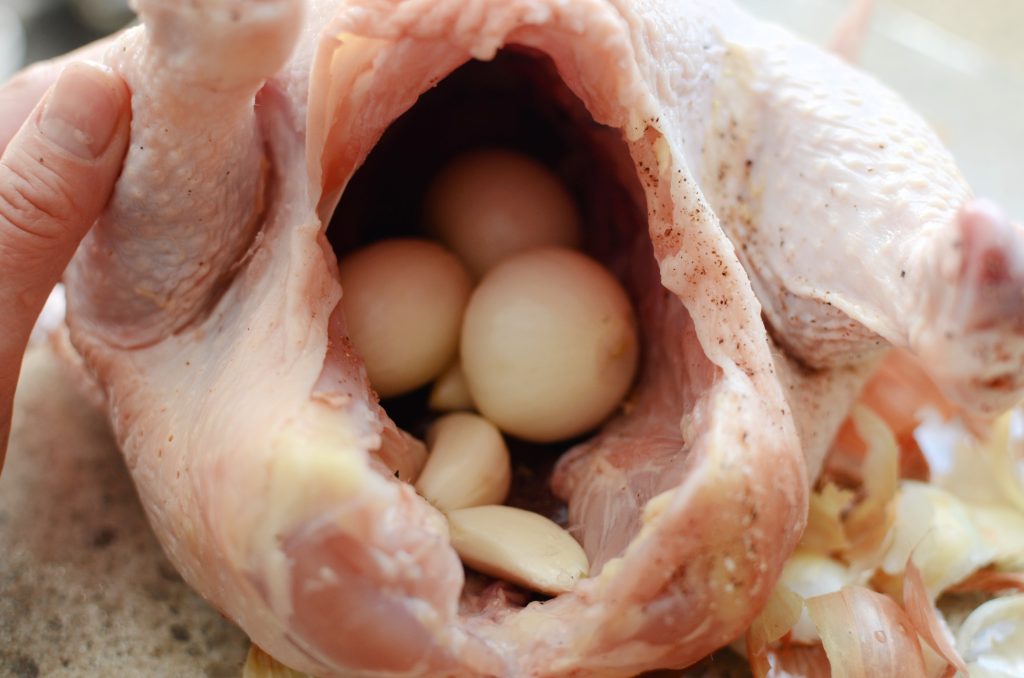
Sprinkle 1 tsp of kosher salt and 1 tsp of pepper into the chicken cavity.
Next, add the garlic cloves, the onion quarters, fresh thyme sprigs, and lemon halves. I like to use toothpicks to close up the cavity of the bird to help keep the aromatics inside. This step is optional, and I only do it if there’s enough skin by the cavity.
In a small saucepan, melt 2 T of butter.
Brush the outside of the chicken with the melted butter and then sprinkle the top with the remaining salt. Some people will use olive oil here, but I prefer the flavor of butter and find it gets the skin crispier.
Bake
Bake the chicken uncovered at 425°F/218°C for 1 1/2 hours.
The cook time will vary based on the weight of your chicken. If roasting a chicken that is on the smaller size, check doneness 15 minutes before the timer is set to go off. You don’t want to overcook the chicken. If the skin is getting too brown but the chicken isn’t done yet, tent aluminum foil over the top of the chicken.
Use an instant-read thermometer and take the internal temperature in the thickest part of the thigh. The chicken is done when the chicken temperature reads 165°F/74°C.
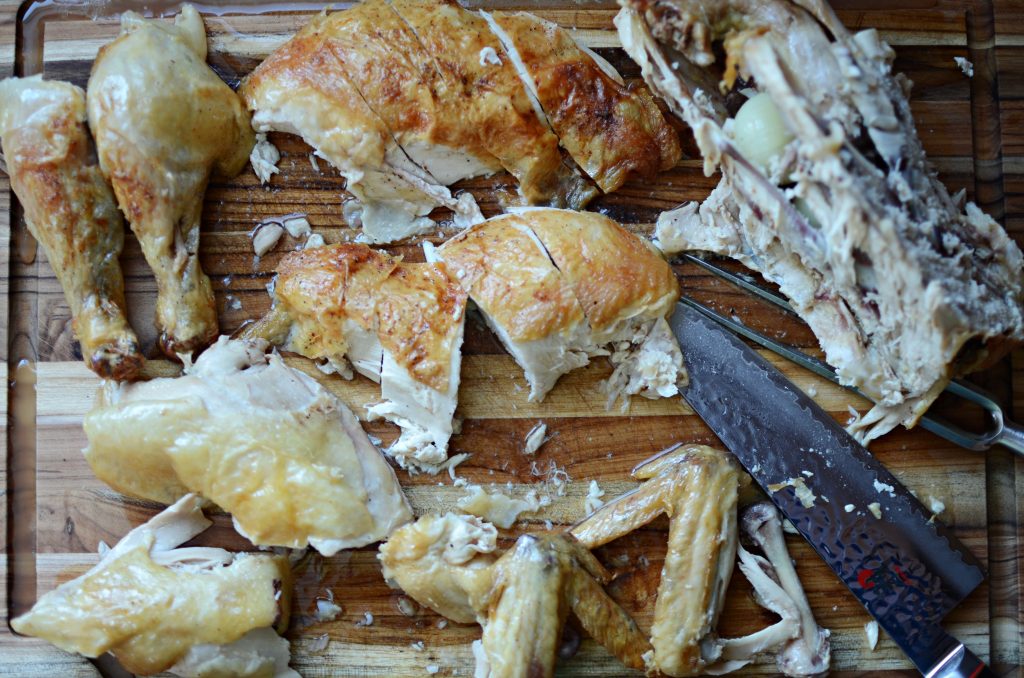
Remove the chicken from the oven and let it rest for 15 minutes before carving.
Why let meat rest before carving it? If the meat is cut right after removing from heat, the juices will simply run out. Let the chicken rest to allow the meat to relax, and the juices distribute within the meat, making it deliciously moist.
Place the chicken onto a large cutting board to carve. I like to use a sharp knife and a cutting board with a groove to help catch the juices.
Perfect Roast Chicken Tips
- Let the chicken come to room temperature before baking. Remove the chicken from the fridge an hour before you plan to bake it. Cooking meat that is at room temperature not only helps to ensure even cooking, but also aids in better flavor and a juicier end product.
- Drying the skin with a paper towels will make it easier to brush the butter on the outside of the chicken. If the skin is wet, the butter will just glide over and not adhere to the skin.
- After the chicken is done roasting, don’t throw away the pan juices. Instead, deglaze the bottom of the pan with chicken broth or white wine to capture all of the flavor of the pan drippings and make into a gravy. Thicken with flour and water, or use sourdough discard.
- The best way to know when the chicken is done is to take the temperature in both the thickest part of the breast and the thigh. When it reaches 165 degrees, and the skin is golden brown, it is done.
FAQs
How long to Roast a Chicken?
How long to roast a chicken will largely depend on the size of the chicken. Larger chickens will take longer, and smaller chickens will be done sooner than the recommended time. Be sure to plan accordingly.
Should I Roast Chicken Covered or Uncovered?
For crispy skin, be sure to leave the chicken uncovered while it roasts. If the top is browning too much before the chicken is done, tent a piece of aluminum foil on top while it finishes roasting.
What Do I Serve with Perfect Roast Chicken?
Roasted whole chicken goes with almost anything, so have fun experimenting with a variety of side dishes to find what your family enjoys most.
- A side salad or pasta salad
- Shred the meat and add to a pasta salad
- Any type of potato, whether its mashed, roasted, boiled or baked
- Roasted vegetables
If You Loved This Recipe, Try These Recipes…
- Ricotta Gnocchi with Mushrooms and Garlic Sage Butter Sauce
- Butternut Squash Casserole with Cheesy Topping
- Easy Pasta Aglio E Olio
- Potato Salad
I hope you enjoy this Perfect Whole Roast Chicken Recipe as much as our family has over the years. I’d love to hear from you! Please rate the recipe, leave me a comment below and share with a friend so they can learn how to roast a whole chicken too! Don’t forget to tag photos #Lockremhomestead over on Instagram!
How to Roast a Whole Chicken
Want to Save This Recipe?
Enter your email & I’ll send it to your inbox. Plus, get great new recipes from me every week!
By submitting this form, you consent to receive emails from Lockrem Homestead
Equipment
- Cutting Board
- Knife
- Baking Pan
Ingredients
- 1 4-6 lbs. whole chicken
- 1 large onion
- 3 cloves garlic
- 2 tbsp butter melted
- 1 ½ tsp salt divided
- ½ tsp black pepper
Instructions
- Preheat oven to 425 degrees.
- Remove the giblets and the neck from the chicken. (Set aside to be used later in bone broth) Rinse the chicken and the inside of the cavity with water and pat dry with paper towels.
- Peel the onion and cut it into quarters. Peel garlic cloves. Cut the lemon in half.
- Season the cavity of the chicken with 1 tsp of salt and ½ tsp of black pepper. Add the quartered onion, garlic cloves, lemon halves, and sprigs of thyme.
- Melt 2 tablespoons of butter in a small pan on the stove over medium heat. Brush melted butter all over the outside of the chicken. Season with ½ tsp of salt over the melted butter.
- Place the seasoned chicken in a roasting pan or deep dish pan that is deep enough to catch the juices as the chicken bakes.
- Bake at 425 degrees for 1 hour and 30 minutes, or until the internal temperature reaches 165 degrees when checked in the thigh and the breast. If the chicken is smaller, check after 60 minutes. If the chicken is larger, it may take longer than the 1 hour 30 minutes. If the skin is browning too quickly, tent the chicken with aluminum foil.
- When the internal temperature is 165 degrees and the juices run clear, the chicken is done and can be removed from the oven. Allow the chicken to rest for 10 minutes before carving.
Notes
-
- Let the chicken come to room temperature before baking. Remove the chicken from the fridge an hour before you plan to bake it. Cooking meat that is at room temperature not only helps to ensure even cooking, but also aids in better flavor and a juicier end product.
- Drying the skin with a paper towels will make it easier to brush the butter on the outside of the chicken. If the skin is wet, the butter will just glide over and not adhere to the skin.
- After the chicken is done roasting, don’t throw away the drippings. Instead, deglaze the bottom of the pan with chicken broth or white wine to capture all of the flavor of the pan drippings and make into a gravy. Thicken with flour and water, or use sourdough discard.
- The best way to know when the chicken is done is to take the temperature in both the thickest part of the breast and the thigh. When it reaches 165 degrees, and the skin is golden brown, it is done.
I remember the first roast chicken I ever made, and what a triumph it was! There is nothing more classic and homey than this dinner staple. Leave a comment or ask your questions here, I would love to get back to you!