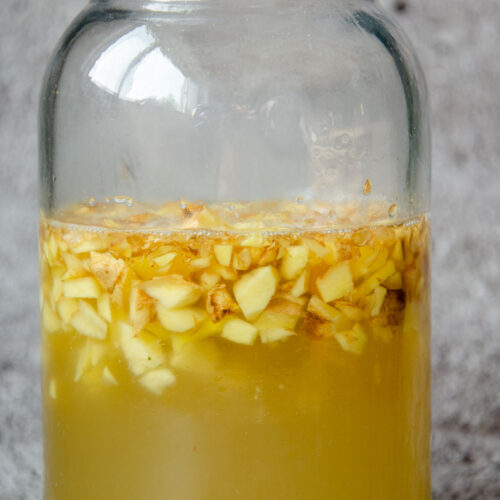
How To Make A Ginger Bug Starter
Learn how easy it is to make a homemade ginger bug starter culture. This beginner-friendly fermentation recipe can be used to make a variety of naturally fermented beverages, including homemade ginger beer, homemade ginger ale, and homemade root beer.
Want to Save This Recipe?
Enter your email & I'll send it to your inbox. Plus, get great new recipes from me every week!
By submitting this form, you consent to receive emails from Lockrem Homestead
Equipment
- quart jar
- rubber band or metal band
- Knife
- Cutting Board
- measuring spoons
- liquid measuring cups
Ingredients
- ginger root fresh, organic, and unpeeled
- 1 cup sugar
- water filtered
Instructions
Day 1
- Chop a 3"x 1 1/2" (30-50 g) knob of fresh ginger root into small pieces.
- Add two tablespoons of ginger pieces to a quart jar. Place the remaining ginger in an airtight container and refrigerate for daily feedings.
- Add 2 tablespoons of sugar and 2 cups of water to the jar. Stir the contents with the end of a wooden spoon until the sugar dissolves.
- Place a small piece of cheesecloth over the jar. Fasten it in place with the metal canning band or a rubber band. Let the ginger mixture rest on the counter in a warm place out of direct sunlight for 24 hours.
Day 2-7
- The next day, add two tablespoons each of chopped ginger, sugar, and water to the jar, stirring to dissolve the sugar. Replace the cover and leave it undisturbed for 24 hours.
- Continue feeding and stirring the ginger bug daily for the next 5 days.
- After 2-3 days, you will begin to see small bubbles forming in the jar. The ginger bug will be ready to use by the end of the week.
Notes
How Do I Know When A Ginger Bug Is Ready To Use?
The ginger bug is ready to use when it shows signs of active fermentation, is foamy, and is full of small bubbles. In addition, the ginger bug will smell begin to have a pleasant yeasty smell, like bread or beer.Storing the Ginger Bug | REgular Maintenance
A ginger bug needs to be fed as it eats through its food supply every 24 hours. To keep the ginger bug active and ready to ferment more soda, feed it daily and store it at room temperature. However, if you want to take a break, you can refrigerate it, going 7 - 10 days before it needs to be fed ginger and sugar again. The cold temperatures slow the fermentation, allowing more time to pass between feedings. Once ready to use, pull it out of the fridge and feed it one or two times before using it to make homemade soda again.
Why Isn't My Ginger Bug Fizzy?
If your ginger bug hasn't become fizzy yet, it's likely that the ginger bug hasn't had enough time to get started and requires more time before you begin to see bubbles. The environment also matters. Allow the ginger bug more time to get going in cooler climates. If you're not seeing bubbles after a couple of days, the ginger bug may have been contaminated. Keeping the ginger bug in an unsealed jar allows the carbon dioxide to escape in the same way an open can of pop eventually loses its carbonation over time. If you're not seeing bubbles, try placing a tight-fitting lid on the container. Check back the next day to see if there is any change. Beware, a tight-fitting lid will need to be burped over time.What Is the Best Container for a Ginger Bug?
A glass container is the best container to brew a ginger bug as it allows you to see what's happening in the container, which is convenient for beginners. In addition, it's easier to keep clean. Plastic containers degrade over time and can be scratched easily, and harbor unwanted bacteria.Can I Use Ground Ginger to Make a Ginger Bug?
Unfortunately, ground ginger doesn't have the microscopic life in it like fresh ginger and isn't suitable for a ginger bug.Tips
- Grate or chop a large portion of ginger and store it in the fridge. This allows you to pull out a few tablespoons of ginger as you need it. In a similar way, for long-term ginger bug maintenance, place the grated ginger in a freezer-safe bag and freeze it.
- Initially, the ginger pieces will float, but over time, it's normal to see them fall to the bottom of the jar.
- For ferments, temperature matters. A warm environment will cause fermentation to happen at a quicker pace than a cooler environment.
- You can substitute turmeric for ginger, or use a combination of the two. Beware, turmeric can cause staining due to the compound curcumin in it.
- Nutrition information is automatically calculated, so it should only be used as an approximation.
Nutrition
Calories: 770kcalCarbohydrates: 199.2gFat: 0.6gSodium: 2mgPotassium: 4mgSugar: 199.6gCalcium: 2mgIron: 0.1mg
Tried this recipe?Let us know how it was!
